There’s something quietly frustrating about a closet that never quite works. Clothes pile up. Shoes go missing. And no matter how many times you reorganize, it falls apart within a week.
The fix isn’t more willpower it’s better custom closet shelves.
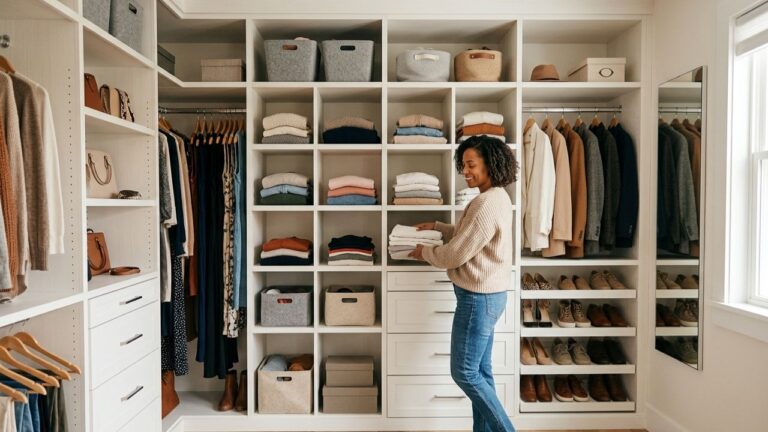
Unlike the generic wire racks that came with your home, custom shelving is built around your stuff, your space, and the way you actually live. Whether you’re tackling a bedroom closet, a pantry, or a laundry room, the right shelves turn chaos into something you’re actually proud to open.
Why Custom Closet Shelves Beat Generic Options Every Time?
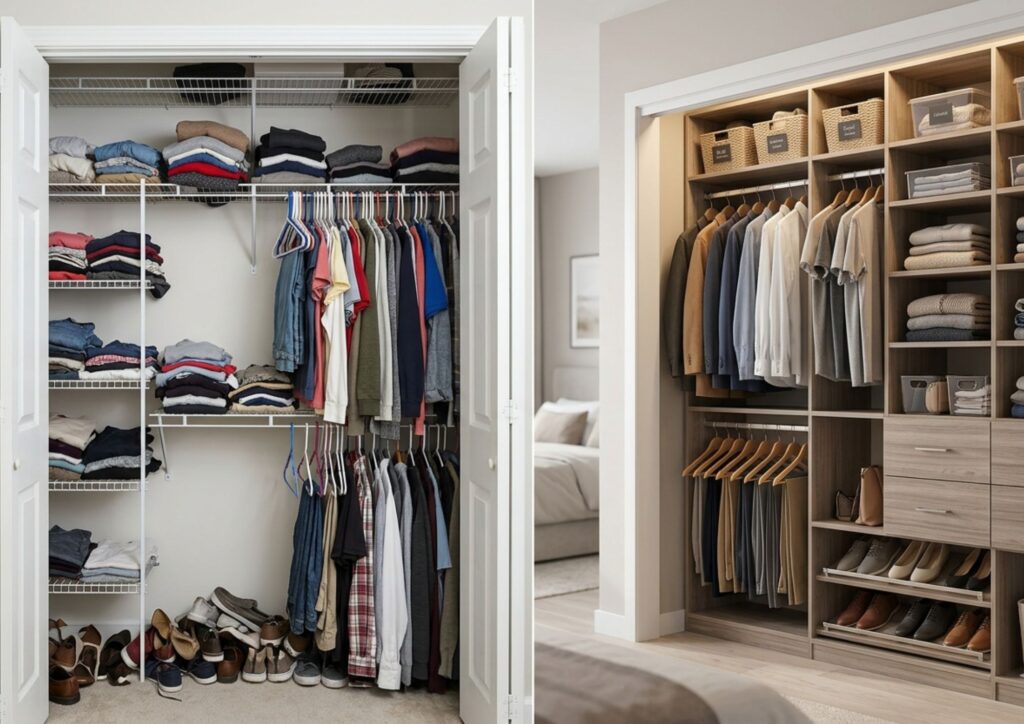
Walk into any big-box store and you’ll find the same two or three shelf systems all designed for an “average” closet that doesn’t quite match yours.
That’s the problem with off-the-shelf solutions: they’re built for nobody in particular.
Custom closet shelves, on the other hand, are designed around your specific dimensions, your storage needs, and your style preferences. You get:
- Every inch of height used (no wasted space above or below)
- Shelf depths matched to what you’re storing (shoes need different depth than sweaters)
- Materials and finishes that actually match your home
- Structural support that lasts years, not months
Think of it like a tailored suit versus one off the rack. Same general product completely different fit and result.
Types of Custom Closet Shelves to Consider
Not all closets are the same, and neither are the shelving options. Here’s a quick breakdown:
Built-In Closet Shelves
Built-in closet shelves are permanently attached to the wall and designed to fit the exact dimensions of your space. They’re strong, seamless, and add real value to your home.
If you’re serious about organization and plan to stay in your home for years, built-ins are almost always the best investment. They look clean, hold more weight, and can be fully customized with drawers, hanging rods, and pull-out trays.
Freestanding Shelf Units
These are movable and don’t require any wall anchoring. Great for renters or people who like flexibility. The trade-off: they don’t use corner space or ceiling height as efficiently as built-ins.
Floating Shelves
Mounted directly to studs, floating shelves are a minimalist option for open closets or display areas. They work beautifully for shoes, bags, or folded items you want visible and easy to grab.
How to Build Closet Shelves The Basics
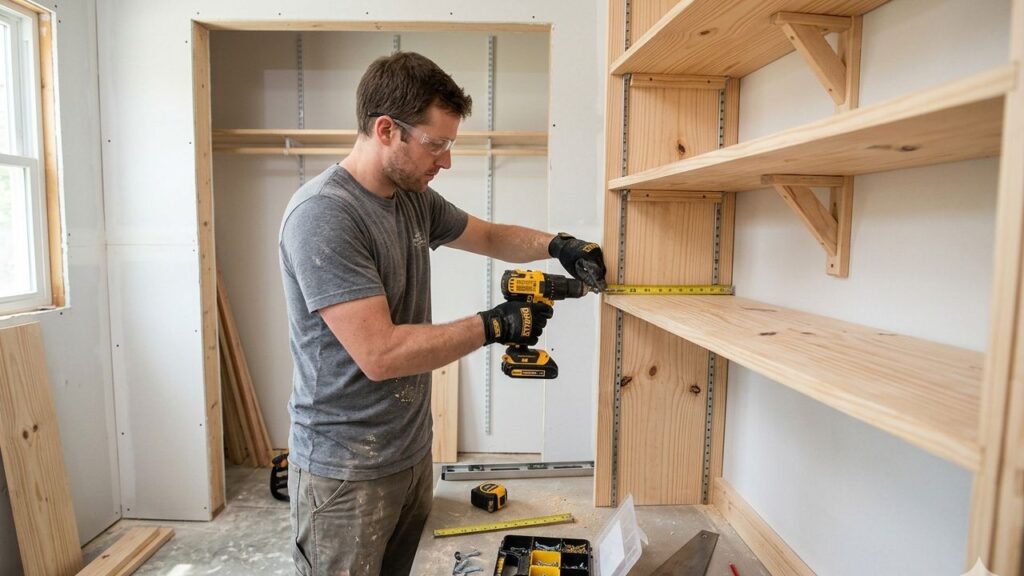
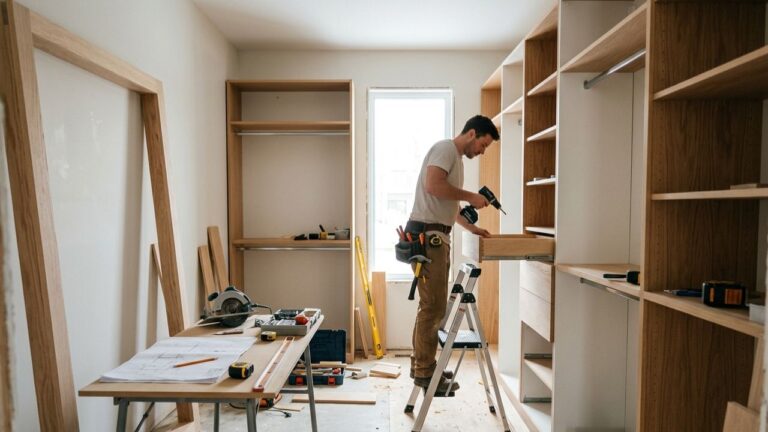
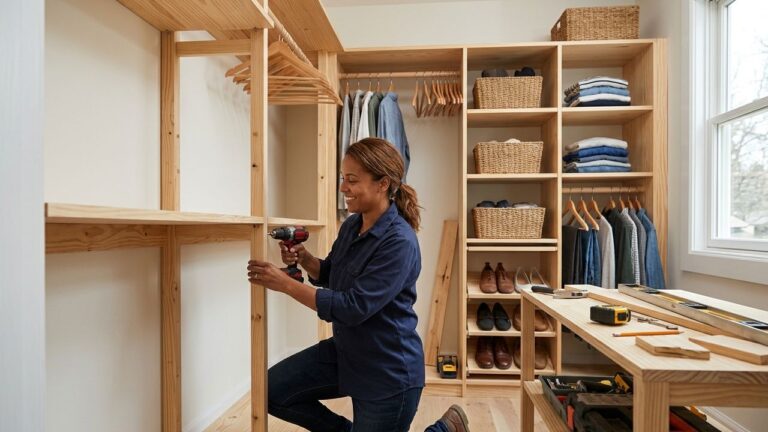
Whether you’re going the DIY route or working with a pro, understanding how to build closet shelves helps you make smarter decisions at every step.
Step 1: Measure Everything Twice
Start with a complete measurement of your closet: floor to ceiling, wall to wall, and the depth from wall to door. Don’t forget to note where outlets, vents, or light fixtures are.
Step 2: Plan Your Zones
A well-organized closet has zones a hanging zone for shirts and jackets, a shelf zone for folded clothes, a shoe zone near the floor, and ideally a drawer zone for smaller items.
Map this out on paper (or use a free closet planning tool) before buying a single piece of wood.
Step 3: Choose Your Material
For most home closets, melamine-coated MDF or plywood is the go-to. It’s clean-looking, easy to wipe down, and holds up well under everyday weight. Solid wood is beautiful but costs more and can warp in humid spaces.
Step 4: Cut, Sand, and Install
If you’re DIYing:
- Cut shelves to length (most hardware stores will do this for you)
- Sand all edges smooth
- Install shelf standards or cleats into wall studs
- Level each shelf before securing
If this feels like more than you want to tackle, that’s completely okay a professional install takes a fraction of the time and delivers a result that looks built from the start.
Don’t Forget the Laundry Room Shelves Change Everything Here Too
Most people think custom shelving ends at the bedroom closet. But laundry room shelves might be where you feel the impact most immediately.
A laundry room without good shelving is just a place where things pile up: detergent bottles, dryer sheets, stain sprays, fabric softener. Add in folded laundry sitting on top of the machines and you’ve got a room that always looks chaotic.
A simple set of wall-mounted shelves above the washer and dryer transforms the entire space. You get:
- Easy access to supplies without digging through a cabinet
- A clean folding surface (add a countertop between your machines)
- Hooks or rods below shelves for hang-dry items
- A room that actually feels intentional
If you’re also redoing a utility closet or mudroom nearby, the same shelving style ties the whole area together beautifully.
Quick Tips for Getting the Most Out of Custom Closet Shelves
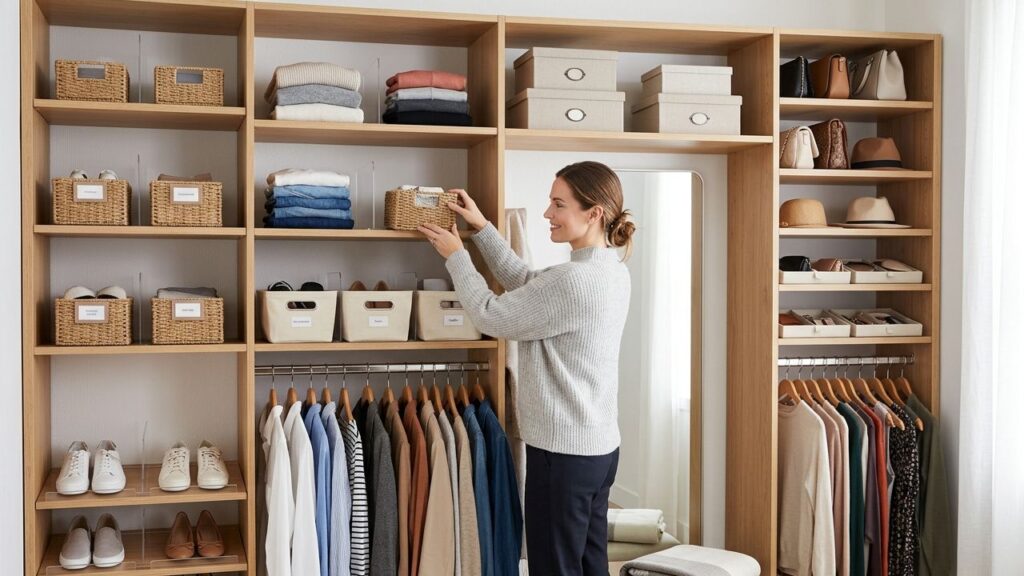
Here are the things that make the biggest difference small details that separate a good closet from a great one:
- Go floor to ceiling. The space above your existing shelves is almost always wasted. A tall tower of shelves or a shelf near the ceiling for seasonal storage reclaims that lost square footage.
- Adjust shelf height to what you own. Short shelves for folded t-shirts, tall shelves for boots or handbags. Don’t build a one-size-fits-all grid.
- Add lighting. LED strip lights or a small puck light inside a closet is a game-changer. You’ll find things faster and the space feels twice as large.
- Leave room for what you’ll buy. If your closet is already packed to capacity, plan for 20% more storage than you think you need.
- Use the door. An over-door organizer or hooks on the back of the door can hold belts, scarves, jewelry, or shoes without taking any shelf space.
- Don’t skip the base. Adding a small baseboard or toe-kick at the bottom of built-in units makes them look finished and keeps dust from collecting underneath.
Custom vs. DIY Which Is Right for You?
This is the question most homeowners wrestle with. Here’s an honest breakdown:
DIY makes sense if:
- You’re handy with basic tools
- You have a simple, rectangular closet
- Budget is a major constraint
- You enjoy the process
Professional installation makes sense if:
- Your closet has unusual dimensions or angles
- You want a seamless, furniture-quality finish
- You’re doing multiple spaces at once
- Your time is valuable and you want it done right the first time
The difference in result quality is real especially for built-ins. A professional has the tools, materials, and experience to handle things that catch DIYers off-guard: walls that aren’t perfectly plumb, floors that aren’t level, studs that aren’t where you expected them.
For a space you’ll open every single day, that polish matters.
Conclusion
A well-organized closet isn’t a luxury it’s just good design. Custom closet shelves give you a space that works the way you need it to, whether that’s a bedroom walk-in, a laundry room wall, or a narrow reach-in that you’ve given up on.
The best part? You don’t have to figure it all out alone.
Start by measuring your space and thinking through what you actually store. From there, the right shelving system becomes obvious and the transformation is faster than you think.
If you’re ready to stop fighting your closet and start loving it, the team at Custom Closets is here to help.
Ready to Get Started?
Whether you need a single wall of built-in closet shelves or a complete home organization overhaul, we’d love to help you design a space that actually works.
Or give us a call at +1 (502) 592-5060 we reply within 24 hours and are happy to answer any questions before you commit to anything.
Your dream closet is closer than you think.
FAQs
It depends heavily on size, materials, and whether you DIY or hire a pro. Professional installation for a full walk-in closet ranges from $1,000 to $4,000+, depending on complexity and finish level. The investment almost always pays off in home value and daily quality of life.
Melamine-coated MDF or plywood is the most popular choice it’s durable, looks clean, and is easy to clean. For a more high-end look, solid wood or furniture-grade plywood with a stained finish is worth considering. Avoid particleboard for shelves that will hold heavy items like shoes or bags.
The key is finding and anchoring into wall studs. Use a stud finder before marking any holes. If you’re installing shelf standards (the vertical metal tracks), screw them into studs not just drywall for long-term stability. For floating shelves, use heavy-duty wall anchors if you can’t hit a stud.
Absolutely and it’s one of the best upgrades you can make to a utility space. Laundry room shelves above the washer and dryer give you easy access to supplies and keep the area looking tidy. A simple wall-mounted shelf with a few hooks below it can transform a cluttered laundry room in an afternoon.
A simple reach-in closet can be done in a day by an experienced installer. A full walk-in closet with multiple sections, drawers, and custom finishes typically takes 1–2 days. DIY projects take longer budget a weekend for a medium-sized closet, especially if it’s your first time.