
A walk-in closet is more than just a storage space it is a personal sanctuary where organization meets style. Whether you are starting from scratch or upgrading an existing closet, knowing how to design and build a walk-in closet the right way can completely transform how you start and end your day. In this comprehensive guide, you will discover everything you need to know about walk-in closet design and installation, from initial planning to the finishing touches.
Millions of homeowners across the United States are now investing in custom walk-in closet solutions to maximize space, improve home value, and create a truly organized lifestyle. If you are ready to take the plunge, this guide will walk you through every step of the journey.
Why Invest in a Walk-In Closet?
Before diving into the design process, it helps to understand why a walk-in closet is one of the smartest home improvements you can make. Here are the key benefits:
- Increased home value: Homes with well-designed walk-in closets sell faster and at higher prices.
- Superior organization: A dedicated space for clothing, shoes, and accessories eliminates daily clutter.
- Time savings: When everything has a place, getting dressed becomes efficient and stress-free.
- Personalization: Custom walk-in closet ideas allow you to tailor every inch to your lifestyle.
- Better garment care: Proper hanging space and shelving protect your clothing investment.
Planning Your Walk-In Closet Design
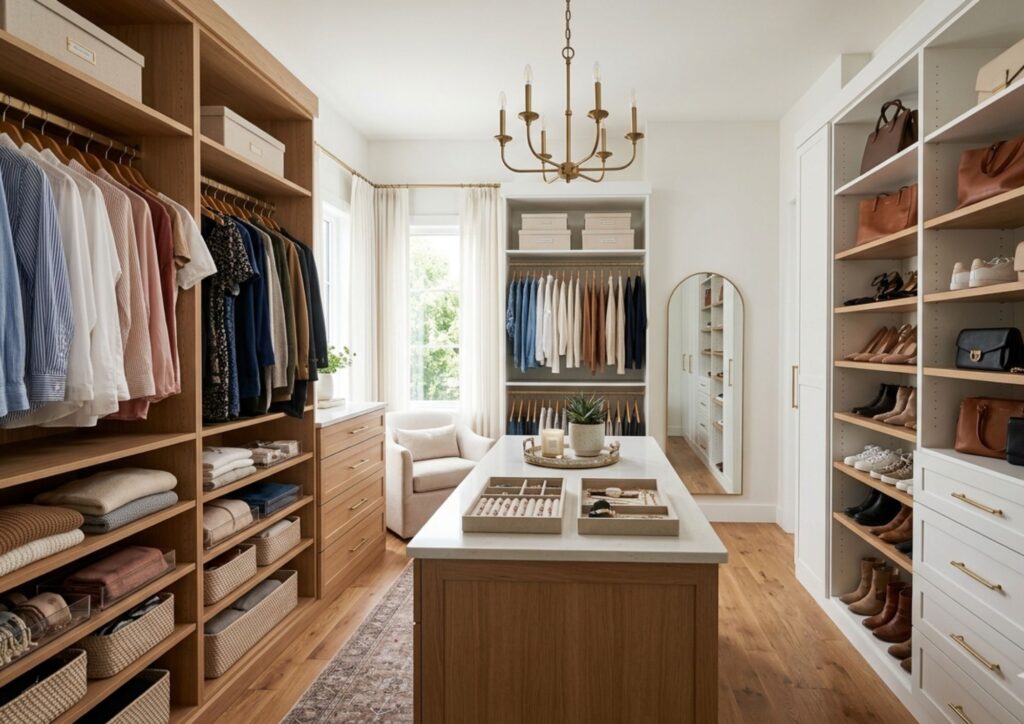
Great closet design and installation always begins with careful planning. Rushing into construction without a solid blueprint leads to wasted space and money. Follow these planning essentials:
Assess Your Available Space
Begin by taking accurate measurements of your room’s dimensions including the length, width, and height of the ceiling. Although a minimum size of 5 feet by 5 feet is suggested for a functional closet, a preferred size of generally 7 feet by 10 feet or greater will allow you much more creativity. Also, prior to creating sketches of your final plans, take note of locations of doors, windows, electrical outlets, and light fixtures.
Determine Your Storage Needs
Take a full inventory of what you need to store. This includes:
- Long hanging garments (dresses, coats, suits)
- Short hanging items (shirts, jackets, folded pants)
- Shoes and boots
- Accessories (belts, ties, jewelry, scarves)
- Folded items (sweaters, jeans, activewear)
- Bags, purses, and seasonal items
Having a detailed list ensures your custom walk-in closet solutions are designed around your actual needs, not generic assumptions.
Choose Your Closet Layout
The layout you choose shapes the entire design. Common walk-in closet layouts include:
- Single-wall layout: All storage runs along one wall ideal for narrow spaces.
- L-shaped layout: Two adjoining walls are used, offering more storage in a compact footprint.
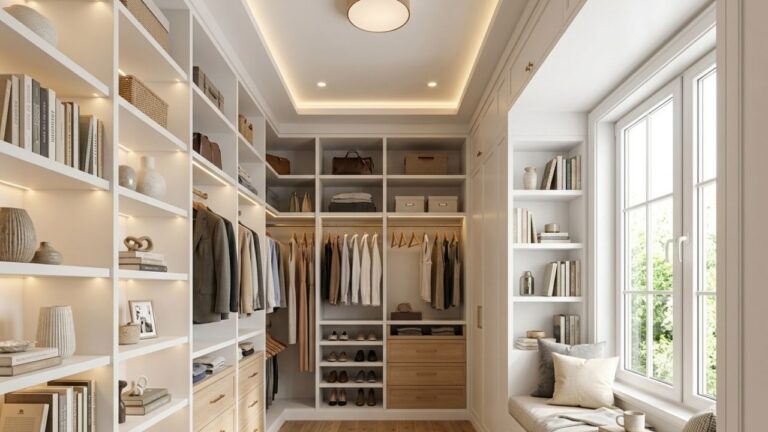
- U-shaped layout: Three walls are utilized, creating maximum storage the most popular choice for larger spaces.
- Island layout: A center island is added to a U-shaped or large space, providing additional drawers, folding space, or display area.
Designing Your Walk-In Closet
Once planning is complete, design brings your vision to life. This is where custom walk-in closet ideas become reality. Good design balances aesthetics, functionality, and budget.
Select the Right Materials
Your material choices affect both the look and durability of your closet. The most popular options include:
- Melamine: Budget-friendly, available in many finishes, and easy to clean. A great choice for most homeowners.
- Solid wood: Premium, timeless, and highly durable ideal for luxury walk-in closets.
- MDF (Medium-Density Fiberboard): Smooth finish, easy to paint, and more affordable than solid wood.
- Wire shelving: The most economical option, though less aesthetic than solid systems.
Plan Your Zones
One of the best methods for organizing your walk-in closet is by creating functional zones within your closet. By designating separate areas within the closet for hanging clothing, folded clothing, shoes, accessories, and seasonal storage, you can eliminate clutter and more easily locate items in your closet since they can all be seen at one time.
For example, place long-hang zones in corners where they will occupy the most vertical space. The double-hang zones should be placed in between the long-hang zones so that shorter hanging garments such as shirts and jackets can be stored here, multiplying your hanging space. Use your lower shelves as a location to keep shoes and the upper shelves as a place to keep clothing that you don’t use on a regular basis.
Incorporate Smart Storage Features
Modern custom walk-in closet solutions go far beyond basic shelves and rods. Consider incorporating:
- Pull-out drawers: Great for folded clothing, undergarments, and accessories.
- Built-in shoe racks or cubbies: Keep footwear organized and visible.
- Jewelry drawers with velvet inserts: Protect and display valuable accessories.
- Valet rods: Fold-out rods perfect for planning outfits the night before.
- Tie and belt racks: Keep accessories tangle-free and easy to access.
- Hampers: Built-in laundry hampers keep dirty clothes off the floor.
- Full-length mirrors: A must-have for any functional walk-in closet.
- Seating bench: A center island or built-in bench adds comfort and functionality.
Lighting Your Walk-In Closet
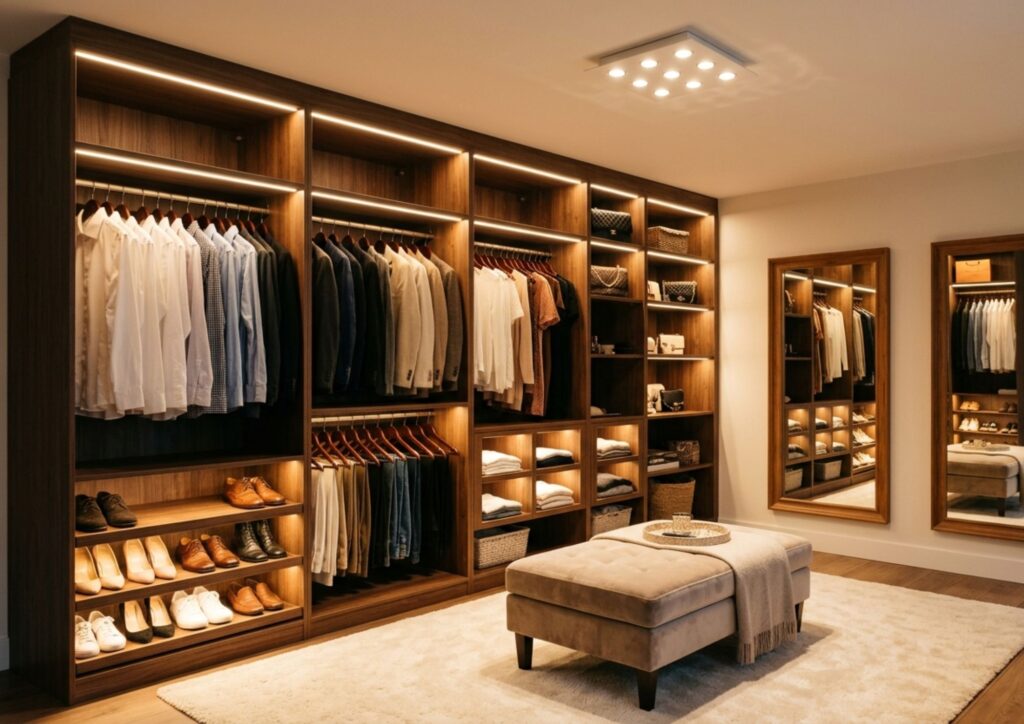
Lighting is one of the most underestimated elements in closet design and installation. Poor lighting makes it nearly impossible to choose colors correctly and leaves your beautiful closet feeling dark and cramped. Good lighting, on the other hand, makes your closet feel like a high-end boutique.
Types of Closet Lighting
- Recessed ceiling lights: Clean, modern, and provide overall ambient lighting.
- LED strip lights: Install under shelves or inside cabinets to illuminate specific zones.
- Motion-sensor lights: Automatically turn on when you enter a convenient and energy-saving option.
- Pendant lights or chandeliers: Adds a luxurious feel to larger walk-in closets.
- Natural light: If possible, a skylight or small window dramatically improves the experience.
Always aim for bright, neutral-toned LED lighting (around 3000K–4000K) that renders colors accurately. This ensures the outfit you pick in your closet looks the same in daylight.
Walk-In Closet Organization Strategies That Actually Work
Building a beautiful closet is only half the journey. Keeping it organized is where most people struggle. The following walk-in closet organization strategies will help you maintain a clutter-free space for the long term.
The One-In-One-Out Rule
For every new item that enters your closet, one item should leave. This habit prevents gradual accumulation and keeps your storage systems from becoming overcrowded.
Categorize and Color-Code
Group clothing by category first (shirts, pants, dresses), then arrange each category by color. This seemingly simple technique makes finding items fast and keeps your closet looking polished and curated.
Use Uniform Hangers
Switching to matching slim velvet hangers instantly makes any closet look more refined. They also save significant space compared to bulky plastic hangers, adding up to 30% more hanging capacity in the same rod length.
Label Everything
Labels on drawers, bins, and shelves remove guesswork entirely. When every family member knows exactly where things belong, maintaining order becomes effortless. Use clear acrylic labels for a clean, upscale look.
Rotate Seasonal Items
Keep current-season clothing at eye level and easy reach. Store off-season garments in labeled bins on upper shelves or in vacuum-sealed bags to free up prime real estate in your walk-in closet.
The Build Process: DIY vs. Professional Installation
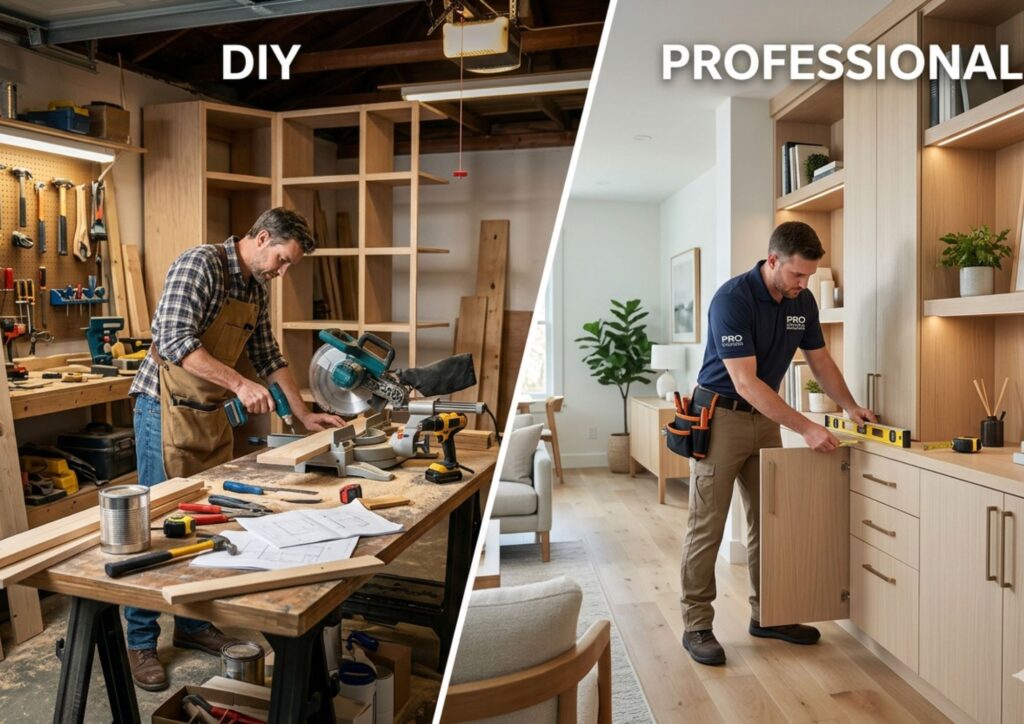
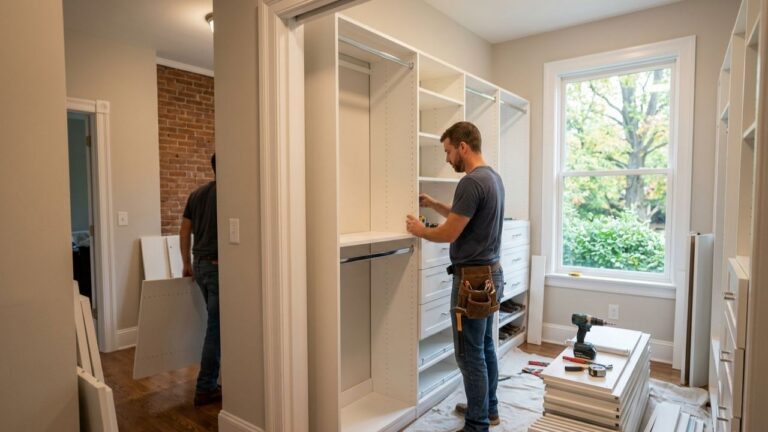
Once your design is finalized, it is time to build. You have two main options: tackle it as a DIY project or hire a professional closet design and installation company.
DIY Walk-In Closet
Going the DIY route with a modular kit or from-scratch build can save money, but comes with significant trade-offs:
- Pros: Lower upfront cost, full creative control, rewarding personal project.
- Cons: Time-intensive, requires carpentry skills, risk of measurement errors, limited customization compared to a built-in system.
Professional Closet Design and Installation
Most Homeowners Find That Hiring A Professional Closet Company Is A Smart Long-term Investment. Professionals Can Optimize The Space Of Your Closet Using Their Expertise And Access To High-quality Materials And Precise Installation That Is Not As Easy For You To Create On Your Own.
The United States Is A Great Place To Find Custom Walk-in Closets. Custom Closets US Is An Example Of A Company That Specializes In Creating Custom Designed Closet Systems Specifically For Your Space, Style And Budget. You Will Work With A Professional Team From The Very Beginning Of The Design Process Until Everything Is Installed So You Can Count On Their Experience To Provide You With All Of The Right Pieces And Components To Make Your Closet Work Well For You For A Long Time.
Finishing Touches That Elevate Your Closet
The difference between a good walk-in closet and a great one often comes down to the finishing details. These additions may seem minor but have an outsized impact on the overall experience.
Hardware and Fixtures
Choose drawer pulls, handles, and rod brackets that match your overall design aesthetic. Brushed gold, matte black, chrome, and brushed nickel are all popular choices. Consistent hardware creates a cohesive, designer look throughout the space.
Paint and Wall Treatment
Your closet walls deserve as much attention as any other room. A fresh coat of paint in a neutral tone like soft white, warm gray, or pale beige creates a clean backdrop that makes your clothing and accessories stand out. Wallpaper accent walls or subtle textures can also add personality to the space.
Flooring
Hardwood, luxury vinyl plank, or even plush carpet can transform a functional closet into a truly luxurious retreat. If your home’s existing flooring extends into the closet naturally, this creates a seamless, unified look.
Décor and Personal Touches
A small framed mirror, a scented candle, a decorative tray for accessories, or a small rug can add warmth and personality to your walk-in closet. These touches make the space feel intentional and inviting not just functional.
Common Walk-In Closet Design Mistakes to Avoid
Even with the best intentions, many homeowners make avoidable errors during closet design and installation. Watch out for these common pitfalls:
- Not measuring accurately: Even a half-inch miscalculation can cause components not to fit properly.
- Ignoring future needs: Design for at least 20% more storage than you currently need to allow for growth.
- Underestimating lighting: Many closets are built with no dedicated lighting, making them difficult to use.
- Choosing style over function: An Instagram-worthy closet that does not serve your actual habits will quickly become a mess.
- Skipping ventilation: Closed closets without airflow can cause musty odors and moisture damage over time.
- Forgetting electrical planning: Plan outlet and lighting placement before installation retrofitting is expensive.
Current Trends in Custom Walk-In Closet Ideas for 2026
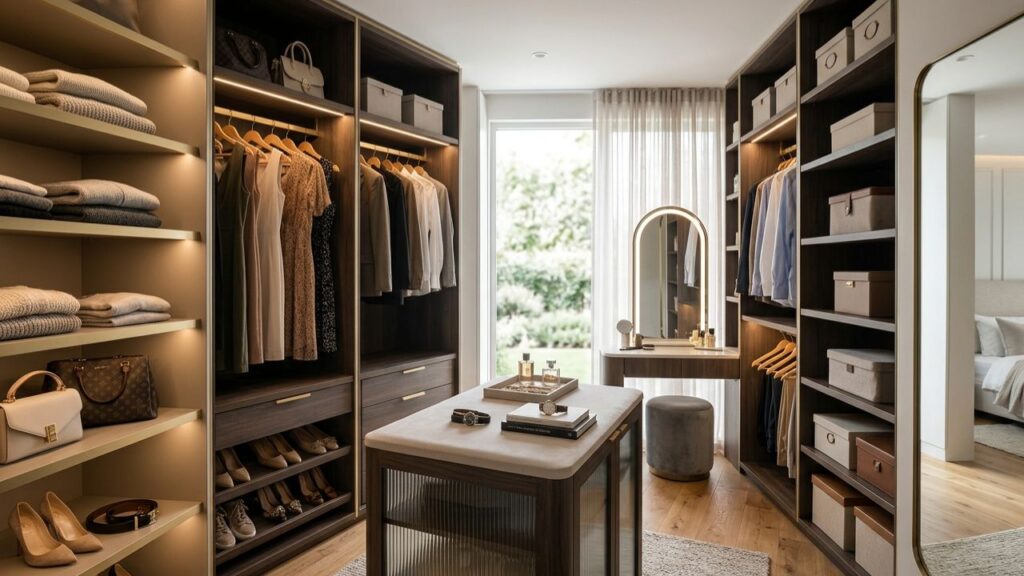
Walk-in closet design continues to evolve. Here are the most exciting trends shaping how Americans are designing their dream closets today:
- Two-tone cabinetry: Mixing a light upper section with a dark lower section adds depth and visual interest.
- Integrated charging stations: Built-in USB and power outlets keep devices charged and organized.
- Glass-front cabinets: Display shoes, bags, and accessories like a high-end boutique.
- Smart closet technology: Automated lighting, inventory apps, and climate-controlled sections for luxury garments.
- His-and-hers zones: Clearly defined zones within a shared closet reduce conflict and maximize efficiency.
- Sustainable materials: Eco-friendly wood finishes and low-VOC paints are increasingly popular.
- Minimalist design: Clean lines, hidden hardware, and monochromatic palettes for a sleek, modern look.
Conclusion
Designing and building a walk-in closet is one of the most rewarding home improvement projects you can undertake. When done right, it transforms a chaotic storage area into a beautifully organized space that simplifies your daily routine and adds lasting value to your home.
Whether you choose to implement a budget-friendly DIY system or invest in a fully custom walk-in closet built by professionals, the key is to plan thoughtfully, design around your actual needs, and never compromise on the details. Use the walk-in closet organization strategies outlined in this guide, incorporate the custom walk-in closet ideas that resonate with your style, and ensure your closet design and installation process is executed with precision.
If you are ready to move forward and want the expertise of a professional team, Custom Closets is a trusted name in delivering premium custom walk-in closet solutions across the United States. Their experienced designers work closely with homeowners to create closets that are uniquely tailored from the first measurement to the final install.
Your dream closet is not a luxury it is a lifestyle upgrade. Start planning today and take the first step toward a more organized, elegant, and functional home.
FAQs
A walk-in closet should be at least 5×5 feet to be functional, but 7×10 feet or larger is ideal for comfortable movement and full storage systems.
A DIY modular system can be completed in 1–2 weekends, while a professional custom closet design and installation typically takes 3–7 business days from measurement to finish.
Use double-hang rods to maximize vertical space, install slim velvet hangers, add pull-out drawers, and rotate seasonal items to upper shelves to keep a small closet clutter-free.
An L-shaped layout works best for narrow or medium-sized rooms, while a U-shaped layout maximizes storage in larger spaces by utilizing three walls efficiently.
Yes a well-designed custom walk-in closet is one of the top features buyers look for and can increase your home’s resale value by up to 5–10% depending on the market.

1 Comment
https://shorturl.fm/PnSNY