Let’s be honest the laundry room is the most overlooked space in most homes. It collects clutter, hides behind a closed door, and gets the least attention when it comes to design decisions. But here’s the thing: a well-organized laundry room with the right laundry room shelves can completely transform how your household runs.
When your detergents have a dedicated home, clean folded towels stack neatly on purpose-built shelves, and every square inch of wall space is actively working for you laundry stops feeling like an endless chore and starts feeling manageable. Maybe even enjoyable.
In this guide, we’ll walk through everything you need to know about laundry room shelving: which types perform best, how to plan your layout, which materials stand up over time, smart design ideas for both small and large spaces, and why custom-built solutions almost always outperform what you’ll find at a big-box store. Whether you’re starting from scratch or just looking to upgrade what you have, there’s something here for you.
Why Your Laundry Room Deserves Better Storage
Most homeowners spend an average of one to two hours per week doing laundry. That’s 50 to 100 hours a year in a space that’s often cramped, poorly lit, and frustratingly disorganized. When you invest in quality laundry room shelves, you’re not just tidying up you’re reclaiming time, reducing daily friction, and adding genuine value to your home.
Beyond practicality, a beautifully organized laundry room also appeals to homebuyers. Real estate professionals consistently note that well-designed utility spaces with built-in storage rank high among buyer preferences. A custom laundry room isn’t just a luxury; it’s a smart long-term investment.
Here are a few specific problems that proper shelving solves right away:
- Lost supplies No more digging under the sink for a dryer sheet that’s buried under a bottle of bleach
- Wasted vertical space The walls above washers and dryers are prime, untapped real estate
- Countertop overload A dedicated folding surface or upper shelf keeps workspaces clear
- Visual chaos Matching baskets on open shelving transform a cluttered room into a calm, organized space
Types of Laundry Room Shelves to Consider
Not all shelving is created equal. The right choice depends on your room’s dimensions, wall structure, weight requirements, and personal aesthetic. Here’s a breakdown of the most popular options homeowners and designers are using in 2026.
1. Floating Wall Shelves
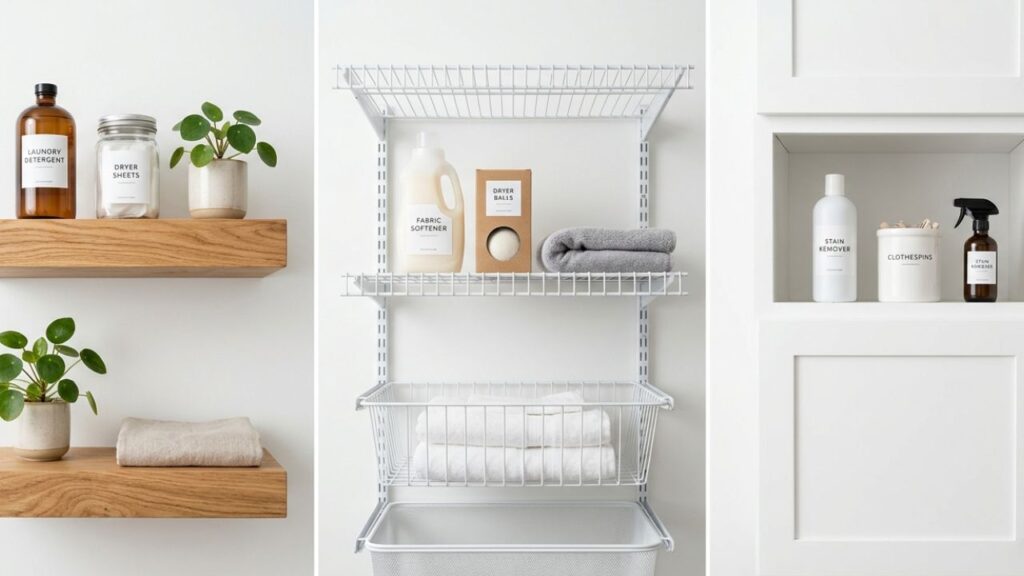
Floating shelves are a go-to for laundry rooms because they’re space-efficient and visually clean. Mounted directly into the wall without visible brackets (or with sleek minimal ones), they work beautifully above the washer and dryer a zone that’s often completely ignored.
Best for: Storing detergent, fabric softener, stain removers, and small decorative baskets.
Expert Tip: Always anchor floating shelves into wall studs, especially above appliances. Liquid detergent bottles are surprisingly heavy, and a shelf anchored only into drywall will eventually fail.
2. Wire Shelving Systems
Wire shelving is affordable, well-ventilated (great for items that need airflow), and relatively easy to install yourself. Many national retailers carry adjustable wire systems that clip together without special tools.
Best for: Budget-conscious renovations, rental properties, or laundry closets where you want a fast, functional solution.
Drawback: Small items like spray bottle caps can fall through the gaps, and the industrial aesthetic can feel unfinished without deliberate styling choices.
3. Built-In Cabinetry with Open Shelving Zones
This is where things get truly elevated. Built-in cabinetry paired with strategic open shelving zones gives you the best of both worlds: concealed storage for items you’d rather keep out of sight, and open shelving for everyday-grab products.
Custom cabinet installations can wrap an entire laundry room wall, incorporate a fold-down ironing board, include pull-out hamper drawers, and even integrate display cabinets for collectibles if your laundry room flows into a mudroom or creative hallway space. This approach creates a polished, intentional look that elevates the entire room.
4. Over-the-Door Shelving
When wall space is genuinely limited, over-the-door organizers add storage without requiring any wall mounting. They work especially well in compact laundry closets.
Best for: Apartments, renters, and tight closet-style laundry spaces.
Limitation: Weight capacity is low, and poorly-sized units can interfere with the door’s swing or latch.
5. Pull-Out and Slide-Out Shelving
Pull-out shelves installed inside existing cabinetry maximize deep cabinet space and eliminate the frustration of reaching to the back of a shelf. These are especially popular in custom laundry room design because the functionality looks completely seamless from the outside.
Custom Laundry Room Design Ideas That Maximize Every Inch
Generic store shelving rarely fits your space perfectly. The most effective custom laundry room design ideas treat your room’s exact dimensions as an asset using every inch deliberately rather than working around limitations.
Here are the most impactful custom design approaches that consistently transform laundry spaces from afterthoughts into standout rooms.
The Full-Wall Storage System
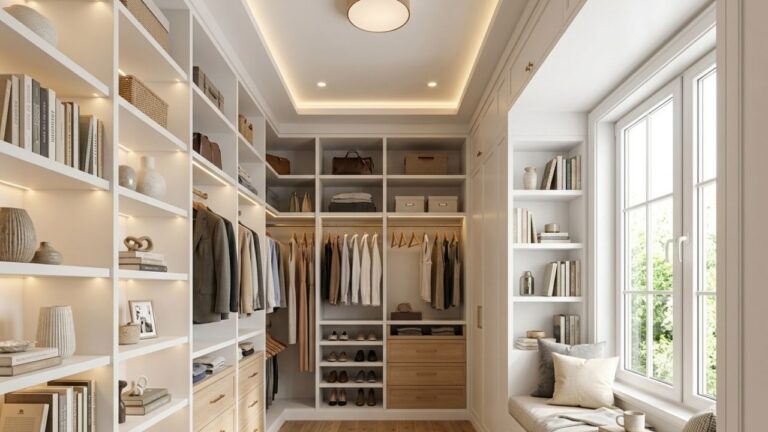
Install floor-to-ceiling cabinetry and shelving across one complete wall of your laundry room. Upper cabinets handle seasonal items and overflow supplies. Middle open shelves hold labeled baskets for sorted laundry categories. Lower cabinets conceal cleaning tools and bulkier products.
This approach suits larger laundry rooms best and creates a designer aesthetic that makes the space feel like a luxury utility room intentional, cohesive, and completely functional.
The Over-Appliance Shelf System
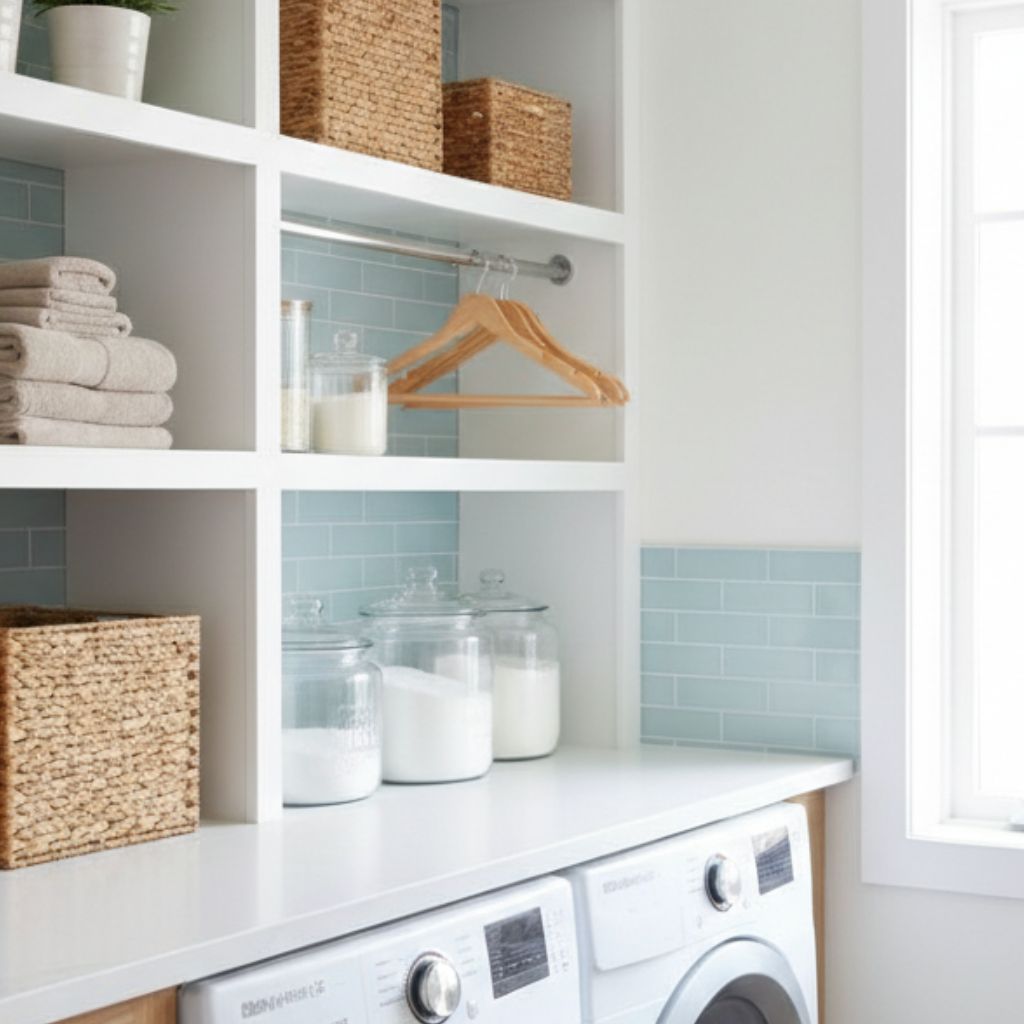
The space directly above your washer and dryer is often 18 to 30 inches of completely unused vertical real estate. A custom shelf system installed above your appliances ideally framed by a cabinet on either side converts that dead zone into your primary laundry supply station.
Add under-shelf LED strip lighting and you’ve created both atmosphere and visibility. It’s a small detail that makes a significant daily difference.
The Built-In Folding Station
One of the most requested elements in custom laundry room design ideas is a dedicated folding surface. A countertop installed directly above front-loading appliances creates an instant folding station without consuming any additional floor space.
Pair it with an open shelf immediately above for detergent and a hanging rod mounted below the shelf for air-dry garments. It’s a modest upgrade with a genuinely outsized daily impact.
The Laundry-Mudroom Combo
Many families are combining their laundry and mudroom functions into a single, organized space. Custom shelving in this hybrid context typically includes:
- Individual cubbies for each family member’s gear and school bags
- Hooks mounted below open shelves for coats, bags, and accessories
- Bench seating with hidden storage compartments underneath
- Open shelving above the bench zone for labeled baskets
- Closed upper cabinets for laundry essentials and cleaning supplies
This combined design is particularly popular for homes with young children or active families who need a high-function drop zone right at the entry point.
Laundry Room Shelving Ideas for Small Spaces
Not every home has a generous laundry room. Many have narrow closets or stacked washer/dryer units tucked into a tight hallway. The good news is that small spaces often respond beautifully to smart shelving sometimes even more dramatically than larger rooms.
Here are the most effective laundry room shelving ideas specifically for compact spaces:
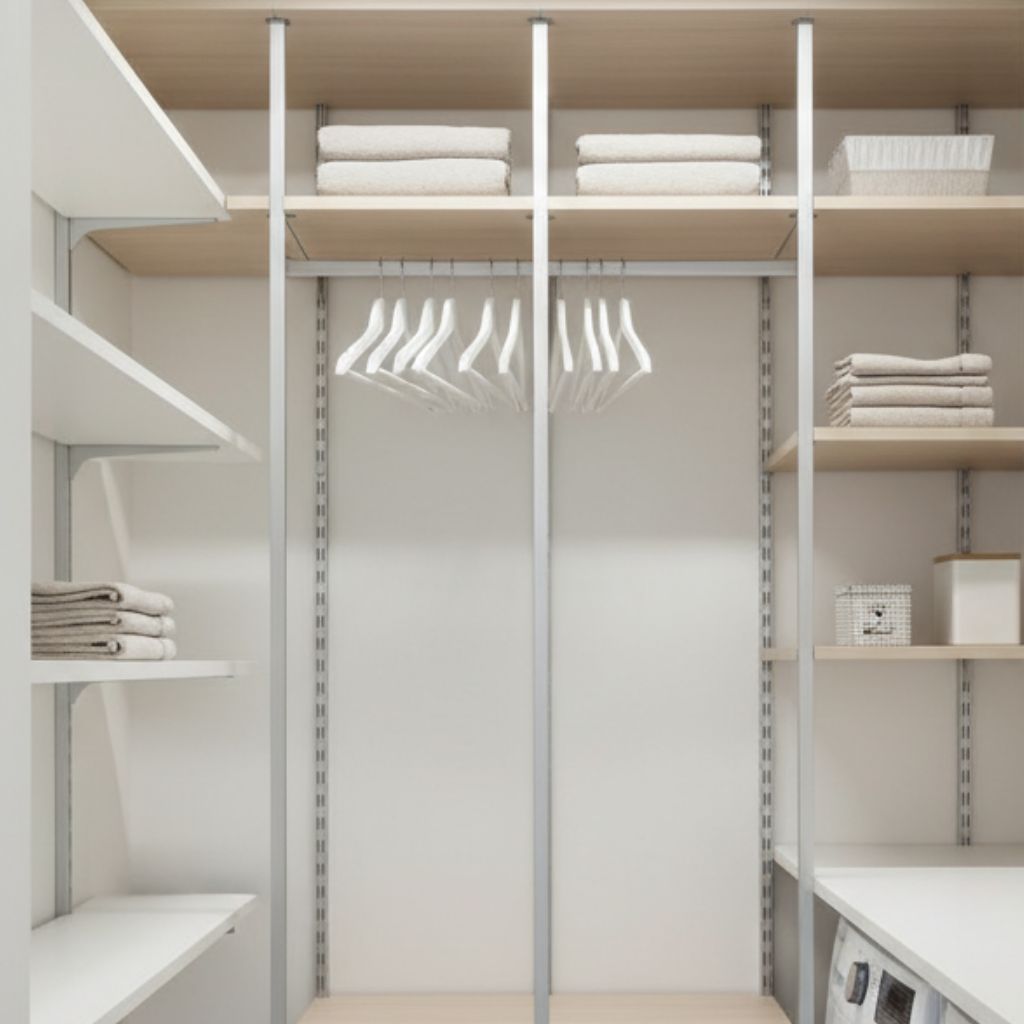
- Go vertical, always. In a tight laundry closet, the walls above eye level are your biggest untapped asset. Shelves installed all the way to the ceiling put infrequently-used items up high and keep everyday items at easy reach.
- Use the side walls. The narrow walls beside your appliances are often completely ignored. Even a single 9-inch floating shelf on a side wall creates a dedicated spot for spray bottles, a small basket, or cleaning cloths.
- Install a tension rod below a shelf. A horizontal tension rod mounted below an existing shelf creates an instant hang-dry zone ideal for delicates that can’t go in the dryer.
- Choose slimline cabinetry. A cabinet as shallow as 9 inches can still hold a full supply of laundry essentials. Don’t assume standard 12-inch depth is required.
- Use matching labeled baskets. In a tight space, visual consistency is everything. Identical labeled baskets on open shelves create order and reduce the visual noise that makes small rooms feel chaotic.
Design Insight: Light-colored shelving (white or natural wood tones) paired with under-shelf lighting makes small laundry spaces feel significantly larger and brighter than they actually are. It’s one of the highest-impact, lowest-cost visual tricks in small-room design.
Materials Matter: Choosing the Right Shelving for a Laundry Environment
Your laundry room is a high-humidity environment. Steam from the dryer, splashing water near the washer, and cleaning product spills are everyday realities. This makes material selection more important here than in almost any other room of the house.
Best Materials for Laundry Room Shelves
- Melamine-coated MDF The most common choice for custom laundry shelving. It resists moisture reasonably well, comes in dozens of finishes, and is straightforward to clean. Choose a minimum ¾-inch thickness for heavier loads.
- Thermally Fused Laminate (TFL) A step up from standard melamine. More resistant to chipping and moisture penetration. Common in high-end custom laundry installations.
- Plywood with a painted or sealed finish Strong, stable, and moisture-resistant when properly sealed. A favorite for custom builders because of its structural superiority.
- Powder-coated steel or wire Extremely durable and resistant to moisture, mold, and rust when properly coated. Perfect for utilitarian setups, though less visually refined than wood-based options.
- Solid wood with a waterproof sealant Beautiful and long-lasting when properly protected. Untreated solid wood, however, can warp in high-humidity laundry environments.
Avoid: Untreated particle board anywhere near laundry appliances. It absorbs moisture rapidly and deteriorates from the inside, often long before it looks damaged from the outside.
Display Cabinets for Collectibles in Laundry and Mudroom Spaces
Here’s something a little unexpected: some of the most beautifully designed laundry rooms we’ve seen incorporate display cabinets for collectibles alongside their functional shelving.
It sounds counterintuitive at first. But when your laundry room connects to a hallway, mudroom, or transition space, that area can become a genuine design feature rather than just a utility zone. A built-in display cabinet with glass-front doors adds character, personalizes the space, and gives you a real reason to enjoy spending time there.
Glass-front display cabinets work particularly well for:
- Small framed art or prints that add personality to a working space
- Decorative jars styled with laundry pods, clothespins, or linen sachets
- Family keepsakes or collections that deserve visibility but a protected home
- Small plants or trailing greenery that soften the industrial nature of the room
Custom cabinet makers can seamlessly integrate display cabinet sections alongside standard closed cabinetry and open shelving so the final result looks intentional and cohesive rather than haphazardly assembled. It’s the difference between a laundry room that functions and one that genuinely reflects your home’s personality.
How to Plan Your Laundry Room Shelving Layout
Before ordering a single shelf bracket or calling a contractor, invest time in the planning phase. A little careful measurement and forethought prevents the most common and most expensive mistakes.
Step 1: Measure Everything Precisely
Start with total room dimensions: length, width, and ceiling height. Then measure your appliances precisely. Note the exact clearance above, beside, and between them. Don’t overlook door swing radius, vents, outlets, or plumbing access points that can’t be covered.
Step 2: Inventory Your Storage Needs
Write down everything you currently store in or around your laundry area. Sort items by how often you actually access them:
- Daily access: Detergent, dryer sheets, stain remover, lint roller
- Weekly access: Sorting baskets, iron, ironing board
- Occasional access: Seasonal items, bulk supply overflow, extra cleaning products
This list directly tells you how much accessible open shelving you need versus concealed cabinet space.
Step 3: Choose Your Shelving Configuration
Decide between open shelving, closed cabinetry, or a combination system. Consider your aesthetic preferences, how naturally tidy your household stays, and whether young children could access cleaning chemicals stored on lower open shelves.
Step 4: Consider Professional Installation
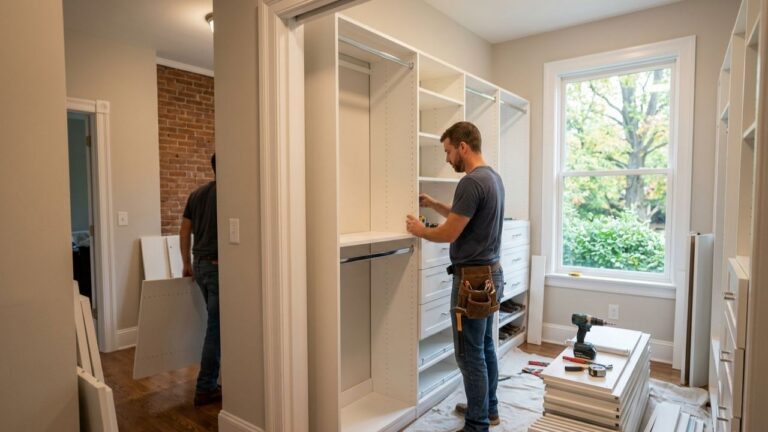
For built-in cabinetry, custom shelving systems, or anything that requires precise fitting around irregular walls, appliances, or plumbing, professional installation pays for itself in quality of outcome. A custom storage specialist can design around your specific room maximizing every inch while meeting code requirements and aesthetic standards.
Pro Planning Tip: Photograph your laundry room from multiple angles before any consultation with a designer. Photos reveal spatial relationships and dead zones that are easy to miss when you’re standing in the room every day.
Conclusion
Your laundry room doesn’t have to be an afterthought. With the right laundry room shelves, thoughtful layout planning, moisture-resistant materials, and a design that fits how your household actually lives it can become one of the most functional and genuinely satisfying spaces in your home.
Whether you’re drawn to sleek floating shelves above your appliances, a full custom laundry room design with floor-to-ceiling built-in cabinetry, practical laundry room shelving ideas for a tight closet space, or even a creative setup that incorporates display cabinets for collectibles in a laundry-mudroom combo the possibilities are far more exciting than most people expect.
Let’s recap the key takeaways:
- Use your vertical space. Walls above appliances and up to the ceiling are storage real estate most homeowners never tap.
- Match materials to the environment. Humidity-resistant options protect your investment for the long term.
- Plan before you build. A few hours of measuring and listing prevents costly mistakes.
- Go custom when you can. Generic shelving fits generic spaces. Your room and your daily routine deserves better.
At Custom Closets, we specialize in turning underutilized spaces into organized, beautiful storage systems that are built specifically for your home and lifestyle. Our team works with homeowners throughout Louisville, KY and the surrounding region to design and install custom solutions that actually fit the way you live.
Ready to see what’s possible in your laundry room? Explore our full range of custom storage services, browse our project gallery for real examples, or contact us today we’d love to help you design the laundry room your home deserves.
FAQs
Without question. Custom shelving is built to your exact room dimensions, uses higher-quality materials than most off-the-shelf products, and is designed to last for the life of your home. Beyond function, custom laundry room design also adds genuine resale value and makes the space feel like a curated, intentional part of your home rather than an afterthought.
Costs vary considerably based on materials, room size, and scope. Basic wire shelving systems typically run $100–$300 installed. Mid-range floating shelf setups range from $300–$800. Fully custom built-in cabinetry and shelving systems generally fall between $1,500 and $5,000+ depending on complexity, material selections, and hardware.
Yes. Floating shelves, over-appliance shelf kits, and modular systems can be added to most existing laundry rooms without structural changes. Custom solutions require more planning but don’t necessarily require a full gut renovation to install successfully.
Keep everyday items detergent, fabric softener, dryer sheets on open shelves for instant access. Store less visually appealing items (cleaning chemicals, bulk overflow, sharp tools) behind closed cabinet doors. Display cabinets for collectibles or decorative items work especially well in laundry-mudroom combo spaces where you want the room to have visual personality.
Use moisture-resistant materials from the start (melamine, TFL, sealed plywood, or powder-coated metal). Ensure your dryer vents properly to prevent excess humidity buildup. Wipe shelves down regularly, especially surfaces near the washer. Avoid untreated particle board entirely in laundry environments it absorbs moisture and deteriorates quickly, often from the inside out.