
Raise your hand if you’ve lost a shoe, missed an important meeting because you couldn’t find your belt, or simply stood in front of your closet feeling overwhelmed. You’re not alone. For most homeowners, the closet is the single most chaotic space in the house not because they own too much, but because their storage system wasn’t designed with real life in mind.
That’s exactly where built in closet shelves change the game.
Unlike wire racks that wobble or freestanding furniture that eats up floor space, built in shelving is custom-engineered to fit your walls, your belongings, and your lifestyle. Whether you’re organizing a master walk-in, reimagining a cramped reach-in, or finally tackling the laundry room that’s been driving you crazy for years, built-ins deliver a level of function and polish that no off-the-shelf product can match.
In this guide, you’ll get expert-backed advice on planning, designing, and maximizing built in closet shelves across every room in your home. From fresh custom closet ideas to specialized solutions for shoes and laundry, consider this your all-in-one resource for smarter storage in 2026.
What Are Built In Closet Shelves? (And Why They’re Different)
Built in closet shelves are permanent or semi-permanent shelving systems constructed directly within a closet space, wall recess, or dedicated storage area. Unlike modular systems you buy in a box, true built-ins are designed to your exact dimensions using every inch of available height, width, and depth.
Here’s what makes them stand apart:
- Structural integration: They attach to walls, floor, and ceiling for maximum stability and weight capacity.
- Custom dimensions: No awkward gaps, no wasted corners, no shelves that don’t quite fit.
- Material quality: Premium materials like solid wood, MDF with high-gloss finishes, and moisture-resistant laminates last decades, not years.
- Aesthetic cohesion: Built-ins look like they were always meant to be there because, by design, they were.
When done well, built in shelving doesn’t just organize your space. It elevates it.
Planning Your Built In Closet Shelves: Where to Start
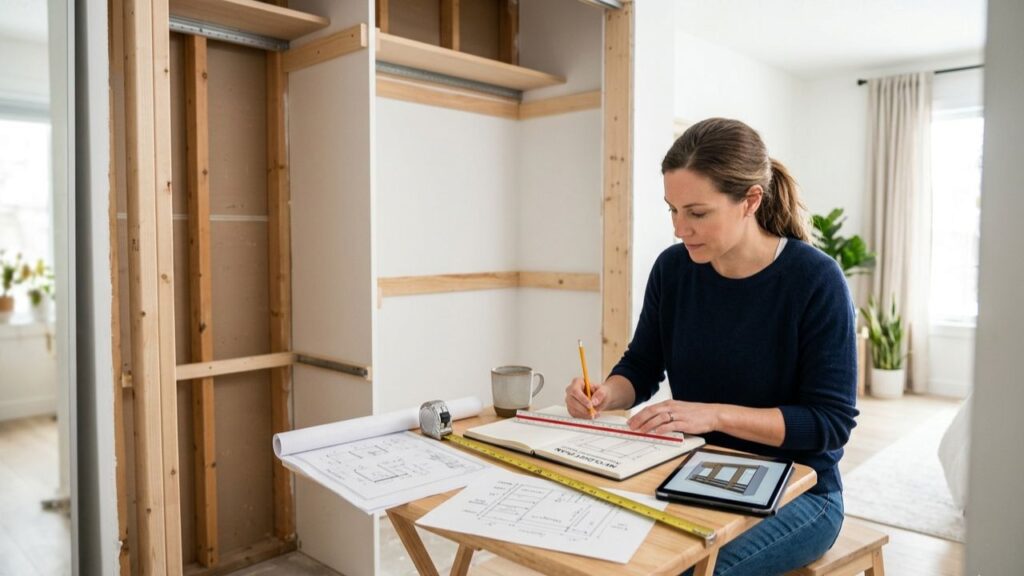
Measure Twice, Plan Once
Before you fall in love with an inspiration photo on Pinterest, get precise measurements of your space. You’ll need:
- Total width, height, and depth of the closet
- The location of outlets, vents, and light fixtures
- Door swing direction and clearance requirements
- Ceiling height, including any soffits or beams
These dimensions are the foundation of a shelving plan that actually works. A professional designer will typically visit your home and measure everything accurately before drawing up a single concept which is exactly the approach taken at Custom-Closets, where a free in-home consultation is the starting point for every project.
Define Your Storage Needs by Category
One of the most effective custom closet ideas is to inventory your belongings before designing your shelves. Sort everything into categories:
- Hanging garments (long, short, folded)
- Folded items (sweaters, jeans, t-shirts)
- Shoes and accessories
- Bags, bins, and boxes
- Seasonal or rarely used items
Once you know what you’re storing, you can allocate the right type and amount of shelf space for each category. This prevents the classic mistake of building a system that looks beautiful but doesn’t actually fit what you own.
Choose the Right Shelf Depths
Shelf depth varies depending on what you’re storing:
- Clothing and accessories: 12–16 inches deep
- Shoes (angled or flat): 10–14 inches deep
- Folded jeans or sweaters: 14–16 inches deep
- Hanging rod sections: 20–24 inches deep
Getting these dimensions right is the difference between shelves you’ll actually use and shelves that collect clutter.
The Best Custom Closet Ideas for Built In Shelving
1. The Hybrid System: Mix Hanging and Shelving Zones
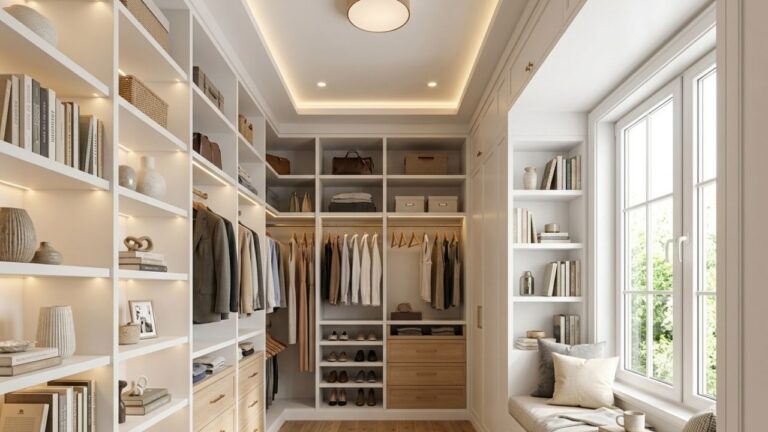
The most versatile walk-in closets combine multiple storage types in a single footprint. Think double-hang rods for shirts and jackets on one wall, open shelving for folded items on another, and a floor-to-ceiling shelving tower for shoes and accessories at the end.
This hybrid approach is one of the most popular custom closet ideas because it accommodates virtually every wardrobe type and grows with your needs over time.
2. The Floor-to-Ceiling Build-Out
If your goal is maximum storage capacity, building shelves all the way to the ceiling is a game-changer. Upper shelves (above 72 inches) are ideal for seasonal storage, luggage, and rarely accessed items. Lower zones handle daily-use items at eye and hand level.
Adding a library-style rolling ladder transforms this from utilitarian to genuinely stunning.
3. Built In Shelves with Integrated Drawers
Incorporating pull-out drawers into your built in closet shelves gives you the best of both worlds the visibility of open shelving and the concealment of drawer storage. Use drawers for undergarments, socks, accessories, and anything that benefits from being grouped and hidden.
A well-designed drawer section also reduces visual clutter, which makes even a small closet feel calmer and more spacious.
4. The Island or Center Console
For larger walk-in closets, a freestanding or built-in center island adds significant storage while creating a boutique dressing room feel. Islands can include drawers, open shelving below, and a flat surface on top for laying out outfits or displaying jewelry.
This is one of those custom closet ideas that truly transforms the experience of getting dressed every day.
5. Reach-In Closet Maximizers
Reach-in closets the narrow, door-front style found in most bedrooms and hallways are often undersized, but they’re rarely maximized. A well-planned built-in system for a reach-in might include:
- Double-hang sections for shirts and folded pants
- A dedicated shelf-and-drawer tower for folded items
- Door-mounted organizers for accessories
- Adjustable shelving to accommodate changing needs
The result is a small space that works hard enough to rival a much larger closet.
Custom Closet Shoe Shelves: A Dedicated Section for Footwear
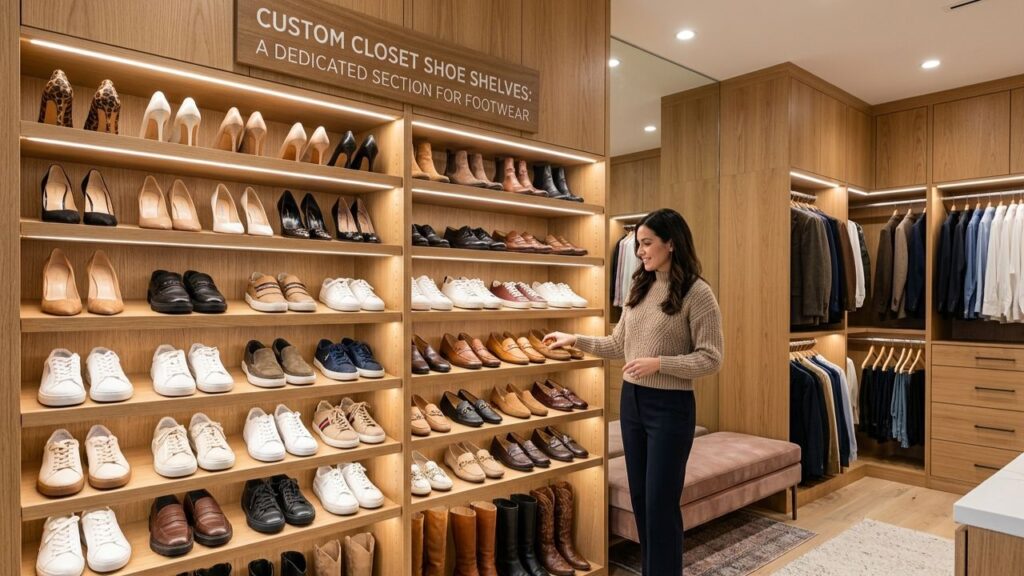
If shoes are your passion or even just a practical necessity dedicated custom closet shoe shelves deserve their own planning section. Generic shelving rarely does justice to a shoe collection.
Angled Shoe Shelves
Angled shelving, typically set at 15–25 degrees, displays shoes face-forward, making it easy to see every pair at a glance. This display-style design works especially well in walk-in closets where the shoe section acts as a showpiece.
Flat Shoe Shelves
Flat shelves are more versatile they accommodate boots, sneakers, and boxes alongside heeled shoes. Standard spacing of 6–8 inches between shelves works well for most footwear, while 10–12 inches between shelves handles taller boots.
Pull-Out Shoe Drawers
For a sleek, concealed look, pull-out shoe drawers slide forward to reveal pairs stored at a slight downward angle. These are ideal for high-end shoe collections where dust protection and display are equally important.
Floor-Level Shoe Storage
The floor of your closet is prime real estate for shoes. Built-in low shelving or angled cubbies at floor level maximizes this often-wasted zone without disrupting the clean sightlines of upper shelving.
The Rotating Shoe Tower
For serious collectors or tight spaces, a 360° rotating shoe tower can store dozens of pairs in a small footprint. This feature-forward option has become one of the most requested luxury additions in high-end walk-in closet builds.
Pro tip: When planning custom closet shoe shelves, always measure your tallest pair of heels and your bulkiest pair of boots. Design your shelf spacing around those extremes, and everything else will fit comfortably.
Laundry Room Shelves: The Often-Overlooked Storage Opportunity
The laundry room is one of the most functional spaces in a home and one of the most neglected when it comes to organization. Laundry room shelves can transform a cramped, chaotic utility room into a clean, efficient workspace.
Above-Washer and Dryer Shelving
The wall space above your washer and dryer is ideal for built-in shelving. This zone is perfect for:
- Detergent, fabric softener, and laundry supplies
- Spray bottles, stain removers, and cleaning products
- Folding bins and mesh bags
Deep shelves of 16–20 inches allow you to store bulky items without reaching awkwardly. Adding cabinet doors above the shelves keeps the space looking tidy even when it’s full.
Wall-to-Wall Laundry Shelving
For larger laundry rooms, a wall-to-wall built-in system creates a cohesive look while maximizing every inch. Include a mix of open shelving, closed cabinets, and a countertop surface for folding laundry and suddenly the task doesn’t feel like a chore.
Vertical Drying and Hanging Rods
Integrating a pull-out or fold-down hanging rod into your laundry room shelves adds function that a standalone shelf simply can’t match. Use it for air-drying delicates, hanging freshly ironed shirts, or staging outfits.
Laundry Room with Built-In Hamper Sections
Built-in shelving with pull-out hamper compartments solves the perennial problem of laundry piles on the floor. Dedicate separate sections to lights, darks, and delicates for a sorting system that practically runs itself.
The laundry room is a space where the right built in shelves pay dividends every single day not just when you’re getting dressed. Custom Closets regularly integrates laundry room storage into whole-home organization projects, designing systems that connect seamlessly with adjacent mudrooms, garages, and hallways.
Materials and Finishes for Built In Closet Shelves
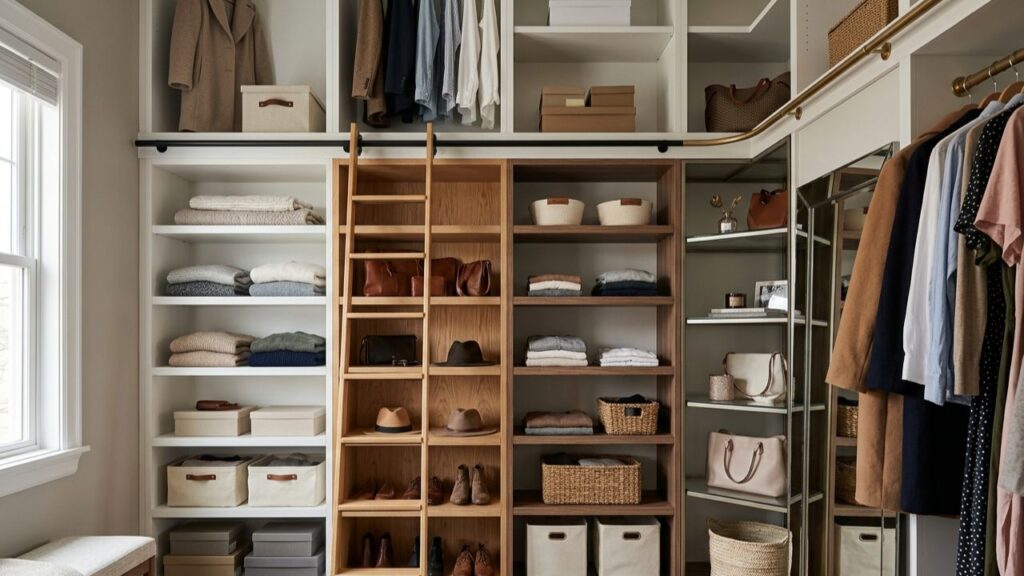
The material you choose affects not just aesthetics, but durability, weight capacity, and long-term satisfaction.
MDF with Thermofoil or Painted Finish
MDF (medium-density fiberboard) is the industry workhorse for built-in cabinetry. It’s smooth, paintable, and highly consistent perfect for clean, modern, or transitional styles. High-gloss thermofoil wrapping creates a sleek look that’s easy to wipe clean.
Solid Wood
For a warm, luxury aesthetic, solid wood shelving is unmatched. Hardwoods like maple, walnut, and oak bring natural character to walk-in closets and home offices. Solid wood is heavier and more expensive, but it holds weight beautifully and improves with age.
Melamine-Coated Panels
Melamine is durable, moisture-resistant, and available in dozens of colors and woodgrain patterns. It’s a cost-effective option that doesn’t sacrifice quality commonly used in high-volume residential closet builds for its balance of performance and value.
Wire Shelving: When It Makes Sense
Wire shelving is breathable, lightweight, and budget-friendly. It works well in utility closets, linen closets, and laundry rooms where airflow is beneficial. However, it lacks the structural elegance of wood-based built-ins and doesn’t suit display-oriented spaces.
The ROI of Built In Closet Shelves: More Than Just Organization
Homeowners sometimes hesitate at the cost of custom built-ins until they consider the return. Well-designed built in closet shelves consistently increase home value. Real estate professionals frequently cite updated closet systems as a selling point that attracts buyers and supports higher asking prices.
Beyond resale, the daily return on investment is significant:
- Time saved getting ready every morning
- Stress reduced from knowing where everything is
- Clothing protected from overcrowding and improper storage
- Space reclaimed from inefficient or broken storage solutions
A custom closet isn’t a luxury expense it’s a practical investment that pays back every day you use it.
How to Work with a Professional Custom Closet Designer
If you’re ready to move from inspiration to installation, here’s what to expect from a professional design process:
Free Consultation: A designer visits your home, takes measurements, and listens to your needs, wishlist, and budget.
3D Design Rendering: Using professional design software, your new built-in system is rendered in three dimensions so you can visualize exactly what it will look like before anything is built.
Material and Finish Selection: Choose from a curated range of materials, colors, hardware, and accessories to match your style and home’s aesthetic.
Precision Fabrication: Your shelving is built to exact specifications using premium materials not adapted from generic stock.
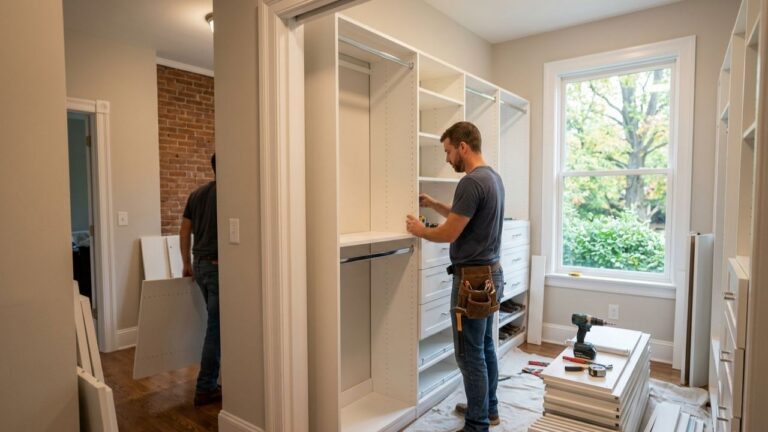
Professional Installation: Experienced installers fit your new built-ins precisely, leaving the space clean, finished, and ready to use.
This is the experience that homeowners across Louisville, KY enjoy with Custom Closets design a locally owned team with a track record of five-star results.
Conclusion
From the master walk-in to the laundry room, built in closet shelves are the single most impactful upgrade you can make to your home’s storage and livability. They’re not just about organization they’re about creating spaces that feel calm, functional, and genuinely yours.
Whether you’re drawn to floor-to-ceiling shelving towers, custom closet shoe shelves that showcase your collection, or a laundry room transformation that makes chores less painful, the key is professional design that starts with your specific space and needs.
If you’re in Louisville, KY or the surrounding Kentuckiana area, Custom-Closets is ready to help you turn any closet into a storage solution you’ll love. With a free consultation, 3D design rendering, premium materials, and expert installation, the team brings every custom closet idea to life with precision and craftsmanship.
Ready to upgrade your space? Book your free design consultation today and take the first step toward a home that’s as organized as it is beautiful.
FAQs
A built-in closet shelf is a specific structural element shelving anchored permanently to walls or frames. A custom closet system is the broader design that includes shelves, rods, drawers, and accessories as a complete solution. Most custom closet projects include built-in shelving as a core component.
Many professional systems are designed with adjustable shelf pins or tracks, allowing you to move shelf heights as your needs change. A good designer will build flexibility into the system from the start.
Yes. Updated closet storage is consistently cited by real estate agents as a feature that attracts buyers and supports higher offers. Primary bedroom closet systems and organized laundry room shelves are particularly valued.
For humid environments, moisture-resistant materials like melamine-coated panels or thermofoil-wrapped MDF are ideal. Solid wood can be used with the right finish, but it requires more maintenance in high-humidity areas.
The easiest first step is booking a free in-home consultation with a professional designer. They’ll measure your space, understand your needs, and give you a clear picture of what’s possible and what it’ll cost before you commit to anything.

2 Comments
References:
Poseidon Casino Login https://s3.amazonaws.com/new-casino/Quickwin-Casino-Test.html
References:
Vegaz Casino Bonus ohne Einzahlung https://diesel-pro.ru