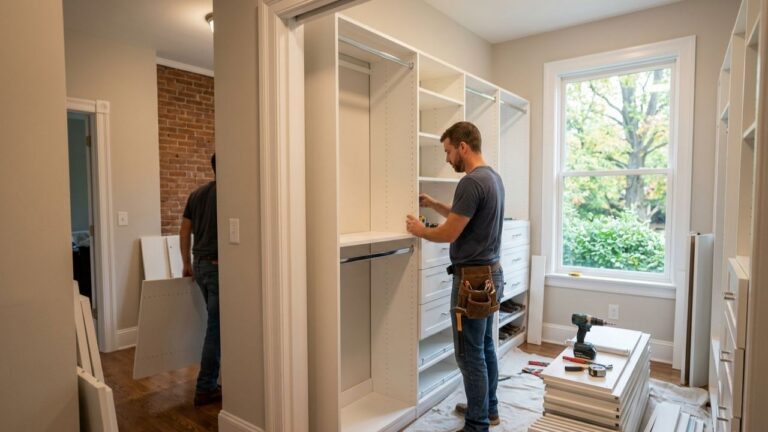
Does opening your closet door feel like bracing for an avalanche? You’re not alone. Millions of homeowners and renters deal with cramped, chaotic closets every single day and the frustration is real. The good news? You don’t need a massive walk-in wardrobe or an expensive renovation to get things under control. With the right small closet organization ideas, even the most modest space can become a functional, stress-free storage zone.
Whether you’re working with a narrow reach-in closet, a shared closet squeezed between two people’s wardrobes, or a basic bedroom closet that hasn’t been touched in years, this guide covers everything you need to transform it. We’re talking smart layouts, clever products, and proven strategies that professional organizers and closet designers actually use.
Why Small Closet Organization Matters More Than You Think
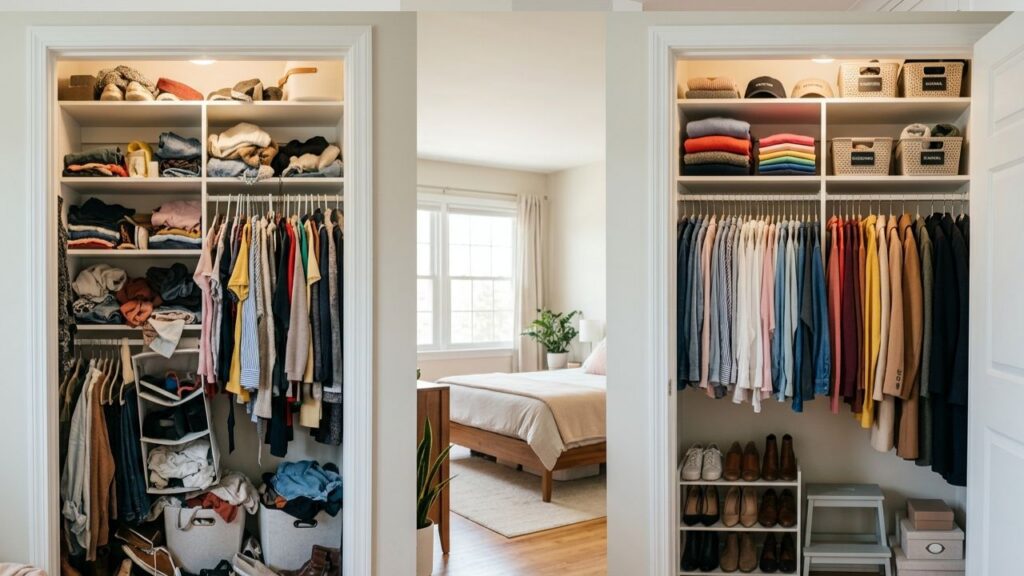
Before jumping into the solutions, it’s worth understanding what poor closet organization is actually costing you. Studies in behavioral psychology consistently show that cluttered, disorganized spaces elevate cortisol levels the body’s primary stress hormone. In plain terms, a messy closet can start your morning on the wrong foot before you’ve even gotten dressed.
Beyond the mental load, disorganized closets lead to real practical problems:
- Wasted time hunting for the right outfit or item
- Damaged clothing from overcrowding wrinkles, stretched fabrics, lost items
- Wasted money buying duplicates of things you already own but can’t find
- Reduced home value buyers and renters notice closet functionality
The goal of great closet organization isn’t perfection. It’s a system that works consistently for your lifestyle, your wardrobe, and your space constraints.
Declutter Before You Organize Anything
This sounds obvious, but it’s the step most people skip and then wonder why their “organized” closet feels cluttered again within two weeks.
Before you buy a single shelf, rod, or drawer, pull everything out of your closet. Everything. Lay it on your bed and sort into three categories:
- Keep items you wear regularly and love
- Donate/Sell items in good condition you haven’t used in 12+ months
- Discard damaged, worn-out, or truly unusable items
A harsh truth that professional organizers will tell you: the average person only regularly wears about 20% of their wardrobe. Organizing around 100% of what you own including that blazer from 2019 and the shoes that never fit right is why most closet systems fail. Declutter first. Organize second.
The Best Small Closet Organization Ideas by Closet Type
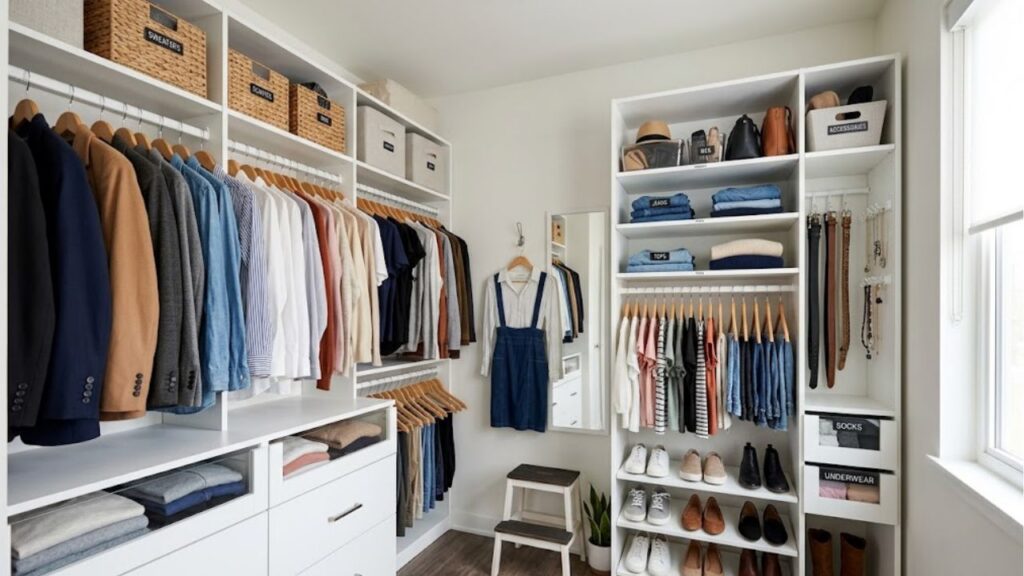
Reach-In Closet Organization Ideas: Maximizing a Shallow Space
Reach-in closets are the most common type found in bedrooms, hallways, and entryways across American homes. They’re typically shallow (around 24 inches deep), anywhere from 3 to 6 feet wide, and come with one standard hanging rod. That single rod is almost always a waste of potential.
Here are the most effective reach in closet organization ideas to unlock that space:
Double your hanging space with a double-hang rod system. Most clothing shirts, blazers, folded pants, jackets doesn’t need more than 40 inches of vertical hanging space. By adding a second rod below the first, you can double the hanging capacity in the same footprint. This is one of the highest-impact changes you can make with minimal cost.
Use the full height of the closet. Most reach-in closets have wasted space above the top shelf and below hanging clothes. Install a high shelf for seasonal items, luggage, or rarely-used boxes. Add a low shelf or a small dresser beneath shorter hanging clothes to capture that floor real estate.
Add slim-profile shelving on the sides. The side walls of a reach-in closet are often completely bare. A set of narrow side-wall shelves (6–8 inches deep) can hold shoes, folded sweaters, bags, or accessories without eating into the central hanging area.
Swap bulky hangers for slim velvet ones. Standard plastic hangers are typically 2–3 inches thick. Slim velvet hangers are about half an inch. Switching your entire wardrobe over can free up 30–40% more rod space instantly. No new furniture required.
Install a door organizer. The back of a closet door is one of the most underused surfaces in any home. Over-the-door organizers with pockets or hooks can hold shoes, accessories, cleaning supplies, or folded items without taking up any interior space.
Shared Closet Organization Making One Closet Work for Two People
If you share a closet with a partner, roommate, or family member, you already know the unique challenges this brings. Different clothing sizes, different organizational styles, different amounts of stuff it can create real friction if the closet isn’t set up thoughtfully.
Effective shared closet organization comes down to three core principles: clear zones, equal access, and honest negotiation.
Divide the space clearly and fairly. Whether your shared closet is a reach-in or a larger built-in, start by physically dividing it into distinct sides or zones. Each person gets their defined space not approximately, but clearly. Use a visual divider on the hanging rod if needed. Clear boundaries reduce daily friction enormously.
Audit space allocation honestly. One of the most common shared closet problems is an imbalance in space that’s never been addressed. One person has gradually expanded while the other has been silently crowded out. Take stock of how much hanging space, shelf space, and floor space each person is using and have an honest conversation if it’s unequal.
Use different storage formats to suit different wardrobes. If one person has mostly hanging clothes and the other has mostly folded items, a one-size-fits-all rod-and-shelf setup won’t work well. A modular closet system lets you configure each side with the storage types that actually match each person’s wardrobe more drawers and shelves on one side, more double-hanging on the other.
Create a “shared zone” for overlap items. Shared accessories, off-season items, or things you both use (like workout bags or extra blankets) can have their own dedicated zone rather than competing for personal space. Labeling this zone clearly helps prevent it from becoming a dumping ground.
Invest in matching storage containers. Visual consistency makes a shared space feel calmer and more intentional. When both people’s sections use coordinated bins, baskets, and boxes even if the contents are organized differently the whole closet feels more cohesive and easier to maintain.
Small Bedroom Closet Organization: Room-Specific Strategies
Bedroom closets carry the heaviest organizational burden in most homes. They hold not just clothing, but often shoes, accessories, bags, extra bedding, and a collection of miscellaneous items with nowhere else to go.
Here are targeted closet organization ideas for small bedroom closets:
Zone your closet by category, not just type. Instead of grouping everything by type (all shirts together, all pants together), try organizing by outfit context. “Work outfits,” “Weekend wear,” and “Special occasion” groupings can make getting dressed faster and reduce decision fatigue especially in a small space where everything needs to work harder.
Use clear storage bins for the top shelf. Opaque bins on high shelves become black holes where things disappear. Clear bins let you see what’s inside at a glance, and labeling them adds another layer of clarity. Reserve the top shelf for things you use occasionally seasonal clothing, formal accessories, spare linens.
Maximize shoe storage creatively. Shoes are closet space killers. Standard shoe racks work, but there are more creative solutions for tight spaces. Over-the-door shoe pockets, angled shoe risers that let you store pairs front-to-back, clear stackable shoe boxes, and toe-to-heel alternating stacking on shelves can all dramatically increase how many pairs fit in the same footprint.
Use vertical dividers for clutches, bags, and folded items. Vertical dividers on shelves prevent stacks of folded clothes or bags from toppling and make it easy to grab one item without disturbing the whole pile. They’re inexpensive and make a visible difference.
Hall Closet and Linen Closet Organization Ideas
Not all small closets are necessarily a wardrobe. Hall closets and linen closets are unique areas that pose their own organizing problems, generally with many items that are oddly shaped, shared family use, and prone to becoming “catch” closets.
For linen closets: Organize by type (bed linens, bath towels, washcloths) and by the size of the bed (if applicable). Keep stacks from falling down with shelf dividers. Full sets of sheets are kept in one of their pillowcases so that the set remains together and takes up less space. Fill lower shelves with products with out-of-the-ordinary shapes, such as baskets for cleaning supplies, toiletries, first-aid products.
Hall closets: These may be used for coats, shoes, bags, cleaning supplies, games, and much more. The important thing is to think vertically. Hang coats and long objects up with a high coat rod. Include a shoe or basket rack below. Hang bags and accessories on the inside walls using hooks. A cart that rolls on a narrow wheelbase can fit into tight floor areas, and provide a considerable amount of capacity.
Smart Storage Products That Transform Small Closets
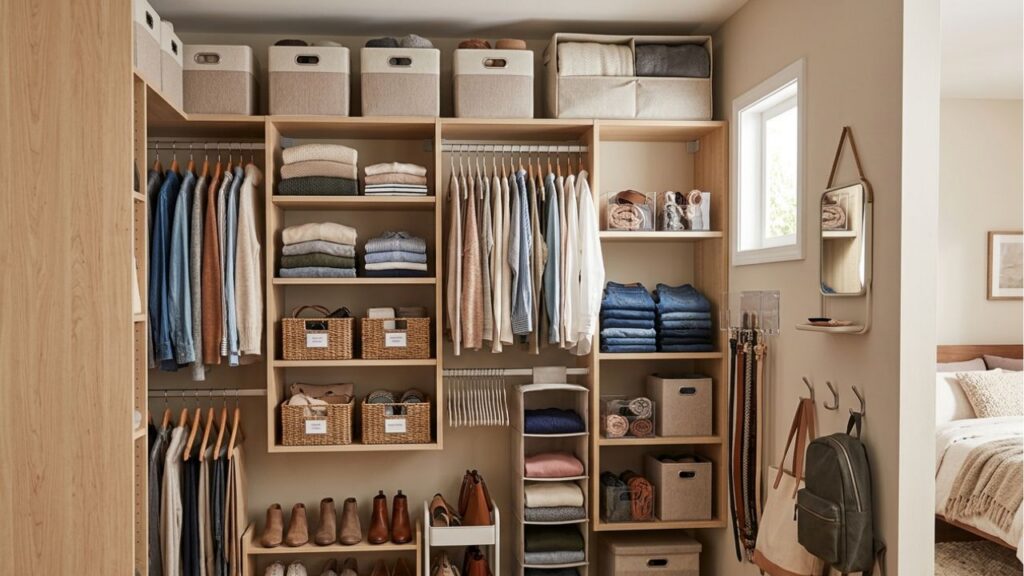
You don’t have to spend thousands on a custom closet renovation to see dramatic results. These are the highest-impact products for small closet organization:
- Adjustable modular shelving systems: Far more flexible than fixed shelves, these let you reconfigure as your needs change
- Slim velvet hangers: The single cheapest way to reclaim rod space
- Over-the-door organizers: Unlocks the most ignored storage surface in the closet
- Clear stackable shoe boxes: Protect shoes, stay visible, and stack neatly
- Shelf dividers: Prevent the “folded tower collapse” that undoes all your hard work
- Drawer organizers and small bins: Essential for accessories, jewelry, ties, and belts
- Vacuum storage bags: Game-changing for seasonal clothing and extra bedding
- Hooks and adhesive wall organizers: Add capacity on side walls and door frames without tools
How a Custom Closet System Changes Everything
It is important to see the difference between making use of the limitations of the closet as they are and creating a closet system to your life. There are off-the-shelf organisers, which are good for the average person, but not your wardrobe, not your space, not how you dress every day in the morning.
A well-designed custom closet begins with the actual dimensions of your closet, the amount of clothes you actually have, and the habits of your life. So no wasted vertical space, no awkward gaps, no shelves that are the wrong length for the contents. Everything is intentional.
For small closets specifically, custom solutions can include:
- Floor-to-ceiling configurations that capture every inch of vertical height
- Mixed storage zones that combine hanging, shelving, and drawers in exactly the right proportions for your wardrobe
- Built-in lighting to eliminate the frustration of reaching into dark corners
- Pull-out accessories like tie racks, belt hooks, and jewelry drawers that hide away cleanly when not in use
- Custom depth shelving for shoes, bags, and folded items that standard systems never quite accommodate
If you’ve been struggling with the same closet problems for years despite trying product after product, a custom system is often the clearest path to a closet that genuinely works not just looks organized for a week.
Maintaining Your Organized Closet: The Habits That Actually Stick
The best closet organization system is useless if you don’t have a few maintenance tips. The truthful thing is:
The “one in, one out” rule.” As something is added to the closet, something else is removed. This one “bad habit” is the cause of the slow slide back to overcrowding that defies most organizational efforts.
Seasonal rotation. People usually change their clothes between spring and fall twice a year, putting the winter and summer clothes away from each other. Vacuum bags or bins on high shelves are suitable. This way you have just what you are going to wear in the season in your active closet.
Monthly 15 minute reset. Closets drift. Shoes can get out of their place, hangers go on flying, and folded stacks fall over. A fast monthly reset (not a deep clean) helps things from getting too big to handle.
Always put away what you put out. This is easy but not necessarily straightforward. The one biggest maintenance habit is putting things away.
Conclusion
A small closet doesn’t have to be a bad closet. Even the tiniest closet can be transformed and make sense in your life with the right small closet organization ideas, from clever product choices to a fully customized storage system.
Regardless of closet size, the basic rules remain the same: Clutter first, put everything up high, organize by what works for your life, and establish simple habits that will help keep it in check from getting back to hell.
When you’re thinking about organizing a reach-in closet in the small bedroom, or struggling with a shared closet with your partner, or simply in need of some practical tips for organizing your closet in a way that will make your mornings less stressful, the road ahead becomes clearer than the one you’re on in front of that open door now.
If you’re ready to go beyond off-the-shelf solutions and build a closet system designed specifically for your space and your life, explore the full range of custom closet options at custom closets. From reach-in configurations to full shared wardrobe systems, the team there specializes in turning small, underperforming closets into spaces you’ll actually love opening every morning.
FAQs
How do I start organizing a small closet if I’m overwhelmed?
Start with one simple action: pull everything out and create three piles — keep, donate, and discard. Don’t organize until you’ve decluttered. Once you know what you’re working with, the right organization system becomes much clearer.
What’s the cheapest small closet organization upgrade with the biggest impact? A: Switching to slim velvet hangers is inexpensive and immediately reclaims 30–40% of rod space. Pair that with an over-the-door organizer and you’ve made a dramatic improvement for well under $50.
Q: How should I organize a shared closet when one partner has significantly more clothing? A: First, have an honest conversation about space allocation — both people deserve a functional zone. Consider external storage solutions (a small dresser or wardrobe in the bedroom) to offload the overflow rather than having one person perpetually cramped. A custom closet system designed for the actual wardrobe volumes of both people is the cleanest long-term solution.
Q: Can I organize a small closet without drilling or permanent changes — for renters? A: Yes. Freestanding modular shelving, over-the-door organizers, tension rod shelf dividers, and adhesive hooks all create significant organizational capacity without any permanent modifications. Many renters are surprised by how much capacity they can unlock without touching a wall.
Q: How often should I reorganize my closet? A: A thorough reorganization once or twice a year (aligned with seasonal wardrobe rotation) keeps most closets functioning well. Between those sessions, a quick 15-minute reset once a month prevents small drifts from compounding into a major problem.