
I’m not the only one that finds myself in a pantry cabinet reminiscent of a game of Jenga the next time I open the door and find the spice jars toppled over or the snacks buried under a forgotten bag of rice. There’s a reason that pantry cabinet organization is one of the most searched home improvement topics: a well-organized pantry looks great, but it actually impacts how you live day to day.
From a deep walk-in pantry to a single pull out cabinet in a galley kitchen, the right organization system will turn chaos into calm. And the good news? No need to do a complete kitchen renovation or to drop a lot of cash. But with the right approach, and the right custom storage solutions, even the most cramped pantry can be a model of efficiency.
We will go over some successful strategies for organizing pantry cabinets, brainstorm some ideas for closets, garages, and places of display, and provide you with a step-by-step outline for a more organized home.
Why Pantry Cabinet Organization Matters More Than You Think
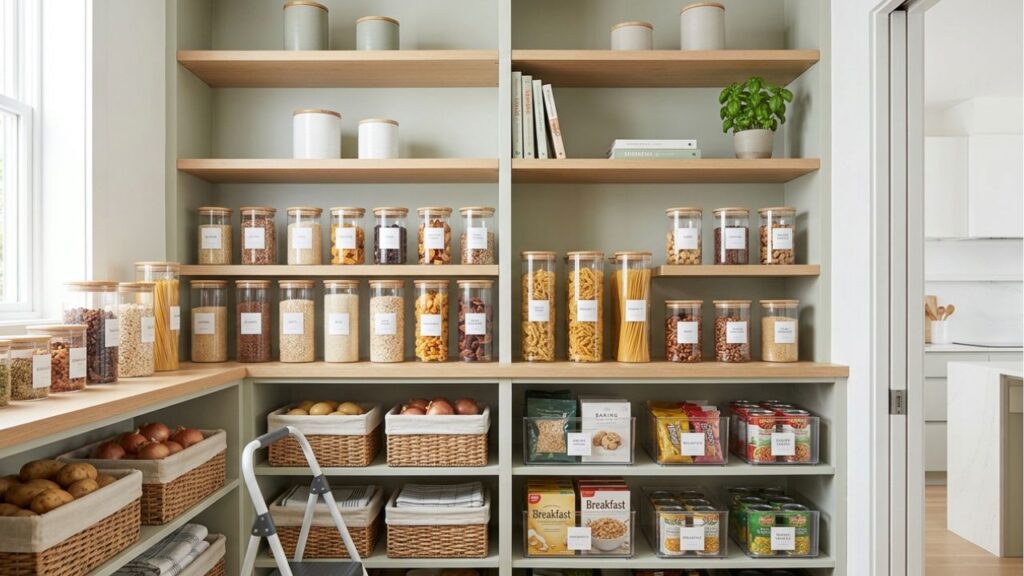
A lot of people are not aware of the expense of a disorganized pantry. How many times have you purchased something that was a duplicate when you could not find the one that you already had? How many times has food been wasted, due to it being shoved to the back?
An orderly pantry cabinet is the one that will help you save money, minimize food waste, save time during meal preparation and, let’s be honest, keep you from getting stressed out. Cluttered environments have been proven in studies to raise cortisol levels over and over. Your kitchen pantry has a huge impact on your everyday mental burden, yet it takes up little room in your cabinet.
The beautifully organized pantry has actually turned into a real beauty. The design of the containers, labelled shelves and careful arrangement of the materials are also part of the interior design.
Start with a Full Pantry Audit
Before you buy a single bin or label maker, pull everything out.
This step feels tedious, but it’s essential. Here’s what to do during your pantry audit:
- Check expiration dates: and toss anything past its prime
- Group items by category: baking supplies, canned goods, grains, snacks, condiments, oils
- Note what you use most: those items belong front and center
- Measure your shelves: depth, height between shelves, and total width
Most people are surprised to discover they’ve been storing things they don’t use and running out of space for things they do. The audit gives you a clear picture before you invest in any organizational tools.
Choose the Right Pantry Cabinet Organization System
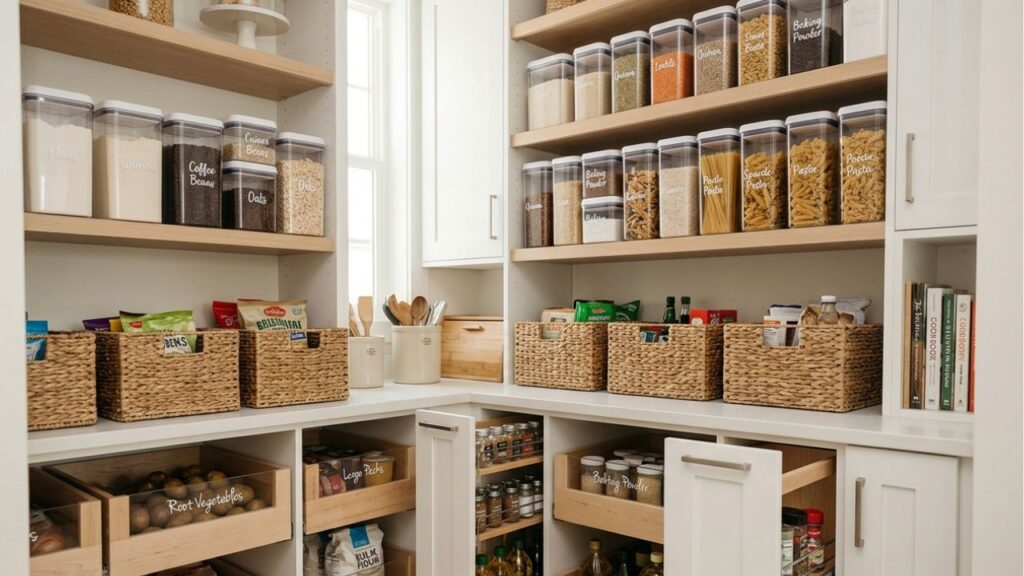
Not all pantry organization systems are created equal. The right system depends on your cabinet’s dimensions, your household’s eating habits, and your personal style.
Adjustable Shelving
The No. 1 enemy of well-organized pantry cabinets is the fixed shelf. Replace immobile shelving with moveable shelving. A few inches up and down can mean a lot of flexibility, a shelf that couldn’t fit a cereal box now has room for your tallest appliances.
One of the biggest benefits of choosing to go custom over store-bought insert pantry cabinets is the fact that specialists such as custom closets will use adjustable shelving as standard for the cabinets.
Put a pull-out drawer or slide-out shelf in your kitchen cabinets.
The most neglected area of organizing the pantry is the “dead zone” at the back of the deep shelves where things go. By pulling, you are able to see and reach any object, even the very back objects.
This is particularly useful for the lower cabinets, where a person would be squinting down in the dark and would not be able to bend over to retrieve the item.
Door-Mounted Storage
The inside of your pantry cabinet door is prime real estate. Over-door organizers, mounted spice racks, and hanging baskets can hold dozens of items without taking up a single inch of shelf space. Spices, oils, small condiment bottles, and frequently grabbed snacks are all ideal candidates for door storage.
Clear Containers and Decanting
Decanting transferring dry goods like pasta, rice, flour, and cereal into clear, uniform containers is probably the single most impactful thing you can do for pantry cabinet organization.
Opt for airtight containers with wide openings for easy scooping. Square and rectangular shapes stack far more efficiently than round ones.
Organize by Zone
One of the most effective principles in pantry cabinet organization is zoning assigning specific areas of the pantry to specific categories of items.
A solid zone layout might look like this:
- Eye level: Most-used items: snacks, coffee, everyday cereals
- Upper shelves: Less-used items: baking supplies, bulk extras, seasonal goods
- Lower shelves: Heavy items large jars, bottles, canned goods, small appliances
- Door: Spices, oils, small condiments, foil, and wraps
- Baskets and bins: Loose items grouped by meal type or family member
The key is to establish a zone and stick to it. Every time you put something away, it goes back to its zone not wherever there’s space.
Smart Closet Organization Ideas to Complement Your Pantry
Once you’ve tackled the pantry, it’s hard not to look at the rest of your home and see similar opportunities. The same principles that make pantry cabinet organization effective zoning, visibility, accessibility apply directly to closet organization ideas throughout your house.
Bedroom Closets
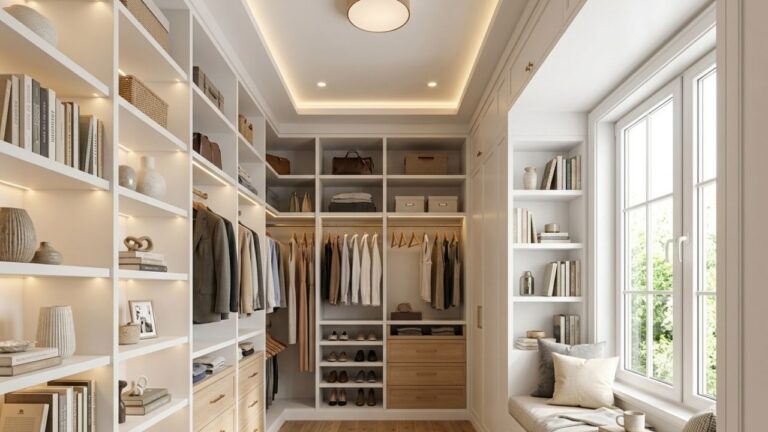
A bedroom closet organized with custom built-ins double hanging rods, dedicated shoe shelving, drawer inserts, and upper storage cubbies works on the same logic as a well-planned pantry. Everything has a place, everything is visible, and you’re not digging through piles to find what you need.
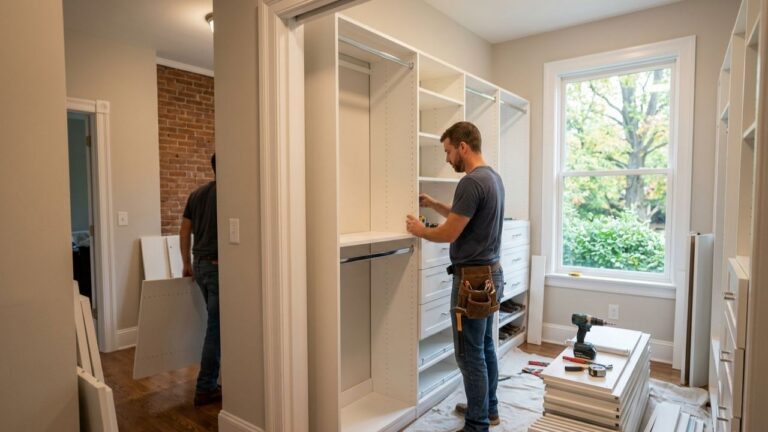
Modern closet organization ideas for bedrooms lean heavily into customization. One-size-fits-all closet systems from big-box stores almost never fit the actual dimensions of your closet or the actual shape of your wardrobe. Custom solutions from companies like custom closets are designed around your specific space and needs.
Linen Closets
Linen closets are chronically underorganized. Shelves that are too deep create dead zones just like pantry cabinets do. Rolled towels in labeled bins, folded sheet sets stored inside their own pillowcase, and tiered shelf risers for smaller items can transform a linen closet from a stuffed mess into an organized, functional space.
Home Office and Utility Closets
These often-neglected spaces can become your home’s most efficient storage areas with thoughtful closet organization ideas: adjustable shelving for supplies, mounted pegboards for tools, and labeled bins for seasonal items.
Garage Cabinet Ideas: Bringing Pantry Logic to the Garage
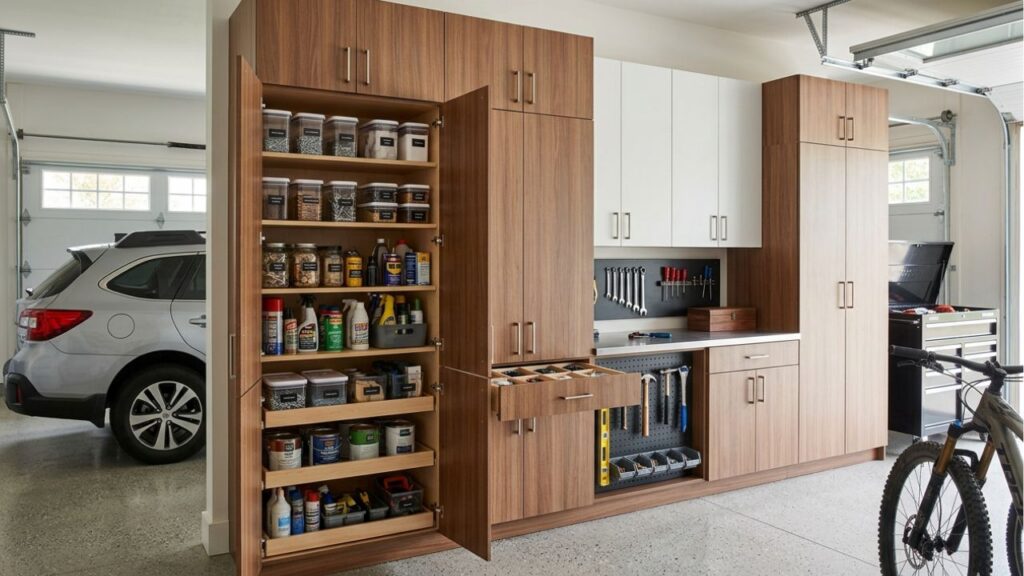
If pantry cabinet organization taught you anything, it’s this: good storage is good storage, regardless of room. Garage cabinet ideas follow the same core principles, just applied to tools, sports equipment, automotive supplies, and seasonal items.
Wall-Mounted Cabinets
Floor-to-ceiling wall cabinets are the pantry of the garage. They keep items off the floor (critical for moisture control and pest prevention), create a clean visual line, and can be organized with the same zone-based approach. Automotive supplies in one cabinet, gardening tools in another, sports gear in a third.
Open Shelving with Bins
For items you grab frequently extension cords, batteries, light bulbs open shelving with labeled bins works beautifully in the garage. The transparency and accessibility mirror what pull-out drawers do in the pantry.
Overhead Storage
Garage ceilings are often wasted space. Overhead storage platforms and ceiling-mounted racks are perfect for seasonal items: holiday decorations, camping gear, luggage. Getting these items off the main floor instantly makes your garage feel more spacious and workable.
Custom garage cabinet systems like those available through custom-closets are built from durable materials designed to withstand temperature fluctuations, humidity, and the heavier loads that come with garage storage.
Display Cabinets for Collectibles: Where Organization Meets Aesthetics
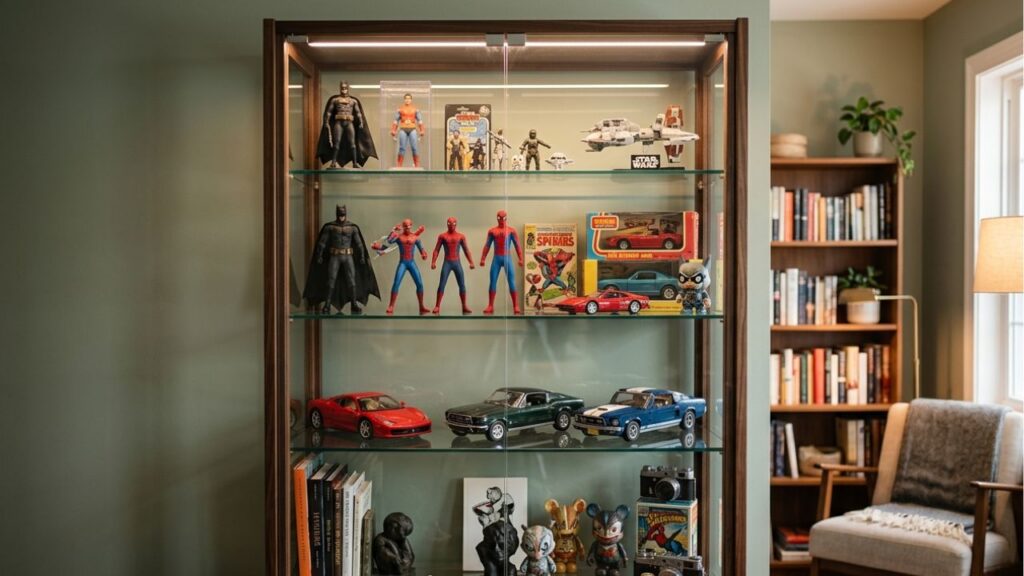
Organization isn’t only about hiding things sometimes it’s about showcasing them. Display cabinets for collectibles represent a beautiful intersection of storage and interior design.
Whether you collect vintage ceramics, sports memorabilia, rare books, action figures, or fine china, the cabinet you choose and how you arrange it matters enormously.
Choosing the Right Display Cabinet
When selecting display cabinets for collectibles, consider:
- Lighting: Built-in LED lighting dramatically elevates how collectibles look and makes the display feel intentional and curated
- Glass doors: Protect items from dust while keeping them visible
- Adjustable shelving: Essential for accommodating collectibles of varying heights
- Locking mechanisms: Important for valuable or fragile items
Arrangement Principles for Collectibles
Even within display cabinets for collectibles, the same zone-based thinking applies. Group items by theme, era, color, or size. Use risers and stands to create visual depth. Leave some empty space overcrowding makes even a beautiful collection look cluttered.
Lighting is the single biggest upgrade you can make. A well-lit display cabinet for collectibles turns a storage piece into a conversation-starting feature of the room.
Common Pantry Cabinet Organization Mistakes to Avoid
Even with the best intentions, pantry organization projects often fall short. Here are the mistakes that trip people up most:
Buying storage products before auditing. Always audit first. You’ll waste money buying organizers for categories you don’t actually need.
Ignoring shelf height. Adjustable shelves are not a luxury they’re essential for efficient use of vertical space.
Mixing categories. Keeping snacks with baking supplies with canned goods creates confusion. Rigid zones prevent the slow drift back into chaos.
Choosing style over function. Pretty glass containers are wonderful, but not if they’re so airtight they’re impossible to open one-handed. Your system needs to be something you’ll actually use every day.
Forgetting the labels. You might know the system right after you build it. Six months later, or when your partner goes to put something away, labels are the difference between a system that holds and one that collapses.
Conclusion
For most home organizers, pantry cabinet organization is the first project on the list of home organization projects and it’s not hard to see why! It’s a place where a lot happens every day that is under control. If you get it right, you’ll do the same for your bedroom closets in your garage, your linen closet, and all of your home’s storage spaces.
The rules remain the same: audit first, then store by zones, make storage visible and easily accessible, and buy a solution that fits your space, not a generic solution that almost fits. Thoughtful plan making is the same for closet organization in the master bedroom, for garage cabinet ideas that are in use, and for beautiful display cabinets to display collectibles you’ve been collecting for years.
Custom design and installation of storage solutions for pantries, closets, garages and more from the team at custom closets . All projects begin with you, your needs and your vision and then ultimately the organization will stand the test of time.
FAQs
A pantry cabinet is a standalone cabinet or a section of cabinetry dedicated to food storage, typically built into or adjacent to the kitchen. A walk-in pantry is a dedicated room or large alcove with shelving on multiple walls. The organization principles are the same zoning, pull-out access, clear containers but walk-in pantries offer significantly more flexibility for shelving layouts and storage capacity.
For most homeowners, yes. Custom pantry cabinets are built to fit your exact space dimensions, which means no wasted inches. They’re also built around your actual storage needs a family of five with young children needs very different organization than a couple who cooks gourmet meals on weekends. The long-term efficiency gains, food waste reduction, and daily time savings make the upfront investment very worthwhile.
Yes full-service custom storage companies like custom closets design and install systems for every room in your home, from pantry cabinets and bedroom closets to garage systems and display cabinets for collectibles. Working with one company means a cohesive design aesthetic throughout your home and a single point of contact for the entire project.
Most custom pantry cabinet installations are completed in a single day, once the design is finalized and materials are ready. The design and fabrication process typically takes one to three weeks depending on the complexity of the project and the company’s schedule.
High-quality melamine or plywood with a melamine finish is the industry standard for pantry and closet cabinetry it’s durable, easy to clean, moisture-resistant, and available in a wide range of finishes. Solid wood is beautiful but can warp in high-humidity environments like kitchens. For garage cabinets, powder-coated steel or heavy-duty melamine is preferred for its ability to handle temperature swings and heavier loads.

1 Comment
68h4hv