
The truth is that a small pantry can feel like the most aggravating room in the house. You open the door, something falls out, you then find the pasta after three minutes and close the door again feeling defeated. Sound familiar?
The fortunate thing is that usually, square footage is not really the issue. The real problem is poor layout, vertical storage space that’s been wasted and storage systems that simply were not designed for the way you live—in most homes, in Louisville, Kentucky and anywhere else.
There are more than just kitchen decor ideas in the right small pantry organization. They can save you time, help minimize food waste, reduce duplicate grocery shopping and can even cut down on stress in your daily life. In 2026, with smarter materials, custom cabinetry options, and a greater understanding of how people are using their kitchen, it’s never been a better time to get it right.
From a tight reach-in pantry to a converted closet to a small butler’s pantry next to your kitchen, this guide offers practical ideas from experts that will fit in real homes, not just Pinterest boards.
The Best Small Pantry Organization Ideas for 2026
1. Go Vertical Your Walls Are Doing Nothing Right Now
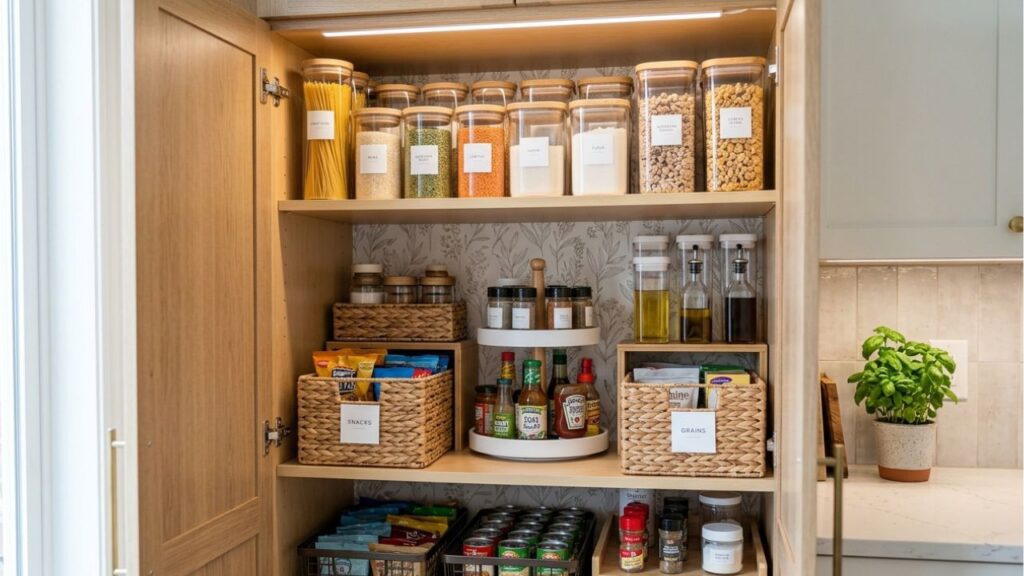
The most critical space in small pantries that is being overlooked is the room above eye level. Most people just start installing shelves at about the 5 foot mark and then just stop at that point, thereby losing the top 25% of the wall.
When space is tight, every inch matters in a small pantry. Flexible shelving solutions from floor to ceiling allow you to store seasonal items, bulk supplies and rarely used appliances up high while everyday items are within easy reach. If your upper shelf is to be used, place it with a small rolling step stool.
TIP: Keep the heavier items on the middle shelves. Extra paper towels, back-up pantry staples, and holiday baking supplies are best stored on upper shelves for the items that are less frequently used and lightweight.
2. Invest in the Right Pantry Cabinet Organization System
One of the most transformative upgrades you can make is moving away from generic wire shelving and into a proper pantry cabinet organization system with purpose-built compartments. This is where custom cabinetry earns its keep.
A well-designed pantry cabinet system typically includes:
- Deep lower drawers for root vegetables, onions, and bulky items that don’t stack
- Shallow upper shelves (around 6–8 inches deep) for canned goods, spices, and small packages
- Pull-out trays or lazy Susans for corner areas or hard-to-reach zones
- Vertical dividers for cutting boards, sheet pans, and muffin tins items that create chaos when stacked flat
- Dedicated spice storage either a pull-out rack built into a cabinet or a mounted rail system on the door
When these elements are custom-fit to your exact pantry dimensions, you eliminate the dead space that generic modular systems always leave behind. At Custom Closets Louisville, every pantry design starts with precise measurements of the actual space not a one-size-fits-most template.
3. Use Door Storage to Double Your Usable Space
The back of your pantry door is essentially a free shelf that most people completely ignore. A well-mounted over-the-door organizer can hold:
- Spice jars and small condiment bottles
- Snack bags and individually packaged items
- Foil, plastic wrap, and parchment paper rolls
- Small cleaning supplies stored separately from food items
For a more polished, built-in look, consider having shallow shelving integrated directly into the door as part of a custom pantry design. This eliminates the slight wobble and limited weight capacity of aftermarket organizers and gives you a system that feels intentional rather than improvised.
4. Decant, Label, and Contain The Holy Trinity of Small Pantry Organization Ideas
If there’s one habit that separates organized pantries from chaotic ones, it’s decanting. Transferring dry goods flour, sugar, rice, oats, pasta, coffee from their original packaging into clear, airtight containers does several things at once:
- It lets you see exactly how much you have at a glance
- It standardizes the shape of your containers so they stack neatly
- It extends shelf life by keeping moisture and pests out
- It makes the space look intentional and calm, not cluttered
Pair decanting with a clear, consistent labeling system. Whether you use a label maker, chalkboard labels, or handwritten tags, the goal is that anyone in your household can find anything without asking you first.
Baskets and bins add another layer of order. Group like items together “breakfast,” “baking,” “snacks,” “pasta and grains” so that when you’re cooking, you go to one zone, pull out the right basket, and everything you need is together.
5. Think in Zones, Not Just Categories
Zoning is one of the most underused strategies in home pantry organization, and it’s borrowed directly from professional kitchen design. The idea is simple: arrange your pantry so that items are grouped by when and how they’re used not just by what they are.
A practical zone breakdown for a small pantry might look like:
- Morning zone (eye level, near the front): coffee, tea, cereal, oatmeal, breakfast bars
- Cooking zone (middle shelves): oils, vinegars, canned tomatoes, broths, dried herbs and spices
- Baking zone (lower shelves or a dedicated drawer): flour, sugar, baking soda, chocolate chips, extracts
- Snack zone (accessible to kids if applicable): granola bars, crackers, dried fruit
- Backup stock zone (high shelves): duplicate pantry staples waiting to replace depleted items
This zone-based approach makes the pantry feel intuitive. You reach for what you need without thinking, and putting groceries away becomes automatic rather than a decision-making exercise.
Pantry Organization Ideas That Connect to the Rest of Your Home
Lessons from Closet Organization That Apply Perfectly to Pantries
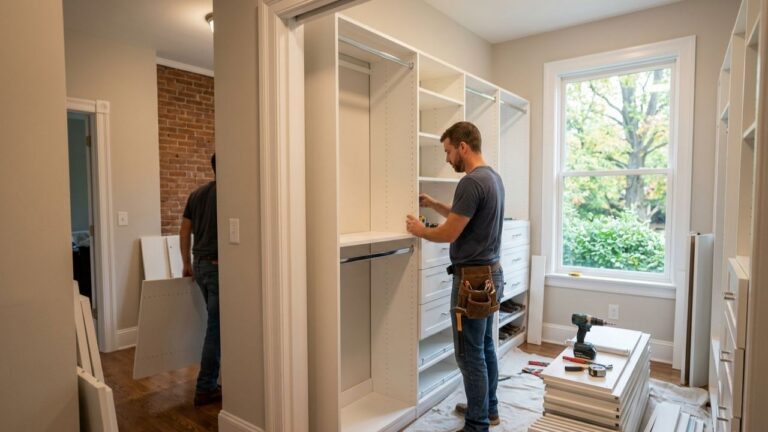
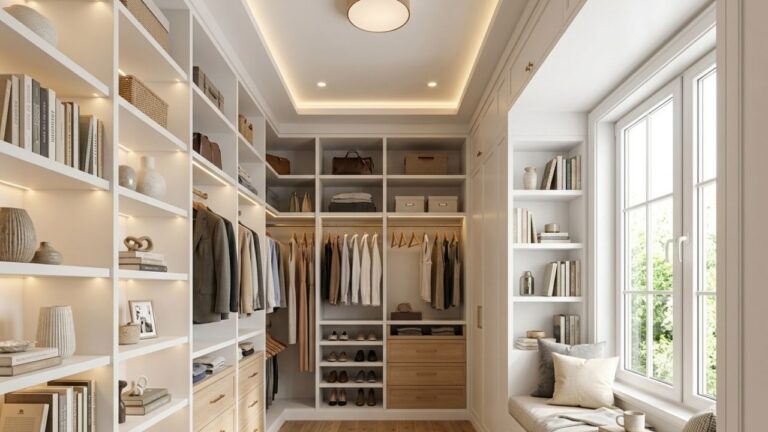
Here’s something professional organizers and custom storage designers know well: the same principles that make closet organization ideas effective translate almost perfectly to pantry design. In both spaces, you’re solving the same fundamental problems limited square footage, items of wildly different shapes and sizes, multiple users with different habits, and a need to find things quickly under pressure.
From closet design, we borrow:
- The “prime real estate” principle the zone from hip height to eye level is the most accessible. Reserve it for your most-used items, just as you would for everyday clothing in a wardrobe.
- The rotation system in a wardrobe, seasonal items go to the back. In a pantry, newer purchases go behind older ones (FIFO first in, first out) to ensure nothing expires forgotten in the back.
- Drawer inserts and dividers popular in bedroom closets for organizing accessories, these work equally well in pantry drawers for separating snack packets, tea bags, and small packets of dry goods.
If you’ve ever worked with a custom closet designer and marveled at how much more space suddenly seemed available, the same transformation is entirely possible in a pantry often with even more dramatic results, because pantries tend to be among the most under-optimized spaces in a home.
What Display Cabinets for Collectibles Taught Us About Visibility
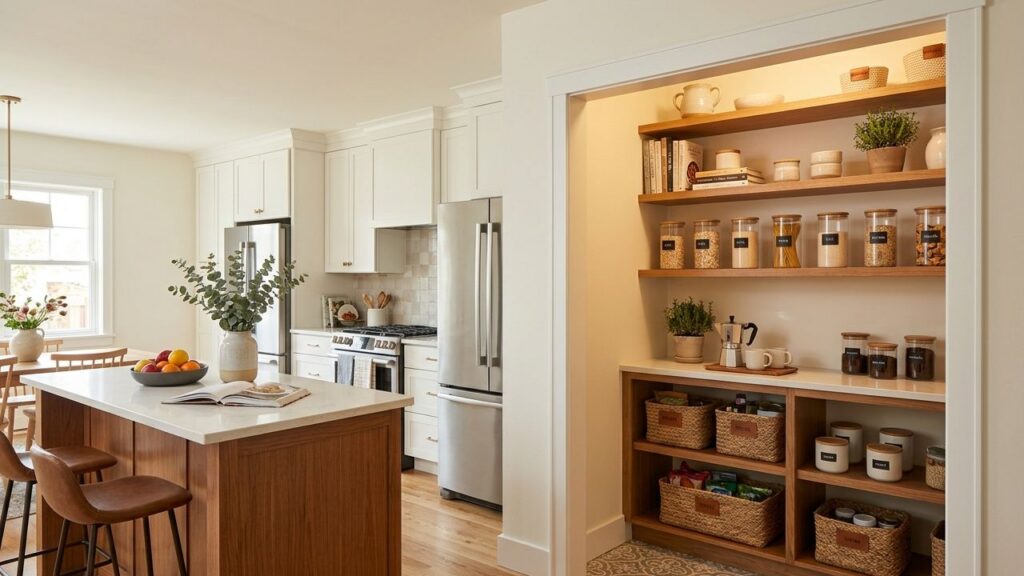
This may sound like a stretch, but hear me out, the design ideas that apply to display cabinets for collectibles apply to interior lighting, organized spacing between shelves, and pantry design as well: a curated pantry instead of a cramped one.
If your pantry is a show place, not a dumping ground, then your organization changes. Clear containers are now the norm. Frequent wiping of shelves. Objects are returned to their correct location. The image order is supporting the behavioural order.
That’s why modern luxury custom pantry designs are increasingly featuring glass front cabinet doors, LED strip lighting under cabinets and open cabinet shelves for everyday use. The pantry isn’t that dark corner where you put everything and now it’s “out of sight, out of mind” anymore, it’s something you’re proud to open.
Garage Cabinet Ideas That Scale Down Beautifully
Some of the most clever storage solutions come from an unexpected source: garage cabinet ideas. Garages deal with the same challenges as pantries bulky items, disparate sizes, the need for rugged, cleanable surfaces, and a tendency to become disorganized quickly.
From garage storage design, we can borrow:
- Pull-out platform drawers for heavy items (replicated in pantries for stand mixers, bulk containers, and heavy canned goods)
- Wall-mounted rail systems with interchangeable hooks and baskets (adapted for pantry doors and sidewalls)
- Labeled bin systems with consistent sizing (the same principle used for hardware in a garage workshop applies to dry goods and snacks)
- Adjustable shelving that accommodates irregular heights perfect for pantries that need to house both spice jars and cereal boxes on the same run of shelving
The material overlap is significant too. The durable, easy-clean cabinet finishes designed for garages thermally fused laminate, powder-coated steel, moisture-resistant MDF are increasingly appearing in custom pantry builds because kitchens demand the same resilience.
How to Organize a Small Pantry Step by Step
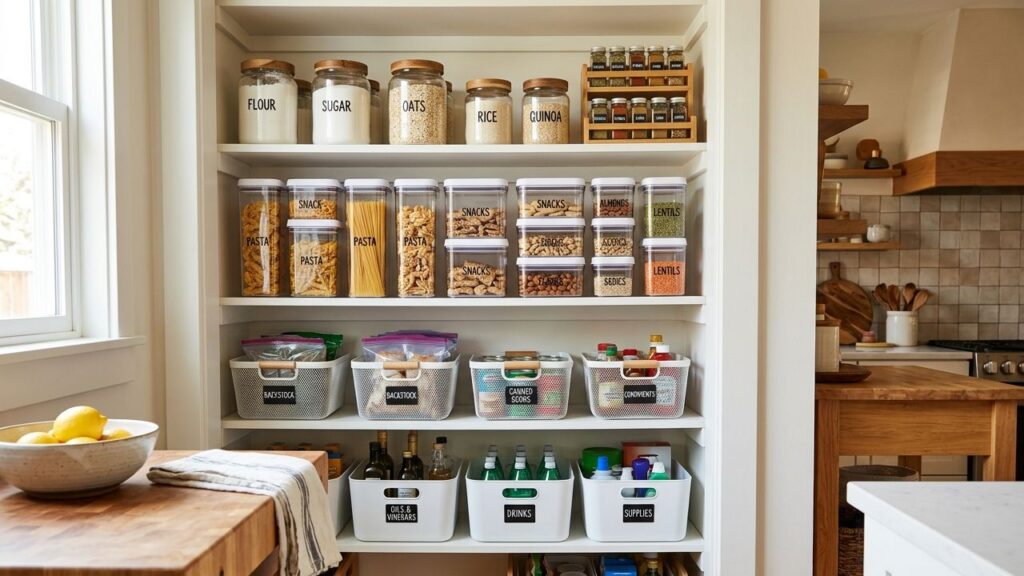
For those who want a clear action plan rather than broad principles, here’s a practical sequence:
- Empty everything out. Every single item. This is non-negotiable. You can’t see what you have until you can see all of it at once.
- Purge ruthlessly. Check expiration dates. If you haven’t used it in six months and it’s not a backup staple, donate it or discard it.
- Categorize before you put anything back. Group items on your counter or table before a single thing goes back into the pantry.
- Decide on your zone system. Map out which area of the pantry will hold which category, based on frequency of use.
- Upgrade your containers and storage tools. This is the step most people do first which is why it often doesn’t work. Know your categories and zones before you buy bins.
- Put everything back intentionally. Place items according to your zones, with labels in place.
- Maintain the system with a weekly ten-minute reset. The best pantry organization system is the one you can actually sustain.
When to Consider a Custom Pantry Solution
DIY pantry organization can get you far particularly if your current shelving is adequate and your primary issues are containers and habits. But there are clear signs that a custom solution is the smarter long-term investment:
- Your pantry’s existing shelves are the wrong depth, making it impossible to use the full space efficiently
- You have an awkward corner, angled wall, or non-standard door swing that generic systems can’t accommodate
- You want your pantry to integrate visually with your kitchen cabinetry (matching door styles, hardware, and finishes)
- You’re planning a kitchen renovation and want the pantry designed as part of the whole
- Your household has specific needs a child-height snack zone, an allergen-separated section, accessibility requirements that off-the-shelf systems don’t address
A professionally designed, custom-built pantry system isn’t a luxury reserved for large homes or large budgets. At Custom Closets Louisville, the team works with pantry spaces of all sizes and price points, and the consultation is always free.
Conclusion
A small pantry doesn’t have to be a problem space. With the right small pantry organization ideas, thoughtful pantry cabinet organization, and storage systems designed around how you actually live rather than how a showroom looks even the most cramped pantry can become one of the most functional spaces in your home.
The key takeaways from this guide:
- Work vertically and use every inch, including the door
- Zone your pantry by usage frequency, not just food category
- Decant, label, and contain for lasting visual and functional order
- Borrow principles from closet organization, display cabinet design, and even garage cabinet storage systems
- When the shelving itself is the limiting factor, a custom solution provides the best long-term return
If you’re in Louisville, Kentucky, or anywhere in Kentuckiana and you’re ready to stop fighting your pantry and start loving it, the team at Custom Closets Louisville offers free in-home consultations with 3D design rendering so you can see exactly what your transformed pantry will look like before a single screw is turned.
FAQs
Use pull-out drawers or sliding bins that bring items at the back to the front. Label the front of each bin with the category, and use a “new behind old” stocking method so nothing gets buried. Turntables (lazy Susans) work well for deep corner shelves where items disappear behind each other.
Start with a purge and a zone plan both are free. Invest in a set of matching clear containers for your most-used dry goods (one-time cost that pays off for years), and use baskets or bins from a dollar store or discount retailer to group categories. The organization principles cost nothing; you only spend money on containers and shelving upgrades you’ve confirmed you actually need.
Light colors on walls and shelves (white or light wood tones) make a space feel more open. Good lighting ideally LED strips under each shelf eliminates the dark shadows that make small pantries feel cramped. Clear containers create visual consistency. And keeping the prime eye-level zone tidy and curated gives an impression of calm even if the higher shelves are more packed.
Yes, whenever possible. Your storage needs change you buy in different quantities at different life stages, your family composition changes, and your cooking habits evolve. Adjustable shelving lets your pantry adapt without a full rebuild. This is one of the core advantages of a custom cabinetry system over fixed-shelf alternatives.

1 Comment
3exto6