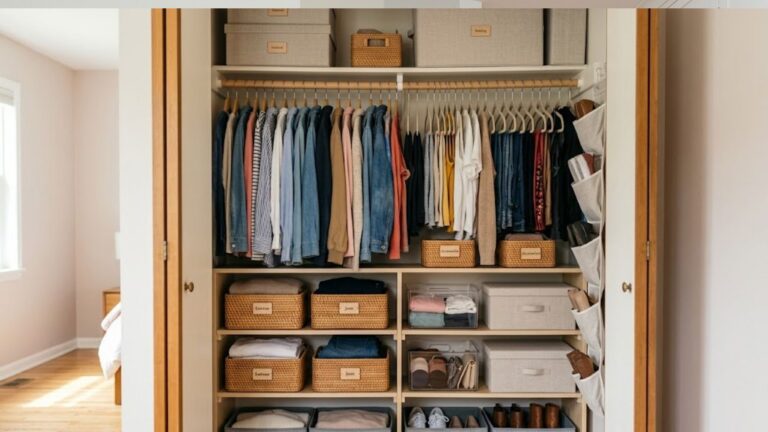
Have you ever stared into an overflowing closet and thought, “There has to be a better way”? You’re not alone. In fact, closet organization is one of the top home improvement priorities for American homeowners in 2026 and the good news is that getting started has never been easier, thanks to the rise of the easy closets design tool.
Whether you’re dealing with a cramped reach-in closet, a walk-in that’s lost its way, or you’re designing a brand-new storage space from scratch, today’s digital design tools take the guesswork out of the entire process. You don’t need to be an interior designer or a contractor. You just need a vision and the right tool to bring it to life.
In this guide, we’ll walk you through everything you need to know: how these tools work, what makes a great custom closet design, how to maximize small spaces, and the closet organization ideas that professional designers swear by. Let’s dive in.
What Is an Easy Closets Design Tool (And Why Does It Matter)?
An easy closets design tool is an online or app-based platform that lets you plan your custom closet layout before a single shelf is installed. You input your room dimensions, choose your storage components shelving, hanging rods, drawers, shoe racks and the tool generates a visual floor plan or 3D render of your finished closet.
Think of it as the bridge between your current chaos and your dream setup.
Here’s why this matters more than ever in 2026:
- Visualization reduces costly mistakes. Seeing your design before installation means fewer surprises and zero wasted materials.
- Customization is now accessible to everyone. You don’t need a big-budget designer to get a thoughtful, personalized layout.
- It saves time. Rather than back-and-forth consultations, a digital tool lets you experiment with configurations in minutes.
- It empowers better decision-making. When you can see your storage needs laid out visually, you shop smarter and prioritize features that actually serve you.
Companies like Custom Closets use design planning as part of their full-service approach, ensuring that every inch of your space is accounted for before a single panel is cut.
How to Use a Closet Design Tool Effectively

Using an easy closets design tool isn’t complicated, but getting the most out of it takes a bit of preparation. Here’s a step-by-step approach that professionals recommend:
Step 1: Measure Your Space Accurately
Before you open any design software, grab a tape measure. You’ll need:
- Width of the closet opening or room
- Depth from front wall to back wall
- Height from floor to ceiling
- Location of any doors, windows, light fixtures, or electrical outlets
Even a quarter-inch error can throw off your design significantly, so measure twice and note everything down.
Step 2: Audit What You Own
This step is often skipped and it shouldn’t be. Go through everything you plan to store in your closet and categorize it:
- Long-hanging items (dresses, coats)
- Short-hanging items (shirts, jackets, folded pants)
- Folded items (sweaters, jeans)
- Shoes and accessories
- Bags, hats, belts
Knowing the volume and type of items you own directly informs how much hanging space, shelf space, and drawer space you’ll need.
Step 3: Set Your Design Priorities
Are you optimizing for maximum clothing storage? Display shelving for accessories? A combination of both? Knowing your priorities helps you configure the layout efficiently and avoid designing something visually beautiful but functionally impractical.
Step 4: Experiment Freely
The best thing about digital design tools is that experimentation is free. Move components around. Try a double-hang section on one wall and floor-to-ceiling shelving on another. Add a center island. Remove it. Test different finishes. The tool is designed for iteration.
Multi Functional Closets: The Modern Standard

Gone are the days when a closet was just a place to hang clothes. Today’s homeowners are embracing multi functional closets spaces that serve multiple purposes within a single, cohesive design.
What does a multi-functional closet actually look like? Here are some popular configurations:
Closet + Dressing Room Hybrid
By incorporating a small vanity, a full-length mirror, and proper lighting, your walk-in closet becomes a private dressing room. This is especially valuable in master bedrooms where bathroom space is limited.
Closet + Home Office Nook
With remote work now a permanent fixture in most households, many homeowners are carving out a small workspace within a larger closet or utility room. A fold-out desk, built-in shelving for files and equipment, and cable management solutions can turn an awkward closet into a productive home office without giving up a full room.
Closet + Laundry Room
In smaller homes and apartments, combining a closet with laundry facilities (a stacked washer/dryer unit, folding counter, and storage for detergents) is a genius space-saving move. Custom-built cabinetry ensures everything looks intentional rather than improvised.
Closet + Display Space
For collectors, shoe enthusiasts, or handbag lovers, dedicated display zones within a closet system add a boutique-like quality to the space. Glass-front cabinet inserts, LED strip lighting, and tiered shoe displays are all achievable through thoughtful design.
The team at Custom Closets specializes in creating exactly these kinds of versatile, multi-purpose storage environments custom-built to match your lifestyle, not just your wall dimensions.
Custom Closets for Small Spaces: Making Every Inch Count
Not everyone has a sprawling master suite with a generous walk-in closet. For most people, custom closets for small spaces is where the real design challenge and real creativity lives.
Here’s the thing: small doesn’t mean limited. It just means intentional.
The Vertical Advantage
When floor space is scarce, go up. Floor-to-ceiling shelving units dramatically increase your storage capacity without expanding your footprint. Pair tall shelving with a small step stool and suddenly that top shelf becomes prime real estate for seasonal items.
Double-Hang Configurations
For a typical reach-in closet, a double-hang rod setup can nearly double your hanging capacity. The top rod holds long items when needed; the bottom rod, shorter pieces. When paired with a small drawer unit in the center, this configuration is one of the most efficient small-closet designs available.
Pull-Out and Slide-Out Features
In narrow closets, pull-out pant racks, slide-out shoe shelves, and pull-down hanging rods are game-changers. These components allow you to access everything in your closet without having to dig through stacked items or reach into dark corners.
Built-In Drawers vs. Freestanding Furniture
One of the most common mistakes in small closet design is trying to fit freestanding furniture (dressers, shelving units) into a space that would benefit far more from built-in cabinetry. Custom built-ins are measured to fit your exact dimensions, eliminating wasted space at the sides, top, or floor level.
Light-Colored Finishes and Mirrors
Visual spaciousness matters. In small closets, light-colored finishes (white, soft grey, warm cream) and strategically placed mirrors can make the space feel twice as large as it actually is. A full-length mirror on the inside of a door, for example, adds function without consuming any floor space.
Closet Organization Ideas That Actually Work in 2026

Design is only half the equation. How you organize what goes inside your custom closet is just as important. Here are closet organization ideas that designers and professional organizers recommend year after year because they genuinely work.
Group by Category, Not by Color
You’ve seen the rainbow-sorted closets on social media. They look stunning. But organizing by color means that all your dress shirts are spread across the closet based on hue rather than function. Grouping by category all work clothes together, all casual wear together, all activewear together makes daily getting-dressed faster and more logical.
The “Frequency of Use” Rule
Items you reach for daily should be at eye level and within arm’s reach. Seasonal items heavy winter coats, holiday sweaters, formal wear belong on the highest shelves or in the back of the closet. This simple rule dramatically reduces the daily friction of finding what you need.
Uniform Hangers Make a Big Difference
Mismatched hangers are one of the most underrated closet saboteurs. They take up extra space, create visual chaos, and cause clothes to slip and slide. Switching to slim, velvet hangers is one of the cheapest, highest-impact upgrades you can make and it’s something you can do the same day you install your custom system.
Drawer Dividers for Everything
Drawers without dividers quickly become junk drawers. Whether it’s socks, undergarments, accessories, or folded shirts, dividers keep each category in its lane. Custom closet systems can include built-in drawer organizers sized specifically for your items.
Dedicated Zones for Accessories
Bags, belts, scarves, and jewelry are the items most likely to create chaos in a closet because they don’t hang neatly on a rod or stack on a shelf. Dedicated hooks, pull-out accessory trays, and clear-front boxes give these items a permanent home and make them easy to grab in a hurry.
What to Look for in a Custom Closet Provider
Using an easy closets design tool is a great first step, but the quality of your finished closet ultimately comes down to the expertise of the team building it. Here’s what separates a truly excellent custom closet company from a generic one:
- In-home consultation: A professional should visit your space, take precise measurements, and understand how you actually use your closet not just design from a distance.
- Material quality: Look for companies that use solid, durable materials rather than lightweight particleboard that warps or sags over time. Quality hardware (soft-close drawers, sturdy rods) is equally important.
- Customization range: Can they accommodate unusual dimensions, sloped ceilings, or awkward architectural features? The best companies don’t offer just a few standard configurations they design around your specific space.
- Installation expertise: Even the best design falls apart with poor installation. Professional installers ensure everything is level, secure, and built to last.
- Warranty and after-sale support: A company that stands behind its work offers warranties on both materials and installation.
Custom Closets in Louisville, KY checks all of these boxes. With a team of experienced designers and installers, they bring both the technical skill and the creative vision needed to transform any closet from a cramped reach-in to a luxury walk-in into a space you’ll genuinely love using every day.
Conclusion
A disorganized closet isn’t just an aesthetic problem it costs you time every single morning, creates daily frustration, and often leads to buying more storage products that don’t actually solve the root issue. The right design changes everything.
Using an easy closets design tool gives you the clarity to plan intelligently, avoid costly mistakes, and visualize a space that genuinely works for your lifestyle. Whether you’re building multi functional closets that serve double duty, designing custom closets for small spaces where every inch is precious, or simply looking for smarter closet organization ideas to implement in your existing setup, the path forward starts with intentional design.
You don’t have to figure it all out alone. The team at Luxury Custom-Closets in Louisville brings years of hands-on experience designing and installing custom closet systems across Louisville, KY and surrounding areas. From the first measurement to the final installation, they handle every detail so you get a closet that looks beautiful, functions flawlessly, and stands the test of time.
FAQs
For beginners, the best tools are web-based, require no download, and offer a simple drag-and-drop interface. Many custom closet companies provide their own proprietary design tools as part of the consultation process. If you’re starting independently, look for tools that allow you to input custom dimensions and preview the layout in 2D and 3D.
Absolutely. In fact, custom closets are arguably most valuable in small spaces, because every design decision is deliberate and space-efficient. A professional designer can create a fully functional wardrobe system even in a 4-foot reach-in closet by maximizing vertical storage, incorporating double-hang sections, and using pull-out components.
Start with a modular custom system that addresses your primary storage needs, then add functional accessories incrementally a pull-out mirror here, a built-in charging station there. The key is designing the core structure to be flexible and expandable from the start.
Divide the closet into clearly defined zones one for each person. Use different finishes, colors, or simply physical separation to establish boundaries. Matching hangers and labeled bins help maintain order over time. Built-in dividers in shared drawer units prevent items from migrating across zones.
The best first step is a free design consultation with a professional. They’ll assess your space, discuss your storage needs, and present layout options you might not have considered. From there, you can refine the design using visualization tools before committing to installation.