
If you’ve ever opened a closet door and immediately felt your stress levels spike, you’re not alone. Disorganized storage spaces are one of the leading sources of daily household frustration and the good news is, they don’t have to be. Whether you’re dealing with an overflowing wardrobe, a chaotic pantry, or a craft room buried under supplies, the right closet organization ideas can genuinely change the way your home feels and functions.
In this guide, we cover everything from shared closet organization strategies for couples and families to creative pantry organization ideas and craft room organization ideas that make the most of every square inch. These aren’t abstract design concepts they’re practical, tested approaches that real homeowners use every day. Let’s get your spaces working for you.
Why Closet Organization Ideas Matter More Than You Think?
Before diving into the how-to, it’s worth understanding the why. Studies in environmental psychology consistently show that cluttered spaces increase cortisol levels the body’s primary stress hormone. A well-organized closet, on the other hand, reduces decision fatigue, saves you time in the morning, and even makes your home feel larger.
From a practical standpoint, good storage systems also protect your belongings. Clothes stored properly last longer. Pantry items organized well reduce food waste. Craft supplies that have a designated home are always ready when inspiration strikes.
The most effective closet organization ideas share a few key traits: they’re tailored to how you actually live, they use vertical space efficiently, and they make it easy to maintain order over time.
Pro Tip: Before buying a single bin or shelf, take stock of exactly what you own. Decluttering first donating, discarding, or relocating items is the single most impactful step in any organization project.
Shared Closet Organization: Making Space Work for Two

Sharing a closet is one of the most common household organization challenges. Whether you’re splitting space with a partner, a roommate, or a child, shared closet organization requires thoughtful planning so that both people’s needs are met without either person feeling cramped.
Define Clear Zones for Each Person
The most foundational rule of shared closet organization is simple: each person gets a defined zone. This isn’t just about fairness it’s about functionality. When you always know where your items are and where your partner’s begin, you eliminate the daily friction of searching through mixed belongings.
Practical ways to define zones include:
- Use different shelf heights for each person based on their most-used items
- Install a center divider rod or panel to create a physical boundary
- Assign separate drawer towers or cubbies to each user
- Use different colored bins or baskets to distinguish ownership at a glance
Maximize Vertical Real Estate
In a shared closet, vertical space is your best friend. Most standard closets only use about half of the available wall height. Double-hang rods for shorter garments like folded shirts, jackets, and pants. Add upper shelves for seasonal items, luggage, or items used infrequently. Use shelf risers to double your folded storage capacity on existing shelves.
Expert Insight: Custom built-in solutions are particularly effective for shared closets because they can be designed around the specific mix of clothing and accessories that two people own not a one-size-fits-all system.
Rotate Seasonal Items
One of the biggest contributors to shared closet chaos is trying to store all-season clothing in one small space. Instead, use under-bed storage containers, vacuum-seal bags, or a secondary closet to house off-season items. This alone can dramatically increase usable shared closet space sometimes by 30 to 40 percent.
Communication Is Part of the System
Any shared closet organization system will only work if both people maintain it. A brief conversation about what goes where and a commitment to returning items to their designated spots is as important as any physical storage solution you install.
Bedroom Closet Organization Ideas That Actually Last
Your bedroom closet sets the tone for your entire morning routine. The best bedroom closet organization ideas are those that reduce friction you should be able to find what you need without thinking about it.
Categorize by Outfit Type, Not Just Item Type
Rather than grouping all shirts together and all pants together, consider organizing by outfit category. Work clothes in one section, casual wear in another, gym clothes in a third. This mirrors how you actually think when you’re getting dressed, which makes the whole process faster and more intuitive.
Use the Right Hangers
Velvet slim hangers are one of the most impactful low-cost investments you can make. They prevent clothes from slipping, take up about half the rod space of standard plastic hangers, and give your closet a uniform, polished look. Switching to uniform hangers is consistently cited by professional organizers as one of the highest-return changes you can make.
Drawer Organization Inside the Closet
If your closet includes built-in drawers, don’t underestimate how much a simple drawer divider or folding method (like the KonMari vertical fold) can amplify your storage capacity. A single drawer can hold more than twice the amount of clothing when items are folded vertically rather than stacked horizontally.
- Fold socks in pairs and store upright for easy visibility
- Use small trays or boxes inside drawers for accessories like belts and ties
- Designate one drawer exclusively for workout gear so it’s always ready to grab
Add Lighting
A dark closet is a disorganized closet even if everything is technically in place. Battery-operated LED strip lights or motion-sensor closet lights are inexpensive, easy to install without any wiring, and make an enormous difference in how usable your space feels.
Pantry Organization Ideas: A Smarter Kitchen Starts Here

The pantry is often the most neglected storage space in the home, yet it’s also the one that affects daily life most frequently. Great pantry organization center on visibility, accessibility, and maintaining what you actually use versus what’s been sitting forgotten for months.
The FIFO Method: First In, First Out
Borrowed from commercial food service, the FIFO principle simply means placing newer items behind older ones whenever you restock. This ensures that older food gets used first, dramatically reducing waste. It’s particularly useful for canned goods, dry pasta, and cereals.
Decant for Clarity and Consistency
Transferring dry goods flour, sugar, pasta, rice, cereal into clear, airtight containers does more than just look good. It actually makes your pantry more functional. You can see at a glance how much you have, items stay fresher longer, and you eliminate the jumble of mismatched packaging that makes pantries feel chaotic.
Practical Tip: Label every container with both the contents and the expiration date. A simple label maker pays for itself many times over in saved time and reduced food waste.
Zone Your Pantry by Use Frequency
Organize your pantry in concentric zones based on how often you reach for things:
- Eye level: everyday staples oils, spices, most-used canned goods
- Upper shelves: baking supplies, specialty items used occasionally
- Lower shelves: bulk items, heavy cans, appliances stored in the pantry
- Door and wall space: small containers, foil, plastic wrap, frequently grabbed snacks
Use the Full Door
An over-the-door organizer is one of the most underutilized pantry organization ideas available. A good door organizer can hold spices, small packets, oils, and snacks effectively adding an entire extra shelf worth of storage without taking up any floor or wall space.
Dedicated Snack Station
If you have kids or adults who snack a designated snack basket or bin at an accessible height makes a huge difference. Instead of rummaging through the whole pantry, everyone knows exactly where to look. This also helps prevent the pantry from getting disrupted multiple times a day.
Craft Room Organization Ideas: Creativity Needs a Clear Space

Ask any crafter what their biggest frustration is, and most will say: finding what they need when inspiration strikes. Great craft room organization ideas solve this problem by making supplies visible, accessible, and logically grouped so you spend your time creating, not searching.
Visibility Is Everything
Unlike a bedroom closet where some items can be stored out of sight, craft rooms benefit enormously from transparent storage. Clear bins, open shelving, pegboards, and glass-front cabinets all allow you to see your inventory at a glance. When you can see your supplies, you’re more likely to use them and less likely to buy duplicates.
Organize by Project Type, Not Supply Type
For dedicated crafters, organizing by project type is often more practical than organizing by supply. Instead of keeping all adhesives together in one bin, keep all your scrapbooking supplies in one zone: papers, adhesives, embellishments, scissors, and stamps together. This way, when you sit down to work on a project, everything you need is in one place.
The Pegboard Wall
A pegboard wall is arguably the most versatile craft room organization idea available. With the right hooks and accessories, it can hold scissors, ribbon spools, spray cans, rulers, markers, and virtually any tool you own. It keeps supplies off your work surface and visible at all times. Pegboards are relatively inexpensive, easy to install, and infinitely reconfigurable as your needs change.
Rolling Carts for Flexible Workspace
Rolling utility carts the kind popularized in recent years are particularly well-suited to craft rooms. They can be pulled to your work table when you need a specific supply set, then rolled back to their storage position when you’re done. They’re also excellent for organizing supplies by project category since each cart or tier can represent a different craft type.
- Tier 1: Most-used tools scissors, tape, glue
- Tier 2: Current project materials
- Tier 3: Completed projects or items pending use
Wrapping Paper and Long Supply Storage
One of the most awkward storage challenges in a craft room is long, unwieldy items: wrapping paper rolls, poster tubes, dowels, and fabric bolts. A tall, narrow cylinder container (a clean trash can works perfectly) keeps these items upright, visible, and space-efficient. Alternatively, wall-mounted wrapping paper organizers take advantage of vertical space and free up floor area entirely.
Small Closet Organization Ideas: Big Impact in Tight Spaces

Not every home comes with generous storage. If you’re working with a small reach-in closet, a hall closet, or even a converted armoire, there are still plenty of closet organization ideas that can help you maximize what you have.
Double Your Hanging Space
A second hanging rod installed below your primary rod effectively doubles your hanging capacity. This is ideal for shirts, jackets, and folded pants. If you only hang full-length items like dresses or coats, a single rod at full height works best but for most people, double-hang rods are a game-changer in small closets.
Think Diagonal and Corner
In small closets, corners are often completely wasted. Rotating corner shelves or angled corner rods can reclaim several cubic feet of storage that would otherwise go unused. Diagonal organizers particularly for shoes can also pack significantly more footwear into a given space than traditional flat shelving.
Over-the-Door Solutions
In a small closet, the inside of the door is prime storage real estate. Over-the-door shoe organizers, jewelry organizers, and pocket organizers can hold dozens of items without taking up a single inch of interior space. For hall closets, door-mounted racks are perfect for gloves, scarves, hats, and other accessories.
When to Consider a Custom Closet System

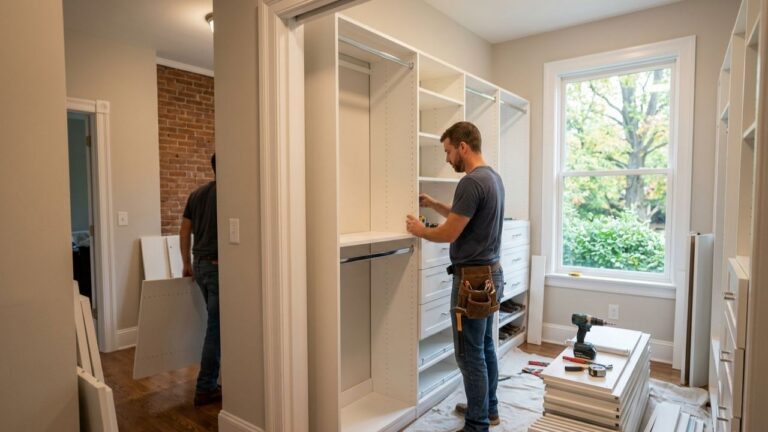
DIY organization products can take you a long way, but at some point, the limitations of off-the-shelf solutions become apparent. If you’ve tried multiple systems and still struggle with organization or if you’re dealing with an unusually shaped space, a very large collection, or specific storage needs a custom closet system is worth serious consideration.
Custom closets are designed around your specific belongings, habits, and space dimensions. They make use of every available inch including corners, high walls, and odd angles in ways that prefabricated systems simply can’t. They also tend to be more durable and visually cohesive, which means they maintain their function and appearance over time.
At Luxury custom closets in Louisville professional designers work with you to create storage solutions tailored specifically to your home whether that’s a master bedroom closet, a shared family closet, a pantry, a craft room, or any other storage challenge you’re facing. A custom solution doesn’t just solve today’s problem; it anticipates how your storage needs will evolve over time.
Quick-Reference: Top Closet Organization Ideas by Space
| Space | Top Priority | Best Tool |
| Shared Closet | Zone definition | Double rods + dividers |
| Bedroom Closet | Daily accessibility | Velvet hangers + labels |
| Pantry | Visibility + FIFO | Clear airtight containers |
| Craft Room | Visibility of supplies | Pegboards + rolling carts |
| Small Closet | Vertical expansion | Over-door + double hang |
Conclusion
Great closet organization ideas don’t require a massive budget or a total renovation. They require intentionality a clear understanding of how you use your space, what you own, and what kind of system will actually hold up in your daily life.
Whether you’re tackling shared closet organization between partners, transforming a pantry into a model of efficiency, or creating a craft room organization system that finally keeps your supplies accessible, the principles are the same: declutter first, use vertical space, keep frequently used items accessible, and make the system intuitive enough that maintaining it is effortless.
For those ready to move beyond temporary fixes and invest in a storage solution that truly fits their home and lifestyle, a custom closet system is the most effective path forward. Professional designers can evaluate your space, understand your specific needs, and create a solution that makes the most of every square inch one that will serve you beautifully for years to come.
FAQs
Start by completely emptying the closet and sorting everything into four categories: keep, donate, discard, and relocate. Once you have only the items that genuinely belong in that closet, measure your space and plan your storage system before putting anything back.
Focus on the highest-impact, lowest-cost changes first: uniform hangers, clear bins from a dollar store, and shelf dividers. Decluttering (which costs nothing) is the single most powerful thing you can do. Once the space is cleaner, you’ll have a much clearer picture of where to invest in more permanent solutions.
Divide the closet into clearly defined zones with each person getting their own section. Use a combination of hanging rods, shelf space, and drawer units. Regular seasonal rotation moving off-season clothing to another storage location is essential for keeping shared closets manageable year-round.
A full reorganization twice a year typically in spring and fall, aligned with seasonal clothing transitions is sufficient for most people. In between, a quick 15-minute weekly tidy prevents small disorganization from compounding into a bigger problem.
Airtight clear containers in uniform sizes work best for dry goods. Square or rectangular containers make far better use of shelf space than round ones. For snacks and packaged items, open-top bins with labels allow for quick access. Tiered shelf risers and lazy Susan’s are particularly useful for canned goods and condiments.


9 Comments
Сокращение ЛГБТ охватывает представителей с различной сексуальностью и гендерным самовыражением gay porno live
Осознанный гемблинг — это практика, направленный на сохранение дисциплины над своими решениями и осознание потенциальных проблем, сопутствующих с азартными играми, при одновременном акценте на отдых как базовую причину участия.
https://randx-super.ru/
Сайты для 18+ могут служить каналом сексуального просвещения, содействуя людям осознавать свою сексуальность.
Они позволяют изучать многообразие практик в защищённом пространстве, уменьшая риск реальных осложнений.
В парах общий просмотр может укреплять доверие и становиться поводом для честного разговора о желаниях и предпочтениях.
фото трансы
Осознанное участие в играх — это набор правил, ориентированных на поддержание баланса над игровым процессом.
Её основная суть состоит в сознательном ограничении времени и финансовых затрат на игру.
Пользователю следует заранее определить бюджет и не превышать этого лимита.
https://wolgograd.ru/column/2542-comparing-rich-casino-s-payout-speeds-with-other-major-online-casinos/
Платформы должны предлагать функции самоконтроля: паузы, ограничения пополнений и тесты на зависимость.
Важнейший аспект — воспринимать к процессу исключительно как к отдыху, а не методу заработка.
При появлении симптомов проблемного поведения (погоня за потерянным) необходимо активировать блокировку или обратиться за помощью к специалистам.
Соблюдение этих правил обеспечивает защиту психики и финансовую устойчивость, а главное — оставляет азарт в безопасных рамках.
Взрослый контент может служить средством сексуального просвещения.
Такие фильмы способны помочь понять собственные предпочтения и пределы комфорта.
В отношениях совместный просмотр иногда выступать инструментом для обсуждения интимных вопросов.
http://happygay.cc/fisting/
Подобный формат помогает снижению внутренних барьеров и неловкости.
Также такой контент предоставляет шанс для безопасного исследования фантазий.
При этом крайне важно не забывать о отличии между реальной жизнью и постановкой.
Здоровое отношение к азарту — это комплекс принципов, ориентированных на защиту психологического и материального благополучия игрока.
Ключевая идея состоит в том, что процесс должна рассматриваться только как развлечение, а не как способ обогащения.
Игроку рекомендуется заранее определять ограничения по длительности и деньгам и строго их соблюдать.
https://liveforsport.ru/full-text/1463-irina-sheyk-i-mikele-morrone-v-novoy-kampanii-dolce-and-gabbana-your-devotion.html
Необходимо научиться замечать первые симптомы проблемного поведения, такие как желание отыграться и пренебрежение обязанностями.
Операторы должны предоставлять инструменты ограничения: тайм-ауты, ограничения пополнений и блокировку аккаунта.
Соблюдение данных рекомендаций даёт возможность сохранить игру в комфортных границах, не нанося вреда своей психике и окружающим.
Ответственная игра — это принцип к азартным сессиям, основанный на контроле и осознании последствий.
Она подразумевает добровольное ограничение времени и расходов на игру.
Каждый игрок должен предварительно устанавливать пределы ставок и неукоснительно их соблюдать.
https://ledtechexpo.ru/news/2026-06-15-bonusnye-funktsii-v-slotakh-besplatnye-spiny-multiplikatory-i-interaktivnye-mini-igry.html
К признакам проблемной игры являются стремление отыграться и пренебрежение повседневными делами.
Ответственная игра учит воспринимать к казино как к досугу, а не способу заработка.
Соблюдение данных принципов гарантирует эмоциональное здоровье и финансовую стабильность пользователя.
hh6e9w
snianc