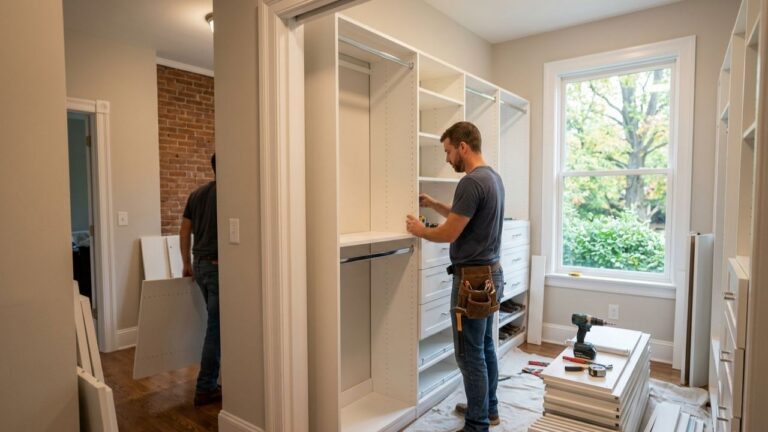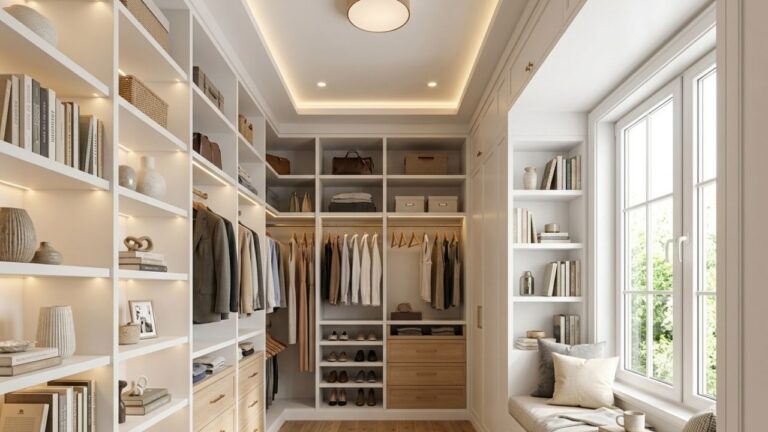
A walk in closet is no longer the stuff of luxury in big master bedrooms. Even the tiniest corners of a room can be converted to a complete and functional closet space with some planning, smart layout and custom walk-in closet solutions. From measuring and planning to shelving, lighting, and finishing, this walk-in closet installation guide for small spaces will guide you through it step by step.
If you have a small space, you need a smart design. The idea is not to simply fit a closet into your home; you are looking to create a walk-in closet that will do more, hold more and look better than a typical reach-in closet. Let’s have a look at how that can be achieved.
Why Choose a Walk-In Closet for a Small Space?
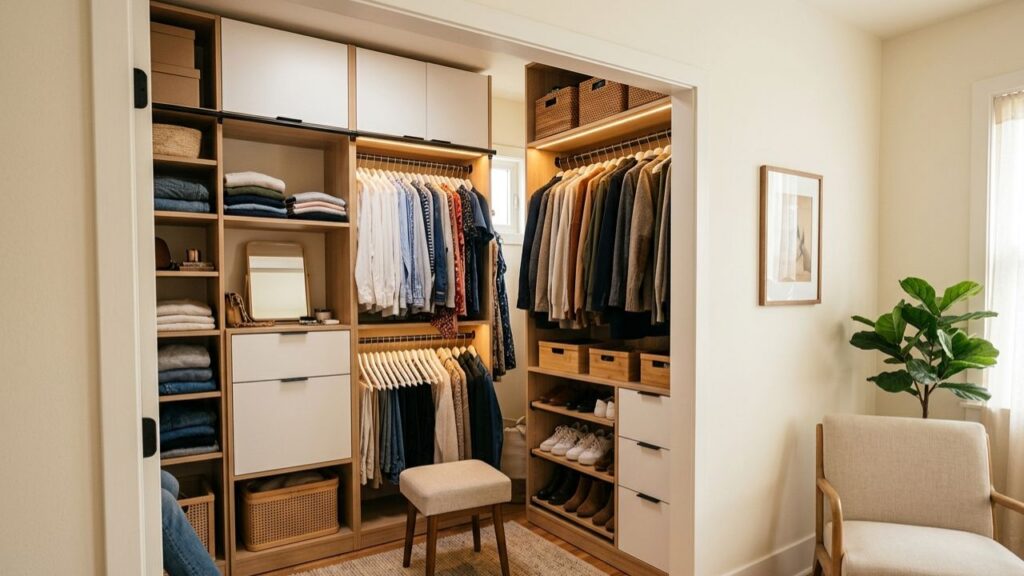
Many homeowners assume that building a walk-in closet requires a large dedicated room, but that is a common misconception. A well-designed small walk-in closet can outperform a large, poorly organized one. Here is why more homeowners are choosing walk in closet designs for compact areas:
- Maximizes vertical and horizontal storage in limited floor space
- Provides a dedicated, organized space that reduces morning clutter
- Adds perceived value and appeal to your home
- Allows full personalization through custom walk-in closet solutions
- Keeps seasonal and everyday items accessible in one place
Measure and Plan Your Space
Before you build a walk-in closet, accurate measurements are the foundation of a successful installation. Even a few inches of error can compromise your entire design. Here is how to start:
Minimum Space Requirements
A functional walk-in closet for small spaces typically requires at least 25 square feet of floor area. A layout measuring 5 x 5 feet is workable, but a 4 x 6 or 5 x 7 configuration offers more flexibility for walk in closet shelving ideas and hanging sections. Always account for door clearance when measuring your entry point.
What to Measure
- Total floor area (length x width)
- Ceiling height (standard closets benefit from 8–10 feet)
- Door swing radius and wall obstructions
- Electrical outlet and window placements
Choose the Right Layout for Small Walk-In Closets
The layout is the backbone of your walk in closet designs. For smaller spaces, the three most popular configurations are:
Single-Wall Layout
Ideal for narrow closets or converted alcoves, a single-wall layout positions all shelving, hanging rods, and drawers along one wall. This design works well for spaces 4 feet wide or less. It keeps a clear walking path and makes the room feel open and accessible.
L-Shaped Layout
An L-shaped configuration uses two adjoining walls and is one of the most efficient walk in closet designs for small corner spaces. It separates storage zones naturally — for example, hanging on one wall and folded items plus accessories on the other — making organization intuitive and efficient.
U-Shaped Layout
A U-shaped layout wraps storage around three walls and is perfect for spaces 5 x 5 feet or larger. This is the most storage-dense option and forms the foundation of most custom walk-in closet solutions. With careful planning, a U-shaped layout can hold a full wardrobe, shoes, bags, and accessories in a surprisingly compact footprint.
Walk-In Closet Shelving Ideas for Small Spaces
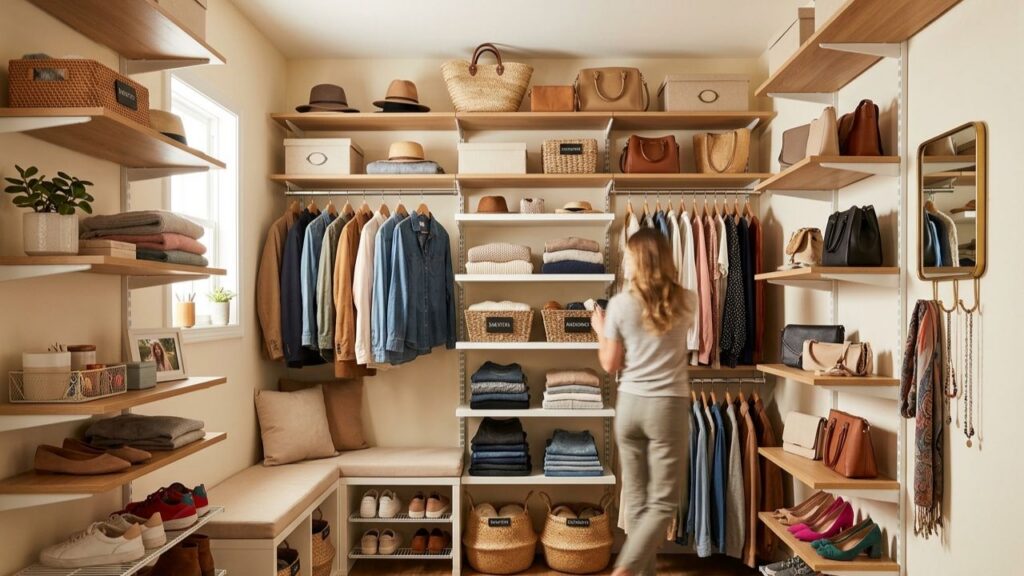
Your storage on the shelf is active. Every shelf in a small walk-in closet must be earned. Here are some of the best closet walk in shelving ideas to save space:
Double Hang Rods
Double-hanging systems combine two hanging rods to double the hanging capacity in the same size of space. For shirts, jackets, and blazers, use the top rod; for skirts or trousers, use the lower rod for folding them up. This is an easy but powerful improvement to make.
Floor-to-Ceiling Shelving
A lot of space is being lost out of the closet, above eye level. That space overhead can be used for seasonal items, luggage and less often for infrequently used accessories with floor-to-ceiling shelving. The adjustable shelf heights offer versatility to reconfigure the space over time.
Pull-Out Drawers and Bins
One of the key features of custom walk-in closet solutions is the presence of built-in drawers. They are an alternative to a bulky dresser, save room in the bedroom and organize folded clothes. Pull-out shoe racks and accessory trays fit in the shelving towers and provide organization for objects that tend to clutter floors and shelves.
Dedicated Shoe Shelving
If you do not store shoes correctly, they can take up a lot of space. Homeowners often prefer angled shoe shelves, shoe cubbies, or a dedicated shoe tower along a single wall in their walk-in closet. Angled shelves use less shelf space than flat shelves and display shoes neatly at an angle, making them perfect for small rooms.
Selecting Materials When You Build a Walk-In Closet
There are times when you’re creating a walk-in closet and the choice of materials plays a significant role in the durability and the aesthetics of the closet. The right materials can make all the difference in your closet’s appearance and longevity.
Melamine and Laminate Panels
For modern closet systems, the choice is largely for melamine coated panels. They are resistant to moisture, easily wiped clean and available in various colors and finishes ranging from pure white to woodgrain. They are easy to carry, yet durable, making these a great selection for shelving systems in small closets.
The types of wood products are solid wood and plywood.
Solid wood and hardwood plywood is the best choice for a more expensive but high-quality and classic appearance. They come with a lot of load-bearing capacity that is important for shelves that carry heavy loads such as bags and shoes.
Wire and Metal Systems
Wire shelving systems are inexpensive, ventilated and easy to install. They are great for linen closets and second storage spaces, but might not look as alluring in a main closet. Powder Coated metal frames create a modern and sleek look and are suited to contemporary Walk in Closet designs.
Lighting Your Small Walk-In Closet
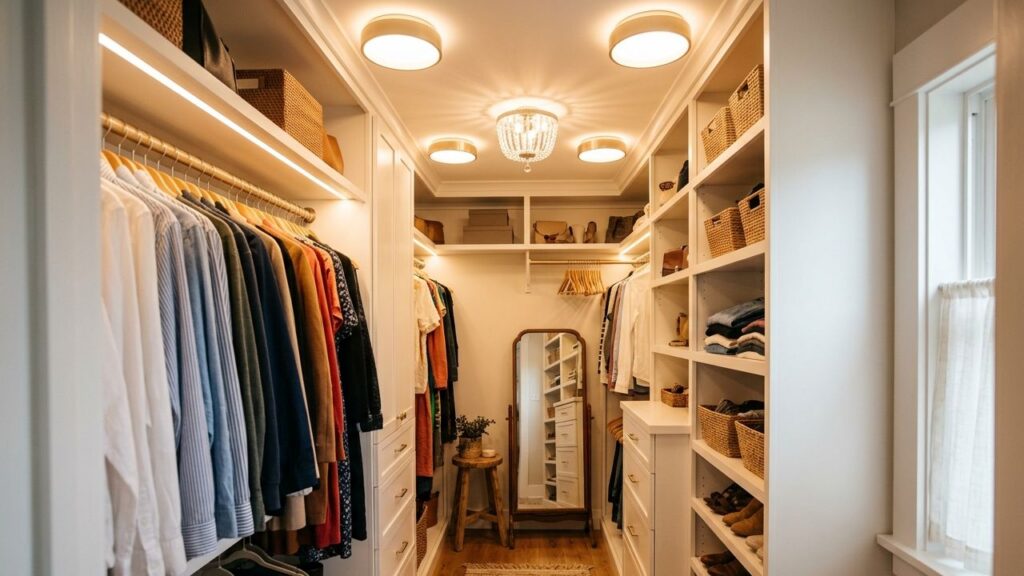
One of the things that people tend to overlook is lighting when they are creating a walk in closet, but lighting makes a lot of difference when it comes to space and making it functional. A well-lit closet appears bigger, is more functional, and enhances the overall design.
Recessed Ceiling Lights
Recessed LED lights are the cleanest option for small walk-in closets. They don’t stick out into the room, provide uniform lighting and provide a luxurious feel. Place them symmetrically to avoid shadows on shelving and hanging parts.
Under-Shelf LED Strips
The LED strip lighting installed under shelves will light the shelf directly below it, allowing one to view the foldable objects, accessories and shoes without squinting or bending. A good feature in small closets where a switch might seem unnecessary is the motion activated strip.
A full-length mirror in your shelving unit can serve two purposes: first, it can provide a convenient dressing station, and second, it can help to bounce the light and to make the room seem larger. When building a small walk in closet, mirrors are a designer’s best friend for helping to open up a small space and give it a sense of openness.
Smart Organization Tips for Small Walk-In Closets
Even the best custom walk-in closet solutions lose their effectiveness without good organization habits and accessories. Here are the strategies that make the biggest difference:
- Group items by category: tops, bottoms, outerwear, shoes, and accessories each get a dedicated zone
- Use uniform velvet hangers to maximize rod capacity and give a clean, cohesive look
- Install hooks on side walls and behind the door for bags, belts, and scarves
- Use clear bins and labeled baskets on upper shelves for seasonal and occasional items
- Incorporate a small island or bench with under-seat storage if space allows
- Rotate seasonal wardrobes twice a year to keep the active space clear and accessible
Why Custom Walk-In Closet Solutions Outperform Stock Systems
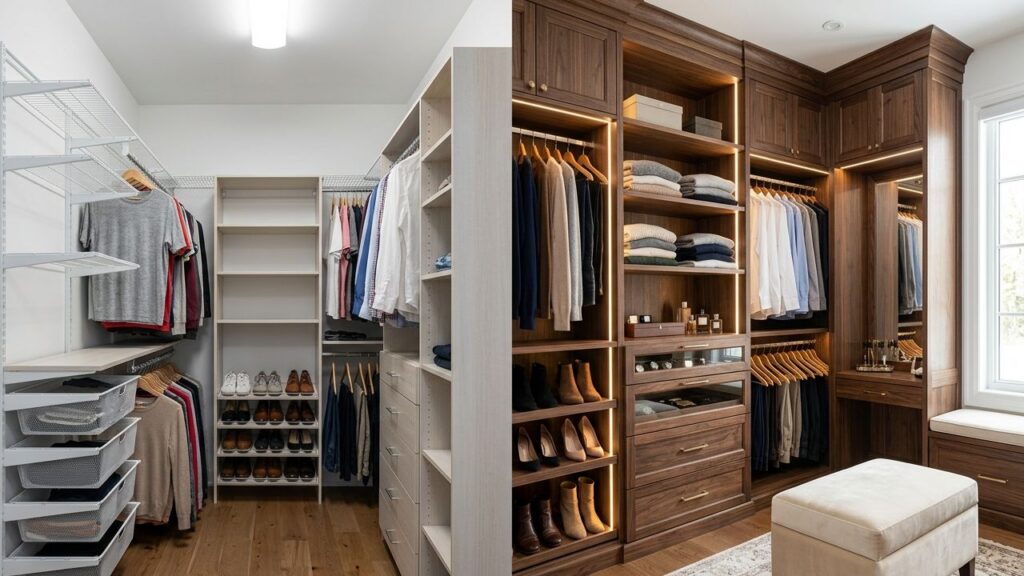
While these closet kits are readily available in large box stores, they come with their drawbacks. There is no flexibility with panel sizes, no options on setting up your configuration and the product aesthetic is generic, so you’re never working around the product, you’re always working your space around the product.
Using a fully custom approach, every square inch of closet is created to suit your measurements, wardrobe, and way of life. These are all opportunities, not limitations, when using a custom designer, especially when designing odd angles, sloped ceilings, architectural columns and irregular shapes.
Professional closet builders will also be able to suggest the best fit for your hanging, drawer and shelving levels and accessories, based on what you actually have in your wardrobe. The outcome: more space, a more attractive closet and a more efficient one.
Custom Closets US is a custom closet company that specializes in custom closet design and installation for small and hard to fit areas throughout the USA. They have a team of professionals who collaborate with homeowners to create walk in closet designs that are both aesthetically pleasing and incredibly functional, and are a trusted brand when it comes to building a walk in closet that truly changes the way the homeowner lives at home.
Common Mistakes to Avoid When Installing a Small Walk-In Closet
Even with the best intentions, certain errors can undermine your closet project. Avoid these common pitfalls:
Ignoring Ceiling Height
Most people plan shelving and hanging at eye level and forget about the vertical space above. Ceiling-height storage dramatically increases capacity without consuming additional floor area.
Choosing Fixed Shelving Too Early
You’ll have to update your wardrobe through the years. Once the shelves are fixed, they will look dated rather quickly. Use adjustable shelving units, especially those that come with custom walk-in closet shelving, to be able to rearrange the space as necessary throughout the years.
Underestimating Lighting Needs
One overhead light is seldom enough for an adequate closet. You should think about lighting early in the design process and plan it alongside your shelving layout to ensure the wiring and fixtures are placed in the best locations for maximum effect.
Skipping Ventilation
In enclosed spaces, there can be water and mildew problems, which is particularly a problem when storing fabrics and shoes. You can improve air circulation by adding a small vent opening or a louvered door, especially in closets built inside interior rooms without windows.
Conclusion
When it comes to walk-in closet design, the key is good planning, smart designs and quality materials—build a walk-in closet in a small space is quite possible. Whether you’re measuring your room, choosing the perfect layout, or exploring the best walk-in closet ideas and lighting options, this closet installation guide will help you through every step of the process.
A single wall system, an L-shaped or a completely personalized, U-shaped design—it all depends on your specific wardrobe and lifestyle, and not just on a formula. If you are ready to create your own walk-in closet that is just what you need and really enhances your home, then it’s time to work with people who are knowledgeable in custom walk-in closet solutions.
Custom Closets US has assisted hundreds of homes in the United States to convert underused areas into beautiful, efficient and functional closet systems. Once you’re ready to make your dream a reality, our team will help bring your vision to life by designing and building a custom walk-in closet that fits your space, style, and storage needs.
FAQs
A functional walk-in closet can be built in as little as 25 square feet. A 5×5 layout works, but 5×7 offers more comfort and storage flexibility for hanging, shelving, and movement inside the space.
Yes. Spare rooms, understairs areas, and large reach-in closets can all be converted. Custom walk-in closet solutions are ideal for these conversions because they adapt to non-standard dimensions and irregular layouts.
Double-hang rods, floor-to-ceiling shelving, angled shoe racks, and pull-out drawers maximize storage in small spaces. Adjustable shelving systems give long-term flexibility to rearrange as your wardrobe and needs change over time.
A custom installation generally takes one to three days depending on the complexity of the design. Simple modular systems may be completed in a single day, while fully custom builds with electrical work may take a few days.
Custom solutions offer precision fit, superior materials, and professional installation that DIY kits cannot match. They also add more lasting home value and are designed around your specific space, wardrobe, and lifestyle preferences.