
You’re not the only person who’s opened a reach-in closet and instantly felt dismay at all the items falling off the shelves, the shoes in the corner, and the clothes crammed onto one rod. The reality is, most reach-in closets are poorly designed from the get go. They are constructed from a single rod and a single shelf, which is very impractical for just about anyone. The great news is that there are closet system for reach-in closets that can overhaul the appearance, feel, and usability of your space without a complete renovation.
Whether you have a narrow bedroom closet, a hallway closet, or a closet in your guest room, this guide will help you learn all you can about the type of system that works best: which reach-in closet systems are best, how to maximize the space you have available, walk-in vs. reach-in closets, and the little upgrades that make a big difference in your daily life.
“A reach-in closet isn’t a compromise. With the right system, it can be just as functional and just as beautiful as any walk-in.”
What Is a Reach-In Closet, Exactly?
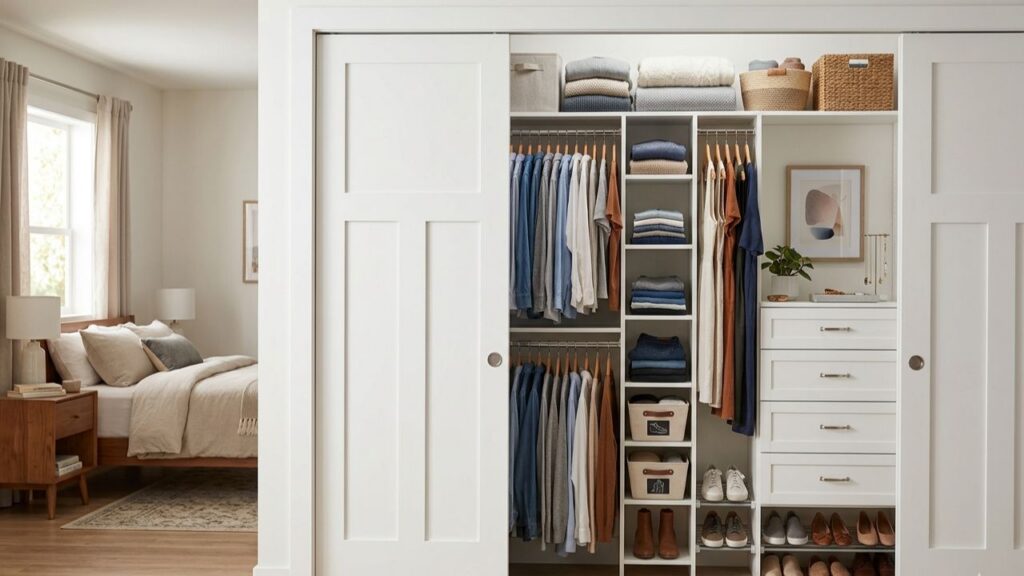
A reach-in closet is a narrow closet which varies from 3 to 8 feet wide and is shallow, typically 24 to 30 inches long that is accessed from the front without stepping into it. You put your hand in to get what you need. They are the most typical closet that may possibly be found in the bedrooms of homes in America and frequently the most basic of storage.
This simplicity is one of the problems. If a closet’s storage is not in line with the way you live your life, how many clothes you own, what kind of clothes you keep, and how you get dressed in the morning creates chaos. And chaos is very tiring.
That’s why it’s a good idea to invest in a well-designed reach-in closet system. It’s not about creating a magazine-style look for your closet (although that’s a great extra). The idea is to save time, to minimize stress and to make your home truly work for you.
Walk-In Closet vs Reach-In Closet: What’s the Real Difference?
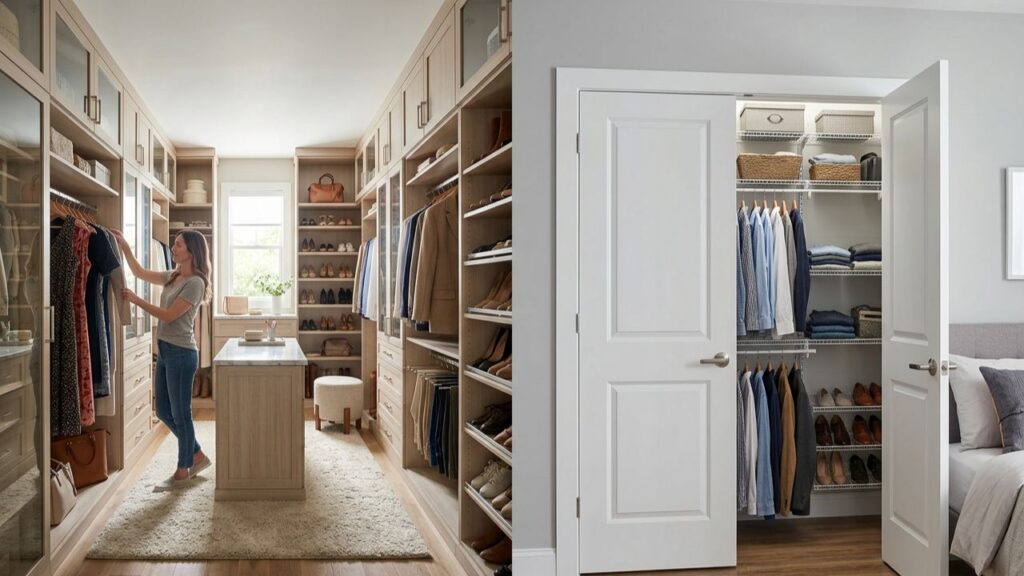
Before diving into specific systems, it helps to understand how reach-in closets differ from walk-ins because their design needs are quite different.
| Feature | Reach-In Closet | Walk-In Closet |
|---|---|---|
| Typical depth | 24–30 inches | 5–10+ feet |
| Typical width | 3–8 feet | 6–20+ feet |
| Access style | Reach in from doorway | Walk fully inside |
| Visibility | Full view at a glance | Multiple zones, more exploration |
| Key design challenge | Limited depth & width; maximize vertical | Making all areas equally accessible |
| Storage approach | Vertical shelving, double hanging, slim drawers | Zones by category, islands, seating |
| Ideal for | Bedrooms, hallways, guest rooms | Master suites, large homes |
The walk-in closet vs reach-in closet debate often comes down to square footage. Most homeowners don’t have the luxury of converting a reach-in to a walk-in, and that’s perfectly fine. With the right system in place, a reach-in closet can store just as much sometimes more than a poorly organized walk-in.
The Core Components of a Great Reach-In Closet System
The best reach in closet systems work by doing three things simultaneously: maximizing vertical height, layering storage types, and making everything visible and accessible. Here’s a breakdown of the key components:
1. Double-Hang Rods
One of the simplest and most impactful upgrades you can make is adding a second hanging rod. Instead of one long rod running the full width of your closet, a double-hang configuration stacks two shorter rods on top of each other one for shirts, jackets, and blazers at the top, and one for shorter items below. This effectively doubles your hanging storage in the same footprint.
2. Adjustable Shelving
Fixed shelving is the enemy of a good closet. Life changes you go through phases of owning more shoes, buying more sweaters, or needing more drawer space. Adjustable shelving lets you reconfigure the layout as your needs evolve. Look for systems with shelf pins or wall-mounted tracks that allow shelves to be repositioned in 1-inch increments.
3. Built-In Drawers or Drawer Units
Folded clothes, accessories, and undergarments do much better in drawers than on open shelves where they tend to slip and tumble. A built-in drawer unit tucked into the center section of a reach-in closet creates a natural anchor for the design and gives you a clean, furniture-like look. For smaller closets, even two or three shallow drawers can be transformative.
4. Shoe Storage Solutions
Shoes are one of the most common sources of closet chaos. Angled shoe shelves, pull-out shoe trays, or cubbies at the bottom of the closet all work well for reach-in configurations. For smaller spaces, angled shelves are particularly efficient because they take up less depth than flat shelves while still displaying each pair clearly.
5. Vertical Dividers and Specialty Compartments
Purses, handbags, hats, and folded items like jeans can benefit from vertical dividers or specialty pull-out compartments. These are often overlooked in basic closet systems but make a real difference for organized, damage-free storage.
Types of Reach-In Closet Storage Systems
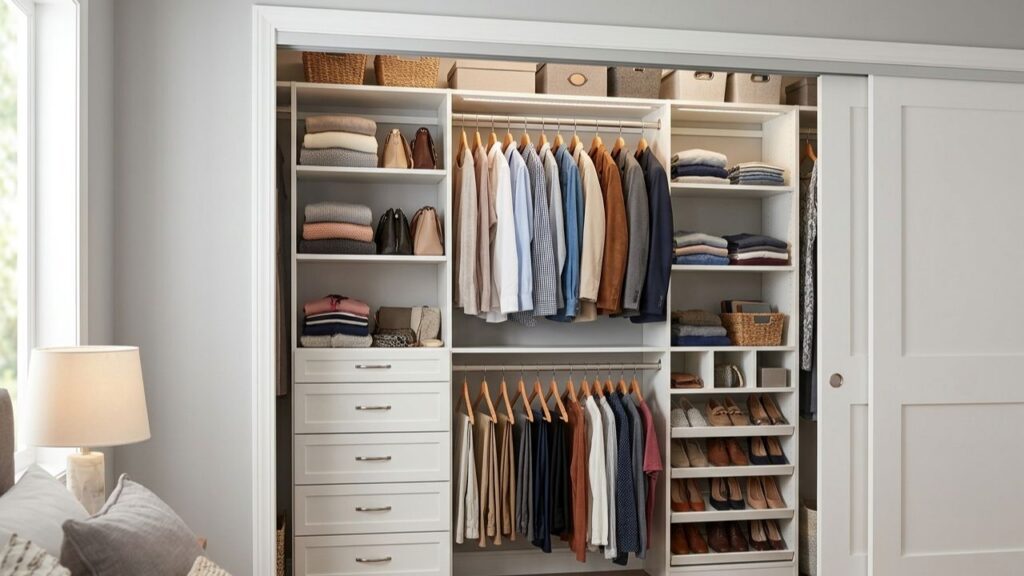
Not all systems are created equal. Here’s an honest look at the main categories of reach in closet storage systems available today:
Freestanding Modular Systems
These are the most affordable and DIY-friendly option. Brands sell modular units cube shelves, hanging rods, drawers that you assemble and arrange however you like. The upside is flexibility and low upfront cost. The downside is that they rarely make the most of your full ceiling height, they can shift and wobble over time, and they rarely look as polished as built-in alternatives.
Wire Rack Systems
Wire systems are popular in rental homes and starter setups. They’re lightweight, affordable, and allow some airflow around clothes. However, they have real limitations: small items fall through the gaps, items can snag on wire edges, and they tend to look utilitarian rather than refined. If you’re looking for a long-term solution, wire systems are a step in the right direction but rarely the final answer.
Laminate or Melamine Panel Systems
This is the sweet spot for most homeowners. Laminate or melamine closet systems offer the clean look of built-in furniture at a more manageable price than solid wood. They’re available in a wide range of finishes from crisp white to warm wood tones to soft grays and they can be configured with hanging sections, shelves, and drawers in a way that truly feels custom.
Fully Custom Built-In Systems
For those who want the best possible result maximum storage, flawless finish, and a design that fits their exact space and lifestyle a fully custom built-in system is the gold standard. Custom closet builders measure your exact space, design a layout optimized for your wardrobe, and install components that fit from floor to ceiling with no gaps, no awkward cutoffs, and no wasted inches. At Custom Closets, this is exactly the approach used for every reach-in closet project creating systems that feel like they were always meant to be there.
How to Plan Your Reach-In Closet Organization
Great reach in closet organization doesn’t start with buying a system it starts with understanding how you actually use your closet. Before choosing any components or layout, ask yourself these questions:
- What’s the ratio of hanging clothes to folded clothes in your wardrobe?
- How many shoes do you own, and which ones do you reach for most often?
- Do you store accessories, bags, or seasonal items in this closet?
- Is this a shared closet, and if so, are both users’ needs accounted for?
- Do you need any specialty storage ties, belts, jewelry, gym gear?
Once you know your storage “inventory,” you can design a layout that allocates the right amount of space to each category. The most common mistake people make is designing around aesthetics first and function second. Start with function and the aesthetics will follow naturally.
Expert Tip: The Zones Method
Divide your reach-in closet into three visual zones: left zone for long hanging items (dresses, suits, coats), center zone for drawers and shelves, and right zone for double-hung items (tops and bottoms). This creates a natural visual balance while maximizing each type of storage. Within each zone, place the most frequently used items at eye level and less-used items higher or lower.
Maximizing Small Reach-In Closets: Vertical Is Your Best Friend
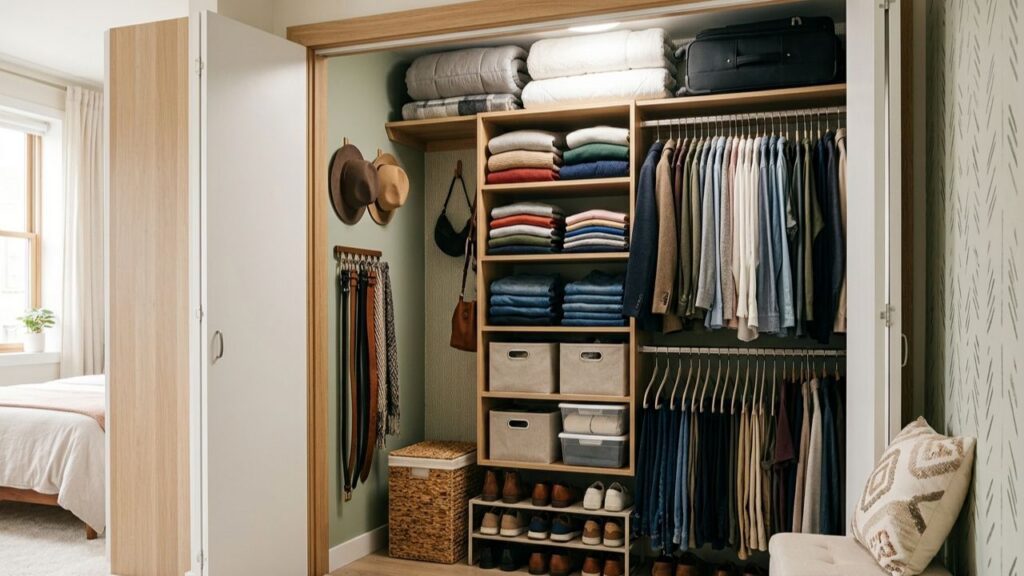
One of the most underused opportunities in reach-in closets is vertical space. Most people use the bottom two-thirds of their closet heavily and leave the top section nearly empty. A well-designed closet system takes shelving all the way to the ceiling or as close to it as practical and uses those upper shelves for seasonal storage, spare linens, luggage, or items used only occasionally.
A few practical strategies for going vertical:
- Add a top shelf at 84–90 inches for seasonal bins, extra blankets, or travel bags.
- Use labeled storage bins on upper shelves so you always know what’s there without dragging things down.
- Install a pull-down closet rod if your ceiling is higher than 7 feet these allow you to hang a second row of clothes near the top and pull them down easily.
- Stack shoe shelves from floor to halfway up one side, freeing up the other side entirely for hanging.
Lighting: The Often-Overlooked Game Changer
Even the most beautifully designed closet system will feel inadequate if you can’t actually see what’s inside. Proper lighting transforms a reach-in closet from a dark cave into a bright, functional space where you can find anything in seconds.
LED strip lighting along the underside of shelves, a simple overhead fixture, or motion-activated puck lights can all make a huge difference. When planning your closet system installation, always factor in lighting as part of the design not as an afterthought.
Custom vs. DIY: Which Approach Is Right for You?
This is one of the most frequently asked questions by homeowners when planning an upgrade to their closets, and the answer is a dependent of budget, timeline, and length of time in your home.
DIY or semi-custom options are suitable for those who have a limited budget, are renting or selling in the near future. They are easy to install and upkeep, and they can be easily moved. But they tend not to fit without some give and take and the cumulative effect of the compromises over time.
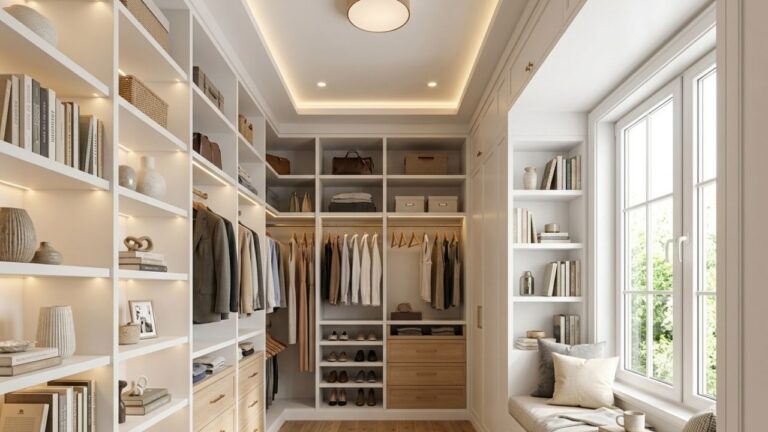
Professional custom systems offer a smarter long-term investment for homeowners. A custom reach-in closet system fits your exact size and storage needs. Designers also consider architectural details like sloped ceilings, outlets, and HVAC vents. They build these systems for long-lasting durability. Additionally, well-designed closet storage room is among the traits that home real estate professionals point out that buyers notice and appreciate most.
If you’re in the Louisville, Kentucky area, the team at Custom Closets specializes in designing and installing custom reach-in closet systems tailored to your exact space and lifestyle. Every project starts with a consultation and a detailed design, so you know exactly what you’re getting before any installation begins.
Signs Your Reach-In Closet Needs a New System
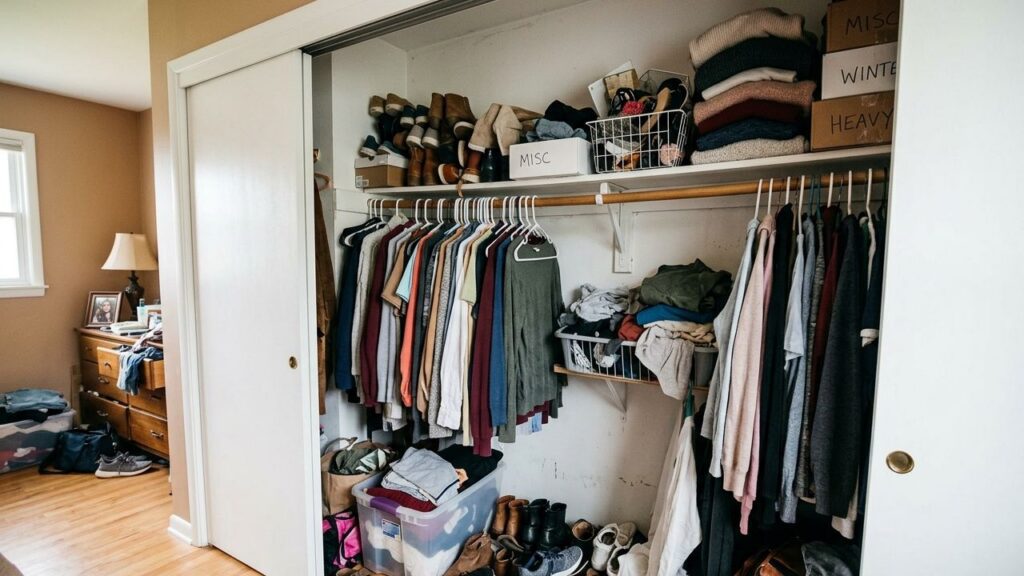
Sometimes it’s obvious you open the door and things fall out. But other times the warning signs are subtler. Here’s a quick checklist:
- You spend more than 2 minutes finding something to wear each morning
- You’ve “lost” items in your own closet only to find them months later
- One area of the closet gets used constantly while other areas collect clutter
- Your closet organization system (or lack thereof) is causing household friction
- The current setup hasn’t changed in over 5 years
If you checked two or more of those, it’s time for a proper system upgrade.
Conclusion
A reach-in closet doesn’t need to be a daily headache. A good reach-in closet system can transform even a small 5-foot closet into a beautifully organized space. It makes getting dressed easier, faster, and more enjoyable.. The secret is to tackle it with conscious awareness of what storage you require, selecting the right system components, utilising vertical space most effectively, and spending money on quality materials that will endure.
The first step, no matter what you’re doing as you get into looking around or are ready to make the purchase of a full custom installation, is to stop settling for anything that is not suitable, and that includes a closet! Each morning you spend a few minutes in that closet. This is something that should be done correctly.
Ready to see what’s possible for your specific space? Explore the full range of reach-in closet solutions at Custom Closets, or browse the project gallery to see real transformations from real homes. Your closet upgrade starts with one conversation.
Ready to Transform Your Reach-In Closet?
Custom Closets designs and installs premium closet systems for homes across Louisville, KY and Kentuckiana. Every project starts with a free consultation and a design tailored to your exact space.Schedule Your Free Consultation
The Custom Closets Team
Louisville, KY’s trusted custom closet specialists. We design and install built-in closet systems, pantry organizers, garage storage, and home office built-ins for homeowners who want storage that actually works. Visit us at custom-closets.us or call 502-592-5060.
FAQs
The cost of a custom reach-in closet system varies based on closet size, materials, and the complexity of the design. A professional consultation like those offered by Custom Closets in Louisville, KY will give you an accurate, personalized quote based on your specific space and goals.
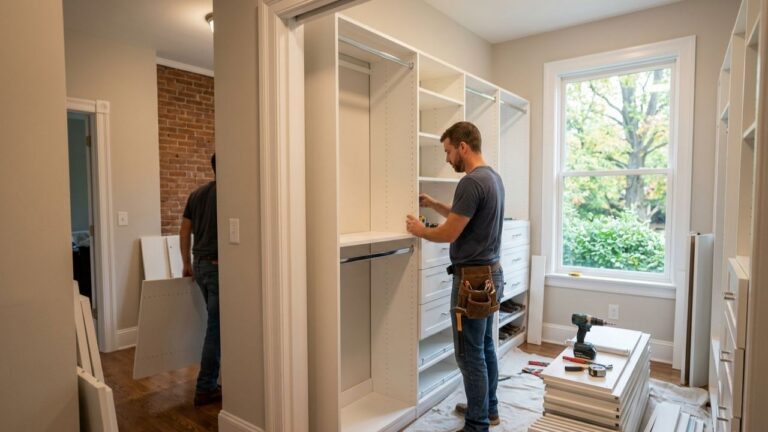
Professional installers usually complete most reach-in closet installations in a single day, typically within 4 to 8 hours depending on the project scope. More complex systems with multiple components, built-in drawers, or custom finishes may take two days. DIY systems typically take a weekend for a thorough installation.
Standard shelving like basic wire racks or simple wall-mounted shelves provides basic storage but lacks the versatility and cohesion of a true closet system. A closet system combines hanging rods, shelves, drawers, and shoe storage into one organized design that fits the available space. The result is significantly more storage capacity, a cleaner aesthetic, and a better user experience day to day.
If you have the space to convert to a walk-in, it can be a worthwhile investment especially for a master suite. But for most bedrooms, the reach-in is the only option, and that’s perfectly fine. A professionally designed reach-in closet system can provide comparable (or better) storage density than a poorly organized walk-in. The key is using vertical space, layering storage types, and keeping the design aligned with your actual wardrobe and habits.
Yes. Studies and real estate professionals consistently confirm that built-in closet storage is one of the most noticed and appreciated features by homebuyers. A well-designed, professionally installed reach-in closet system improves your daily life and shows future buyers that you have cared for and thoughtfully upgraded the home. It’s one of the few home improvements that benefits you both today and at resale.

4 Comments
4a8fjy
qh0zdo
uwuxkz
4o6458