
You open your closet every single morning. And every single morning, something falls on your head.
Sound familiar? You’re not alone. Most people live with closets that were designed as an afterthought a rod, a shelf, and hope. But modern closet design ideas have completely changed what’s possible, even in small spaces.
Whether you’re working with a tiny reach-in or a generous walk-in, this guide will show you exactly what’s trending, what works, and what makes a closet feel like it was designed for you.
Why Modern Closet Design Matters More Than You Think
A well-organized closet isn’t just about aesthetics. It saves you time every morning, reduces stress, and if you’re selling your home adds real value.
Buyers notice closets. Real estate agents will tell you: a beautiful, functional closet can tip a buying decision. That’s why closet designs for home staging have become one of the top requests from sellers who want an edge in the market.
But even if you’re not selling, a thoughtfully designed closet changes how you start and end every day. Small upgrade, big impact.
The 5 Best Modern Closet Design Ideas for Any Home
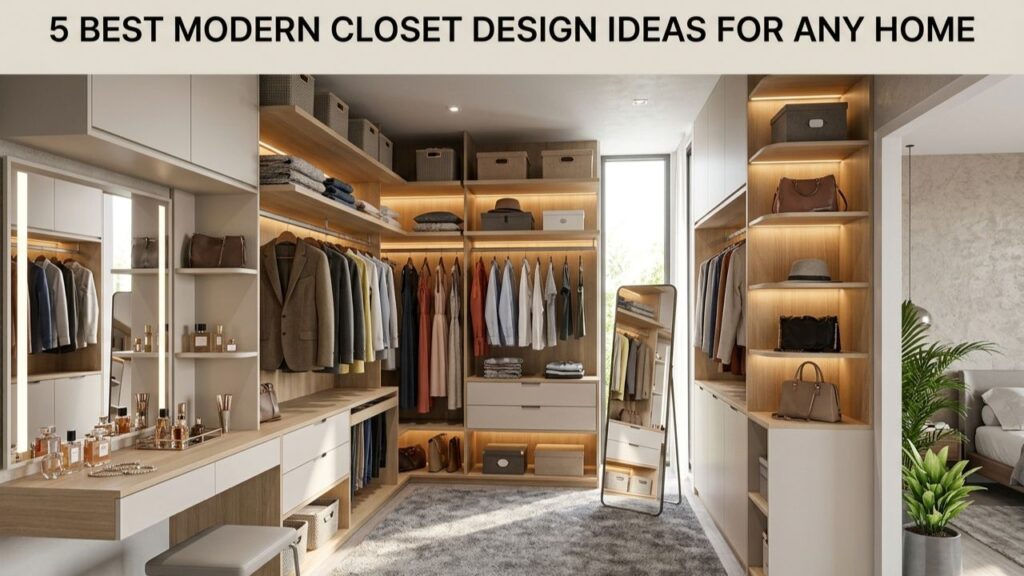
Here are the ideas that consistently work whether you’re renovating, staging, or just tired of the chaos.
1. The Double-Hang System
Most people use their closet rod like it came with the house one single rod, full width. Doubling it up (short clothes above, folded items below) instantly doubles your hanging space without adding a single square foot.
This works especially well for shirts, blazers, folded pants, and kids’ clothing.
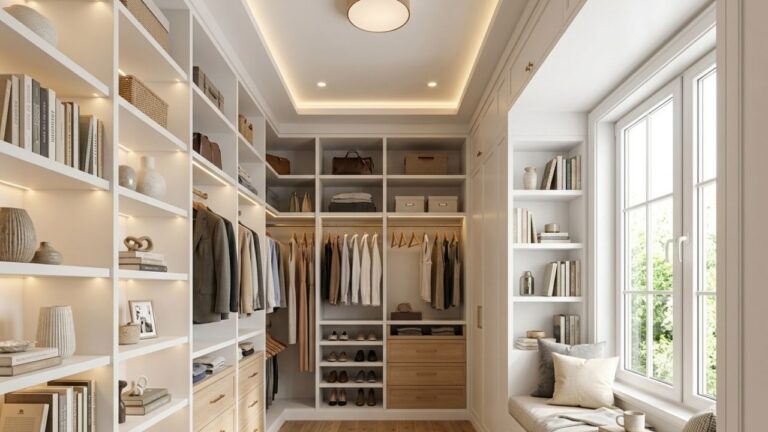
2. Open Shelving with Basket Bins
Fully enclosed cabinets can make small closets feel claustrophobic. Open shelving keeps the space feeling airy and lets you see everything at a glance.
Pair the open shelves with labeled fabric bins for items you don’t want on display think seasonal accessories, scarves, or gym gear.
3. Floor-to-Ceiling Storage
Dead space above the top shelf is wasted real estate. Modern designs push storage all the way to the ceiling top shelves for seasonal items, lower sections for daily-use clothing. A small step stool handles the rest.
4. Built-In Drawers Instead of a Dresser
Moving your dresser into your closet (or replacing it with built-in drawers) frees up bedroom floor space and keeps folded clothes where they belong inside the closet, not spread across a chair.
5. Integrated Lighting
This one sounds small, but it changes everything. A dark closet hides your clothes. Simple LED strip lighting under shelves or inside the unit makes colors pop and eliminates the “why does this look different in daylight?” problem entirely.
Reach-In Closet Design Getting the Most Out of a Small Space
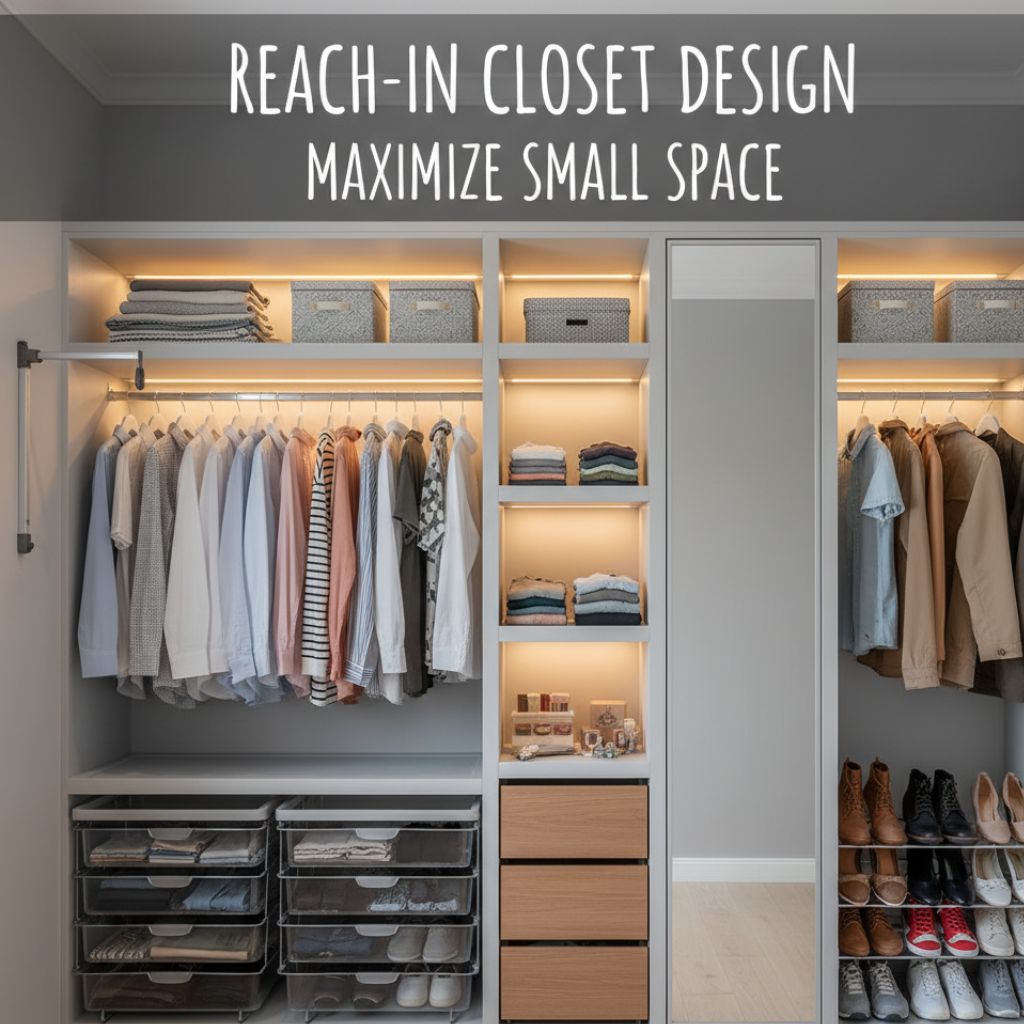
Not everyone has a walk-in. Most homes, especially older builds, have a standard reach-in closet design usually 2 to 6 feet wide and about 24 inches deep. The good news? Small doesn’t have to mean chaotic.
Here’s what works for reach-ins:
- Use the full height. Install shelving all the way to the ceiling. The top section stores items you use less frequently.
- Add a second rod. If you hang mostly shirts or shorter items, a second rod below the first is a game-changer.
- Put a mirror on the inside of the door. It creates the illusion of space and adds a full-length mirror you’d otherwise need room for elsewhere.
- Use slim velvet hangers. Standard plastic hangers take up more space than you realize. Switching to slim hangers can add 30–40% more hanging capacity.
- Add a pull-out accessory tray or belt rack. Small accessories are closet chaos magnets. A dedicated pull-out keeps them contained and accessible.
A reach-in done right doesn’t feel like a compromise it feels intentional.
Minimalist Closet Design Less Is Actually More
There’s a reason minimalist closet design keeps trending: it forces you to be intentional about what you own, and it makes getting dressed feel calm instead of overwhelming.
The core idea is simple every item has a home, nothing is hidden, and visual noise is kept to zero.
Here’s how to pull it off:
Stick to a neutral palette. White, natural wood tones, soft grays. The goal is for your clothes to be the visual element, not the storage system.
Use matching hangers throughout. Mixed hangers create visual noise even when everything is technically organized. Uniform wooden or velvet hangers make a huge difference.
Hide what doesn’t need to be seen. Hampers, shoe boxes, and accessories live inside closed bins or behind doors. What’s visible should look deliberate.
Edit ruthlessly. A minimalist closet only works if you’re honest about what you actually wear. The design supports a curated wardrobe not a place to hide things you haven’t worn in three years.
Done well, a minimalist closet is the most calming space in your home.
Closet Designs for Home Staging What Buyers Actually Notice
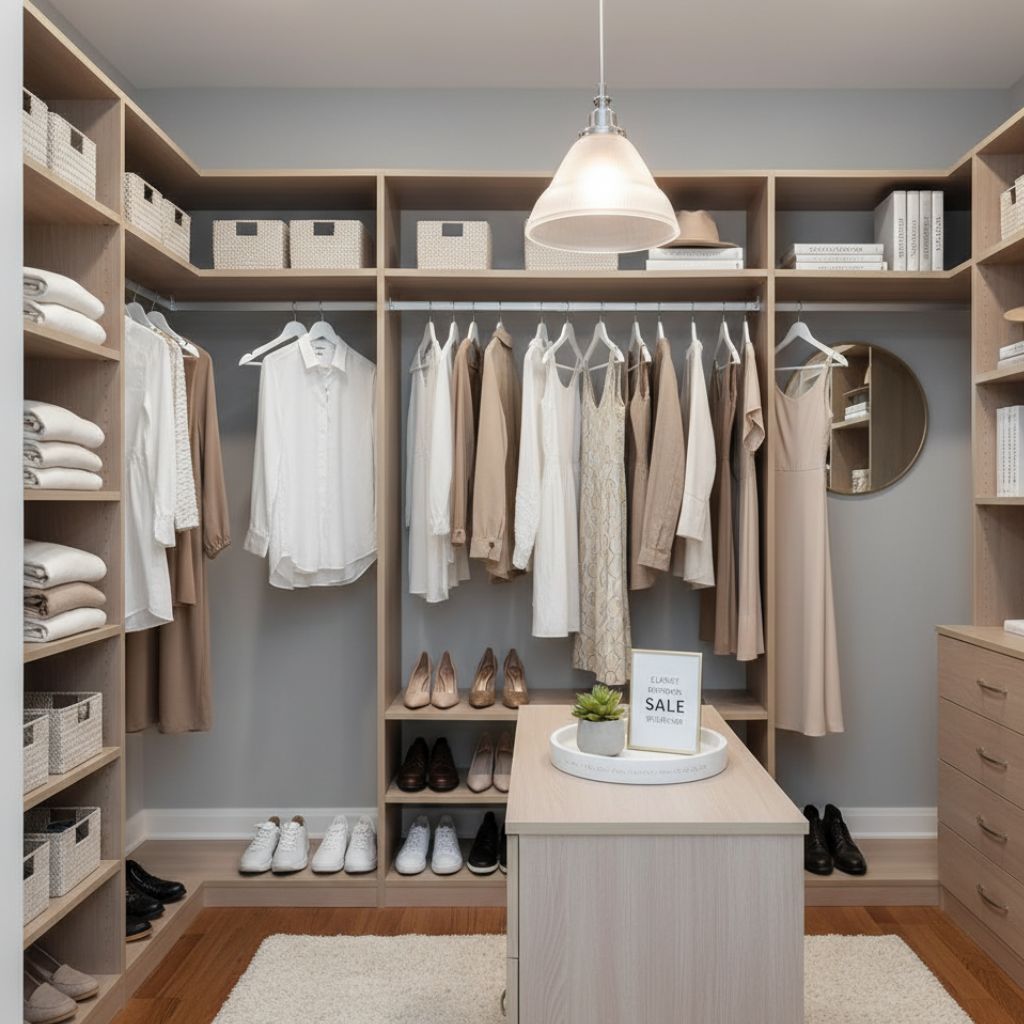
If you’re getting ready to list your home, your closets deserve as much attention as your kitchen or bathroom.
Buyers open every closet. Every single one. And what they’re evaluating consciously or not is whether their life will fit in your home.
Here’s what smart custom closet designs for home staging focus on:
- Remove at least 50% of what’s currently in the closet. Sparse looks spacious. Packed looks small, no matter the actual dimensions.
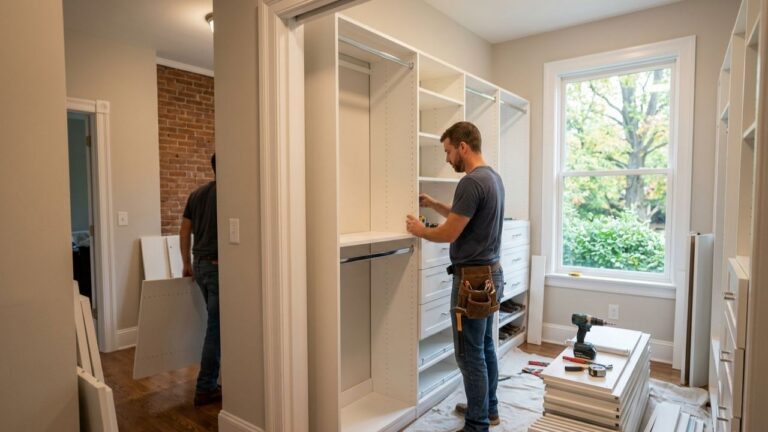
- Install a simple custom system. Even a basic modular system from a professional installer reads as “upgraded” to buyers and stands out against builder-grade rods and shelves.
- Consistent matching hangers. Again this sounds minor, but it photographs beautifully and makes the space look curated.
- Light it up. Staged closets that are well-lit feel larger and more luxurious. Add battery-powered LED lighting if hardwired isn’t an option.
- Show off specialty storage. If you have a shoe shelf, tie rack, or jewelry drawer, make sure it’s visible. Buyers love built-in solutions they don’t have to add themselves.
Closets are a selling point now. Make sure yours tells the right story.
How to Choose the Right Closet Design for Your Home
Before you invest in any closet system, ask yourself three questions:
1. What do I actually store here? Mostly hanging clothes? Lots of folded items? Shoes and accessories? Your storage mix determines your design. A shoe collector needs very different shelving than someone who lives in suits.
2. What’s my space constraint? Walk-in, reach-in, or a converted wardrobe? Each has a different design approach. Getting the measurements right before you design saves a lot of frustration later.
3. What’s my budget? Custom-built systems offer the best fit and finish. Modular systems are more flexible and budget-friendly. Either way, even a modest investment in better organization pays you back in daily time savings and if you’re selling in home value.
When in doubt, talk to a professional. A closet designer can look at your space and immediately suggest layouts you wouldn’t have thought of yourself.
Conclusion
A closet is one of those spaces that quietly shapes your daily life. Get it right and you barely think about it everything has a place, mornings run smoother, and the space just works.
Whether you’re drawn to a sleek minimalist closet design, need to maximize every inch of a reach-in, or want to impress buyers with a staged upgrade, the right design makes all the difference.
You don’t need a massive space or a massive budget. You need a plan that fits your life.
Ready to make it happen? The team at Custom Closets specializes in designing closets that work for real homes and real people. Browse ideas, get inspired, and reach out when you’re ready visit Contact Us to start your project today. Or give them a call at +1 (502) 592-5060 they typically reply within 24 hours and are happy to talk through your space before you commit to anything.
FAQs
Clean, open shelving combined with a mix of hanging space and drawers is dominating in 2026. Warm wood tones paired with matte white or soft gray panels are especially popular they feel modern without being cold.
Costs vary widely. A basic reach-in closet system typically runs $500–$1,500 installed. A full custom walk-in can range from $3,000 to $10,000+ depending on size, materials, and features. Many homeowners find the investment pays for itself in resale value alone.
Absolutely. In fact, small reach-in closets benefit the most from smart design. Double rods, floor-to-ceiling shelving, door-mounted organizers, and proper lighting can completely transform what feels like a frustrating space into a highly functional one.
A minimalist closet is intentionally designed so that only what you regularly use is visible and accessible. The storage system itself recedes into the background neutral colors, matching hardware, no visual clutter. It’s not just organized; it’s curated.
Yes consistently. Staged and upgraded closets help buyers visualize their lives in a home. A well-designed closet signals that the home has been cared for and updated. Real estate professionals often recommend closet upgrades as one of the highest-ROI pre-sale improvements you can make.

3 Comments
Your post is a prime example of top-notch content. I found it highly informative and engaging. For more insights, click here.
References:
Snatch Casino Erfahrungen https://s3.amazonaws.com/
cekl5j