You’ve been there, done that and got the T-shirt.You’ve been there, done that, and you’ve got the T-shirt when you’ve had to move three boxes of holiday decorations just to get a screwdriver. One of the most under-used and most disorganized rooms in the house is the garage. The problem is it doesn’t have to be.
Installing the proper garage storage shelving system can completely revolutionize the space and make it look and function completely differently. Smart shelving organizes and holds everything in place, whether you’re storing sports gear, power tools, seasonal items or yard supplies. In 2026, homeowners will have even more choices, flexibility and durability options than before.
Whether you’re considering a DIY garage storage shelving project or hiring a professional to build custom garage cabinets, this guide provides you with the tips and tricks that you need to take into account. We’ll also show you how you can use some closet organization ideas to your garage and give you a blueprint that you can use to make smart decisions for your project.
Why Garage Storage Shelving Is More Important Than You Think
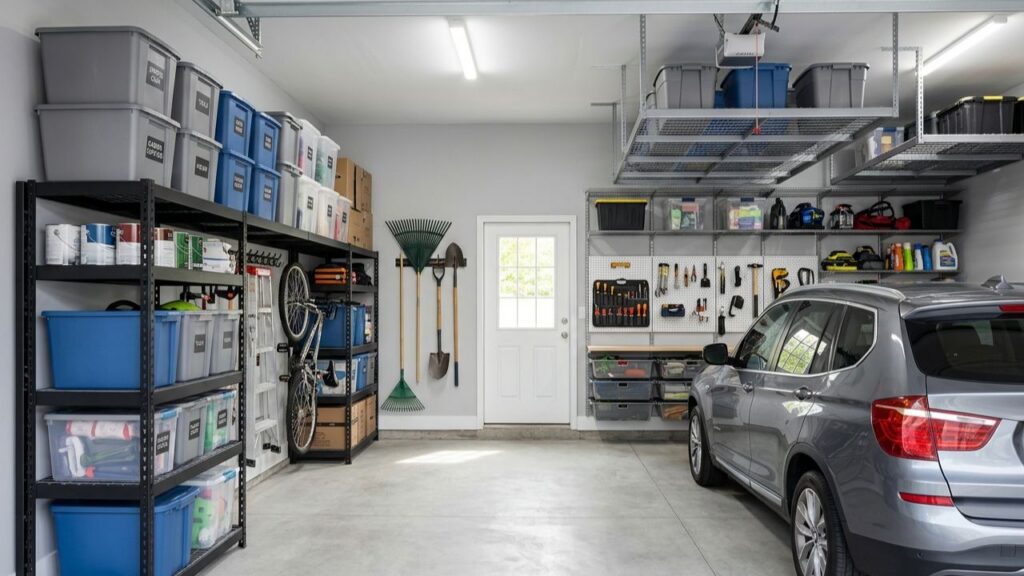
The average American home has a two-car garage yet nearly 25% of people with a two-car garage can’t fit even one car inside because of clutter. That’s wasted real estate, wasted time, and honestly, wasted money.
A well-designed shelving system solves several problems at once:
- Safety: Items stacked on the floor are tripping hazards. Shelving keeps the floor clear.
- Efficiency: You find what you need in seconds instead of minutes.
- Space maximization: Vertical wall space in a garage is often 9–12 feet that’s enormous untapped storage.
- Home value: Organized, finished garages are a genuine selling point in today’s real estate market.
- Stress reduction: An organized environment genuinely reduces mental load at home.
The investment in quality garage storage shelving pays dividends every single day.
Types of Garage Storage Shelving: Which System Is Right for You?
Not all shelving is created equal. The best solution depends on your garage size, what you’re storing, your budget, and how finished you want the space to feel.
1. Freestanding Metal Shelving Units
These are the workhorses of garage storage. Freestanding steel shelving units are affordable, heavy-duty, and can be repositioned anytime. They’re ideal for large, heavy items like bins of tools, bulk supplies, and car maintenance products.
Best for: Renters, budget-conscious homeowners, or anyone who wants flexibility.
Tip: Look for shelving rated at 1,000–2,000 lbs per shelf when storing heavy items. Wire shelving allows dust to fall through, reducing maintenance.
2. Wall-Mounted Shelving Systems
Wall-mounted systems use brackets and rails secured directly into studs, freeing up floor space completely. They’re more permanent than freestanding units but offer excellent load capacity and a much cleaner look.
Best for: Garages where floor space is at a premium; those who want an organized, finished appearance.
Popular option: Slatwall panels combined with adjustable brackets let you reconfigure shelf height as your needs change over time.
3. Overhead Ceiling Storage
Ceiling-mounted shelving and storage platforms are perfect for seasonal items holiday boxes, camping gear, and infrequently used equipment. These systems typically hang from the ceiling joists and can hold hundreds of pounds.
Best for: Storing items that aren’t accessed frequently; maximizing vertical space in smaller garages.
Safety note: Always anchor overhead systems to ceiling joists, not drywall alone. Consult a professional if you’re uncertain about load limits.
4. Custom Built-In Shelving and Cabinetry
This is where garage storage becomes something genuinely impressive. Custom built-in systems are designed specifically for your garage dimensions, your storage needs, and your aesthetic preferences. They combine open shelving, enclosed cabinets, and often workbench space into one cohesive, finished system.
This is the option that turns a cluttered garage into what many homeowners describe as their favorite room in the house.
Custom Garage Cabinetry Ideas That Actually Work
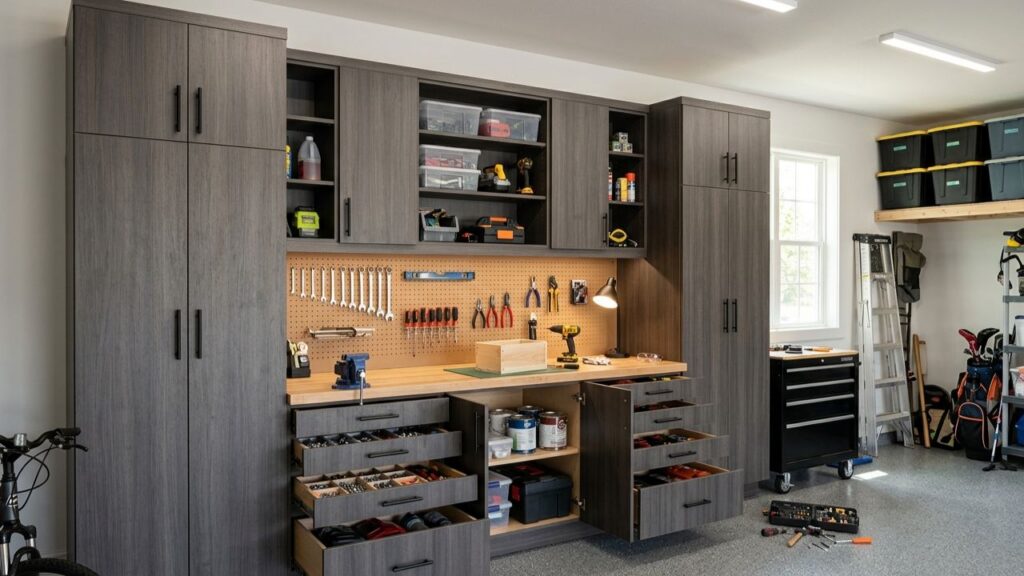
If you’re ready to invest in a real transformation, custom garage cabinetry ideas are worth exploring seriously. The difference between off-the-shelf solutions and custom-built cabinetry is the difference between making do and truly loving your space.
Here’s what the best custom garage cabinet installations include:
Floor-to-Ceiling Cabinet Towers
These tall, vertical cabinet units maximize every inch of wall height. Upper sections handle seasonal or rarely used items; lower sections are within easy reach for everyday tools and supplies. When everything is behind closed doors, the garage instantly looks cleaner even on a messy day.
Upper and Lower Cabinet Combinations
A classic cabinetry layout pairs lower base cabinets (typically 34–36 inches high) with upper wall cabinets, leaving a gap in the middle that serves as a workbench or display ledge. This is one of the most functional garage cabinet ideas available because it creates defined zones: a work area, a storage area, and visual breathing room.
Integrated Workbench Systems
For homeowners who use their garage as a workspace woodworkers, mechanics, hobbyists a custom workbench integrated with shelving and cabinetry is a game-changer. Built-in power strip channels, pegboard backings, and deep drawer systems for tools make the workbench area as functional as a professional shop.
Locker-Style Sections for Families
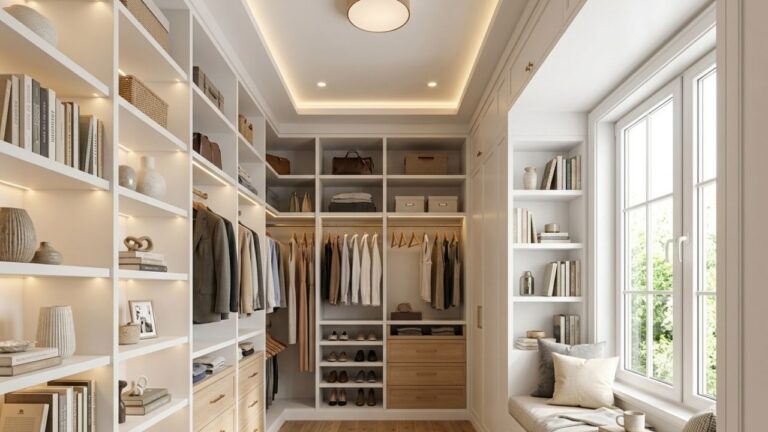
Families with multiple kids and lots of sports gear love locker-style cabinet sections. Each family member gets their own dedicated locker with hooks, a small shelf, and a bin just like a mudroom, but in the garage. It’s an idea borrowed directly from closet shelving ideas, scaled up for the garage environment.
Garage Cabinetry Material: What Holds Up Best?
This is a question we get constantly. In a garage environment subject to temperature swings, humidity, and dust material choice matters enormously.
- Thermally fused laminate (TFL): Excellent moisture resistance, durable surface, wide range of colors and finishes. The best all-around choice for most garages.
- Powder-coated steel: Extremely durable, resistant to scratches and dents, ideal for heavy-duty environments.
- Solid wood: Beautiful but requires more maintenance in humid climates. Better suited for finished, climate-controlled garages.
- PVC/Polymer: Fully waterproof, great for damp garages, but limited aesthetic options.
For most homeowners in the Louisville, KY area and across Kentucky and Indiana, TFL cabinetry with a powder-coated frame is the sweet spot of durability, aesthetics, and value.
Borrowing the Best Closet Shelving Ideas for Your Garage
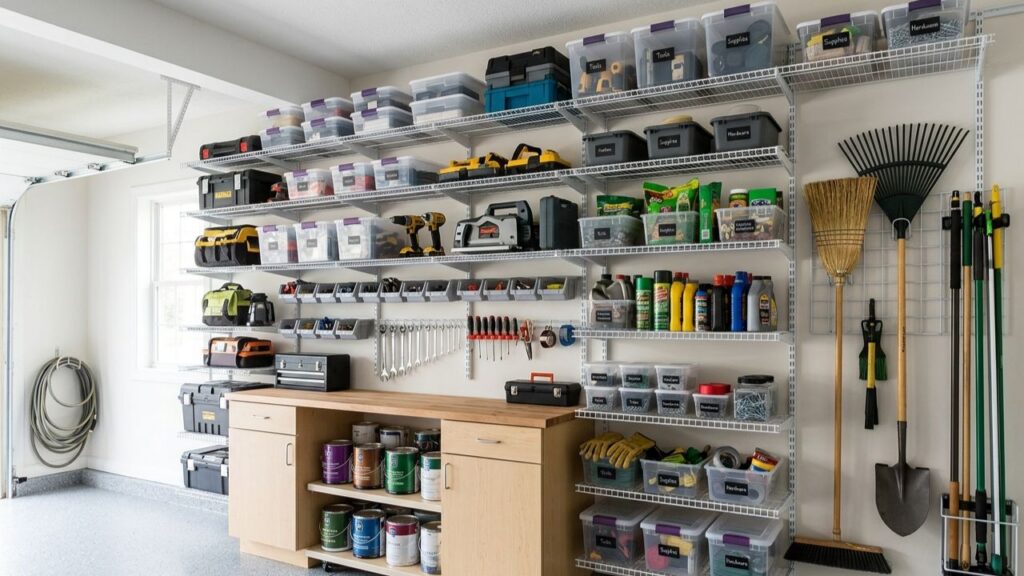
One of the smartest design shifts happening in home organization right now is treating the garage with the same level of care as any other room in the house. And that means borrowing proven strategies from interior closet design.
Here are some closet shelving ideas that translate beautifully to garage spaces:
Adjustable Shelf Pins Over Fixed Shelves
In a walk-in closet, adjustable shelving lets you reconfigure the space as your wardrobe changes. The same logic applies in the garage. As hobbies evolve, kids grow up, and storage needs shift, adjustable shelving means your system grows with you instead of becoming obsolete.
Zoning by Category
Professional closet designers always organize by category and frequency of use: daily items at eye level and arm’s reach, seasonal items up high, rarely used items in back. Apply this exact logic to garage shelving. Your daily-use tools go at mid-height. Garden supplies go on one wall. Automotive products go near the garage door. Zone your garage the same way you’d zone a closet.
Vertical Dividers
Closet systems use vertical dividers to organize handbags, clutches, and folded items. In a garage, vertical dividers on a shelf section are perfect for storing folding chairs, large cutting boards, folding tables, and yard signs upright instead of stacked. This makes retrieval effortless.
Labels and Clear Bins
This one sounds simple, but it’s transformative. Clear bins with printed or handwritten labels are a staple of professional closet design. Applied to garage shelving, they eliminate the “mystery box” problem where half your storage time is spent looking inside containers just to remember what’s inside them.
Don’t Overlook Laundry Room Shelving Ideas: The Garage Connection
Many homes in the Louisville metro area and throughout Kentuckiana have their laundry room either inside the garage or directly adjacent to it. This creates a natural opportunity to design the storage in both spaces as a unified system.
The best laundry room shelving ideas that connect with garage storage include:
Continuous Cabinetry Across Both Spaces
When the laundry room opens directly into the garage or mudroom, running matching cabinetry across both spaces creates a cohesive, high-end feel. Upper cabinets for laundry supplies in the laundry room flow into tool and supply storage in the garage, with the same door style, color, and hardware throughout.
Utility Shelving Above the Washer and Dryer
Open shelving above the washer and dryer typically 12–16 inches deep handles detergents, fabric softeners, dryer sheets, stain removers, and small laundry accessories. This keeps countertops clear and creates a clean, organized backdrop for what’s usually a hardworking room.
A Rod for Air-Drying Clothes
A simple hanging rod mounted below a shelf borrowed from closet design thinking creates an air-drying station without taking up any floor space. It’s one of those small additions that people call “life-changing” once they have it.
Fold-Down Ironing Board Cabinets
For laundry rooms short on space, a fold-down ironing board cabinet mounted to the wall replaces the need for a freestanding ironing board entirely. When not in use, it looks like a clean cabinet door. This kind of thoughtful design is what separates a professionally designed laundry space from a functional-but-forgettable one.
Expert Tips for Planning Your Garage Storage Shelving System
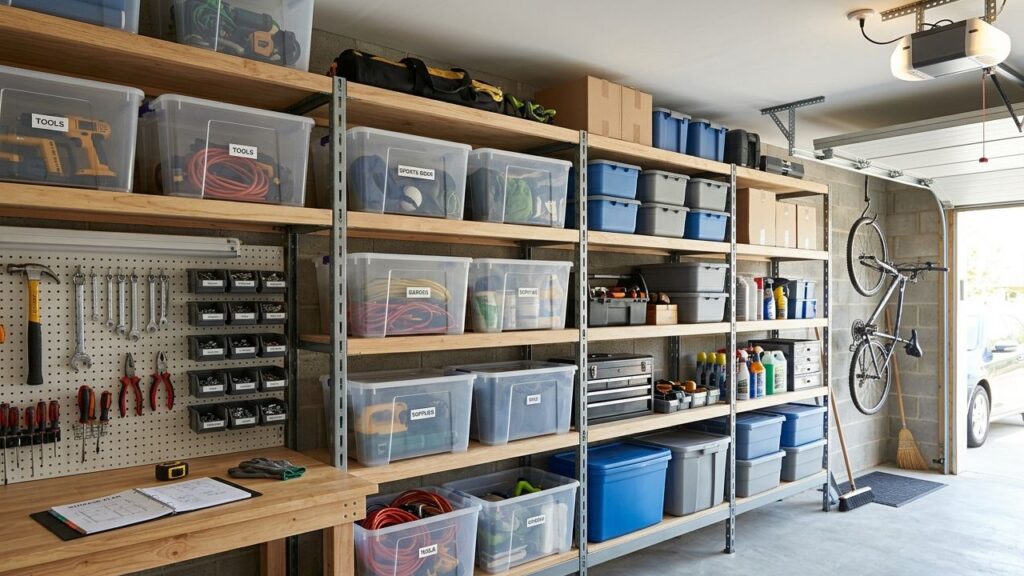
Before you buy a single shelf bracket or cabinet door, spend time planning. Here’s the professional process we recommend:
Step 1: Take a Full Inventory
List every category of item you need to store. Don’t edit yet just capture everything. Tools, sports equipment, automotive supplies, seasonal decorations, garden equipment, cleaning products, camping gear, bikes, and anything else living in your garage.
Step 2: Measure Everything
Get precise measurements of your garage: total floor area, wall lengths, ceiling height, door and window locations, and the location of electrical outlets, switches, and lights. These measurements are critical for any built-in or wall-mounted system.
Step 3: Define Your Zones
Based on your inventory and how often you use each category, define storage zones. Frequent-access items belong on dedicated wall sections at a comfortable height. Seasonal and rarely used items go in overhead or high-up storage.
Step 4: Decide Between DIY and Professional Installation
This is an honest conversation worth having. DIY shelving from a big-box store costs less upfront but often looks makeshift, doesn’t maximize your specific dimensions, and may not hold up over time. A professionally designed and installed custom system costs more initially but delivers a finished result that adds real value to your home and genuinely lasts for decades.
Step 5: Set a Realistic Budget
Quality garage storage shelving systems range from a few hundred dollars for basic wall-mounted shelves to several thousand dollars for full custom cabinetry systems. Define what you want the space to accomplish, and budget accordingly. Many homeowners find that a mid-tier professional installation falls in the $3,000–$8,000 range and delivers results they’re still thrilled with ten years later.
Common Garage Storage Mistakes (And How to Avoid Them)
Even well-intentioned garage organization projects go wrong. Here are the most common mistakes and how to sidestep them:
- Buying shelving before measuring: Purchased units rarely fit perfectly. Measure twice, shop once.
- Ignoring the ceiling: Overhead storage in a two-car garage can add hundreds of cubic feet of usable storage.
- Choosing aesthetics over durability: Garage environments are tough. Choose materials rated for temperature and humidity variation.
- No designated floor area: Keep a clear floor zone for moving large items in and out. Don’t let shelving consume every inch.
- Skipping the planning phase: The biggest predictor of a successful garage organization project is thorough planning before anything is purchased or installed.
Conclusion
The garage is one of the rooms in most homes to receive the attention it deserves and that’s why investing in it makes such a drastic impact. The right garage storage shelving system isn’t just for storing your stuff. It alters the overall aesthetic and performance of your whole house. It liberates up wasted space, removes everyday annoyance and brings a place you’re happy to walk into.
If you’re on the lookout for clean freestanding metal shelving, innovative wall-mounted shelving, or a complete bespoke cabinet with a built-in workbench and locker area, the important thing to keep in mind is to consider and select materials that will outlast the designs, and design a system that suits reality rather than an idealized version of it.
If you’re ready to take the next step, check out the complete selection of garage storage, custom cabinetry, closet systems and laundry room organization solutions from custom-closets. Whether it’s a walk-in closet design or an entire garage renovation, the team of Custom Closets has real-world experience, quality craftsmanship, and a passion for lasting results.
FAQs
Absolutely. The wall-mounted shelving, upper and lower cabinets, and adjustable shelf solutions are great in the laundry room. If the spaces are next to each other, they can be designed in the same style and finish for a unified, upscale appearance.
For a smaller garage, space is a big concern, and vertical storage is the key, with floor-to-ceiling cabinets and overhead platforms making the most of limited space. In a larger garage, you can set aside spaces (a workshop space, a sports equipment area, a seasonal storage area) and can introduce island work benches and a full wall cabinet run.
The solution is one that facilitates the placement of items in the right location more than putting them anywhere. Items not required to be seen at all can be stored in labelled bins, a designated zone or enclosed cabinets – all of this helps to keep a system in order with little effort.
Both are appropriate. Wire shelves can be used in dusty garage areas, as air and dust can flow in and out. Shelves that are solid are better for small items that would go through wire gaps, and for a cleaner finished look. Open and enclosed cabinets are often built on solid shelves while open areas are constructed with wire or slatted shelves.
Begin with a complete list of everything that you want to store, accurate measurements of your space, and an understanding of your priorities (maximizing storage, creating a workspace, enhancing the visual appeal). Then, with the help of a professional custom storage designer you’ll see just what you can afford.