
You open your closet every single morning. That’s roughly 365 times a year you’re either greeted by calm, organized space or a tangled avalanche of clothes, mystery boxes, and shoes you forgot you owned. If it’s the latter, there’s a good chance your storage system is working against you, not for you.
That’s exactly where customizable closet systems come in. Unlike the wire-shelf kits collecting dust in hardware store aisles, a truly custom closet is designed around your actual wardrobe, your daily habits, and the physical dimensions of your space. In 2026, the options have never been better or smarter.
In this guide, you’ll find everything from practical design principles and eco friendly closet ideas to cutting-edge smart closet solutions and strategies for seamless shared closet organization. Whether you’re building from scratch or finally upgrading that embarrassing reach-in, this is your starting point.
What Are Customizable Closet Systems?
At their core, customizable closet systems are storage solutions built specifically for your space not some hypothetical “average” closet in a catalog. They go far beyond picking a color for a shelf unit. A well-designed system considers your ceiling height, wall configuration, the types of clothing you wear most, your shoe collection, and even how you move through the space during a busy morning.
The customization happens at multiple levels:
- Structural layout The arrangement of hanging rods, shelves, drawers, and cubbies, all sized to your actual wardrobe mix (suits vs. folded items vs. long dresses).
- Material selection From solid hardwoods and bamboo to moisture-resistant MDF and powder-coated metal, each with different durability, cost, and environmental profiles.
- Finish and aesthetic Hardware, door styles, color palettes, and accent lighting that match your bedroom or dressing room design.
- Accessories and upgrades Pull-out tie racks, velvet-lined jewelry drawers, motorized carousels, built-in laundry hampers, and more.
The goal isn’t just storage it’s a system that makes getting dressed faster, finding things easier, and keeping everything organized with minimal effort over time.
Expert Insight: The biggest design mistake people make is focusing only on hanging space. In reality, most wardrobes benefit from a roughly 40% hanging, 40% shelving, and 20% drawers split but this varies dramatically by person. A custom design process always starts with an honest audit of what you actually own.
Custom vs. Standard: An Honest Comparison
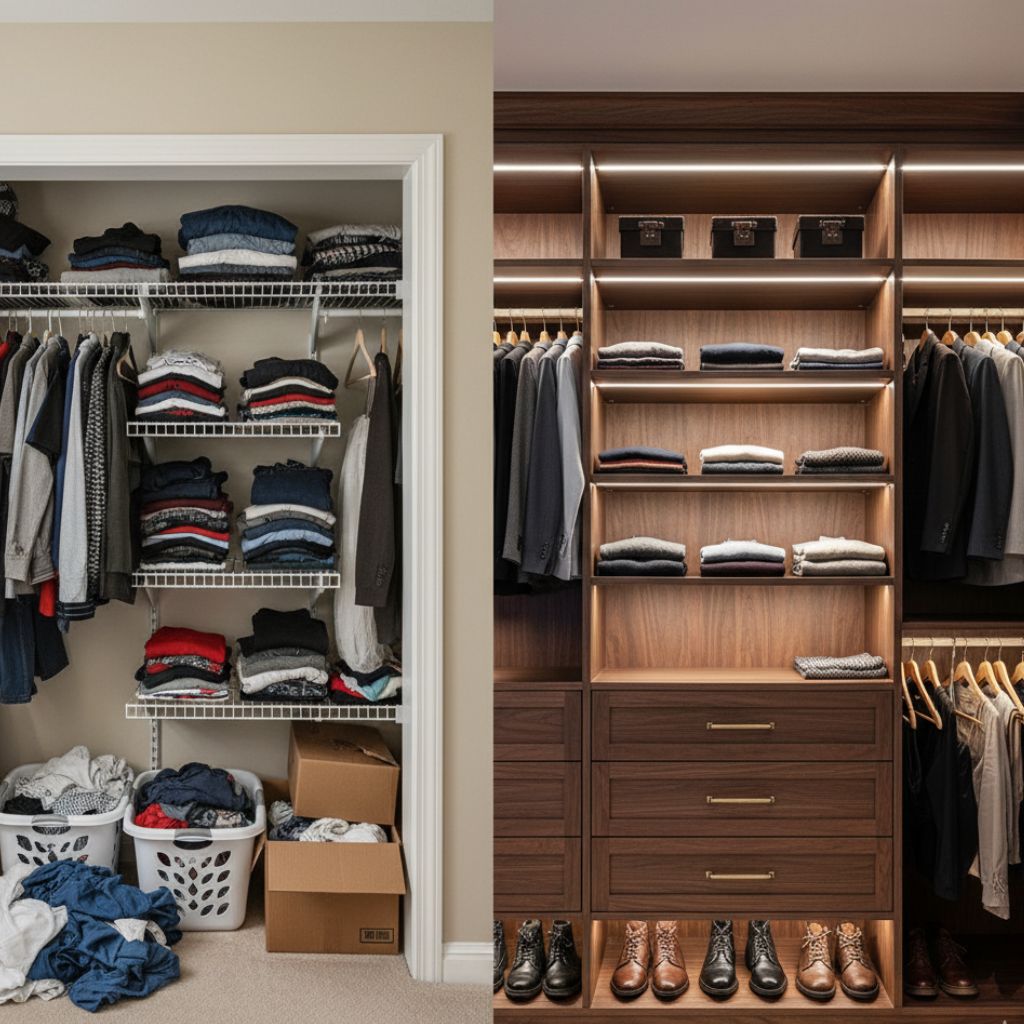
Before investing in customizable closet systems, it’s fair to ask: why not just buy a modular kit from a big box store? The short answer is that standard systems are designed for the average home and your home, wardrobe, and lifestyle almost certainly aren’t average.
Standard Shelf Kits
- Fixed shelf heights, limited flexibility
- Generic dimensions rarely fit your space perfectly
- Low durability with heavy use
- Hard to expand or reconfigure later
- Minimal design appeal
- No professional installation guidance
Customizable Systems
- Adjustable shelving for any wardrobe type
- Designed to exact room measurements
- Commercial-grade materials built to last
- Modular designs grow with your needs
- Finishes chosen to match your home
- Expert design consultation included
The difference becomes most apparent over time. A standard kit may save money upfront, but it rarely solves the underlying organization problem. A custom system especially one designed by an experienced closet specialist tends to feel like the problem was solved for good.
Eco-Friendly Closet Ideas for 2026
Sustainability isn’t a trend anymore it’s a standard expectation, and the closet industry has responded. If you care about reducing your environmental footprint without compromising on quality or aesthetics, today’s eco friendly closet ideas offer genuinely excellent options.
Sustainable Materials Worth Choosing
- FSC-Certified Wood Lumber carrying Forest Stewardship Council certification comes from responsibly managed forests. It’s the gold standard for hardwood closet components and one of the most straightforward ways to verify your materials have an ethical supply chain.
- Bamboo Panels Bamboo grows in three to five years, compared to 20+ for most hardwoods, making it one of the fastest-renewable materials available. Modern bamboo engineered panels rival hardwood in durability and have a clean, contemporary grain pattern.
- Formaldehyde-Free MDF Standard MDF can off-gas formaldehyde into your home for years. No-added-formaldehyde (NAF) versions eliminate this risk while keeping costs manageable essential for a space you’ll spend time in every day.
- Recycled Metal Hardware Drawer pulls, hanging rods, and bracket systems made with recycled steel or aluminum have nearly identical performance to virgin metal products, with a significantly lower carbon footprint.
- Low-VOC Finishes Paints, stains, and sealants with low volatile organic compound content improve your indoor air quality and are better for the finishing craftspeople who apply them.
Design Choices That Reduce Waste
Beyond materials, the structure of your closet system itself can be more or less sustainable. Modular, adjustable designs that can be reconfigured rather than replaced mean less material ends up in landfills as your wardrobe or life circumstances change. Built-in pull-out laundry hampers reduce the need for plastic hampers. Integrated lighting on motion sensors can cut energy use by 60–80% compared to always-on fixtures.
“The greenest closet is one you keep for 20 years. Durable materials, adaptable layouts, and timeless finishes aren’t just good design they’re the most sustainable choice you can make.”
Choosing an eco friendly closet design doesn’t mean sacrificing elegance. In fact, natural wood tones, matte hardware, and organic textures are among the most visually appealing finishes available and they happen to be the most responsible choices, too.
Smart Closet Solutions: Technology That Actually Saves You Time
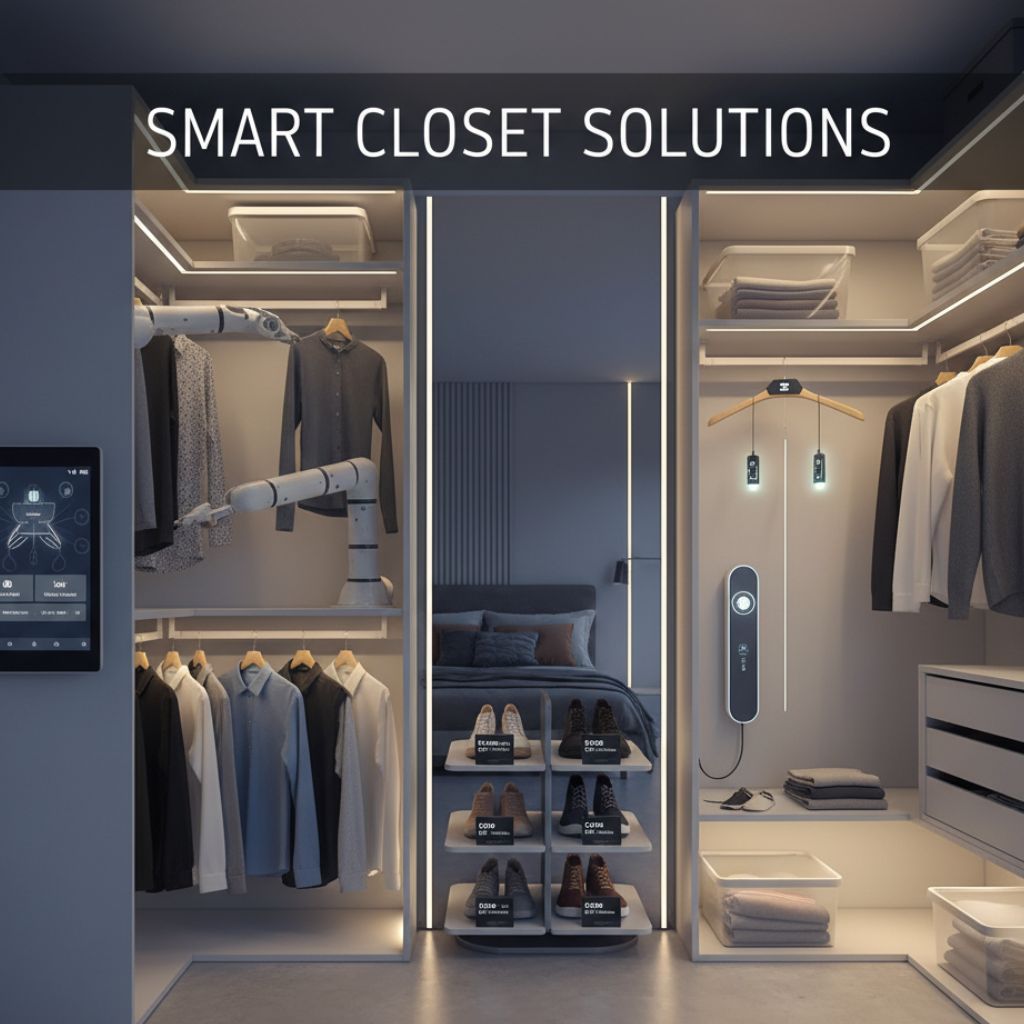
The phrase “smart home” has been overused to the point of parody, but when it comes to closet organization, certain technologies genuinely change the daily experience. The best smart closet solutions in 2026 are thoughtful, practical, and integrated invisibly into a beautiful design not gadgets for gadgetry’s sake.
Lighting That Works Automatically
Motion-activated LED lighting is arguably the single highest-impact smart upgrade for any closet. The moment you open the door or step inside, the space is perfectly illuminated no fumbling for switches in the dark at 6am. Look for systems with adjustable color temperature, so you can view clothing colors accurately (daylight-balanced, around 5000K) rather than under warm bedroom light that makes navy look black.
Motorized Clothing Carousels
For larger walk-in closets, motorized rotating carousels bring clothing to you rather than requiring you to navigate the space. These systems long used in commercial dry-cleaning facilities have become genuinely practical for residential walk-ins and are a genuinely impressive functional upgrade for large wardrobes. Control them via wall panel or smartphone app.
Digital Wardrobe Management
Apps like Cladwell, Smart Closet, and Stylebook let you photograph and catalog your entire wardrobe, then suggest outfits based on weather, occasion, or what you haven’t worn recently. Some high-end custom closet installations include integrated tablets or screens mounted inside the closet itself, making this a seamless part of the morning routine rather than an afterthought.
Climate and Humidity Control
If you own quality knitwear, leather goods, or delicate fabrics, humidity is a serious concern. Smart humidity sensors paired with small, quiet ventilation systems can maintain the ideal 40–50% relative humidity inside a closet, protecting your investment in clothing and preventing the musty odors that plague poorly ventilated storage spaces.
Pro Tip: You don’t need all of these features to have a “smart” closet. Start with excellent lighting it’s the upgrade that delivers the most value for the cost, and it makes every other organizational system easier to use.
Shared Closet Organization: Designing a Space That Works for Two
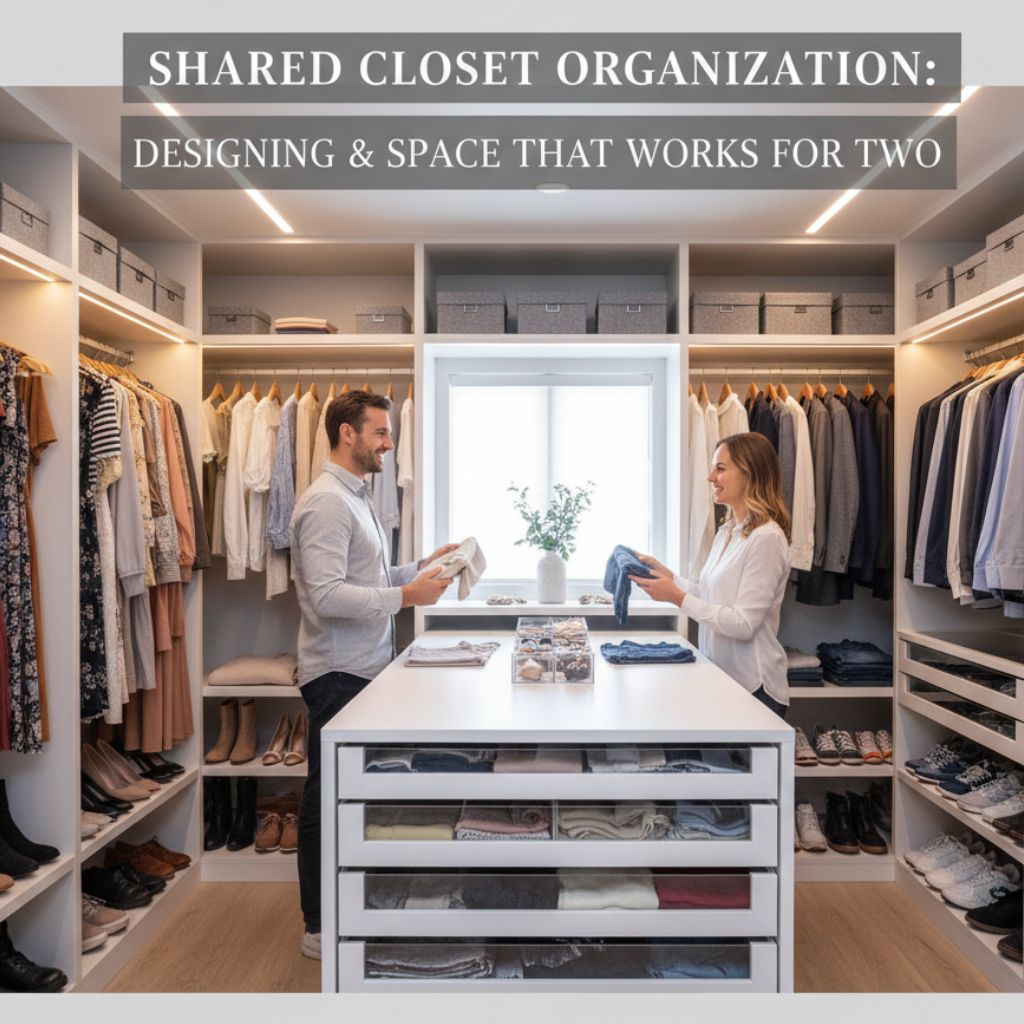
A shared closet is one of the great tests of any relationship. When two people with different wardrobe sizes, organizational styles, and morning routines try to share the same storage space, conflict is almost inevitable unless the space is designed thoughtfully from the start.
Good shared closet organization isn’t about compromising it’s about designing two distinct personal zones within a single system.
The Zone Principle
The most effective strategy is to create clearly defined, separate sections for each person. Left side belongs to one partner, right to the other. This sounds obvious, but many couples skip this step and end up with creeping wardrobe expansion and constant territorial renegotiation.
Within each zone, each person’s section should be configured for their own wardrobe one partner may need significantly more hanging space for suits and dress shirts, while the other may need more shelf space for folded items and shoes. Adjustable shelving makes this easy to set up and easy to change as wardrobes evolve.
Shared Infrastructure, Personal Sections
- Central island or bench A shared island in a larger walk-in serves both people for folding, accessory storage, and sitting while putting on shoes. It becomes a neutral collaborative element that doesn’t belong to either zone.
- Common drawer units A shared drawer tower placed at the center boundary can hold shared items (extra blankets, seasonal accessories) without blurring personal zone boundaries.
- Separate full-length mirrors One for each side eliminates the morning bottleneck of two people needing to get dressed at the same time in front of the same mirror.
- Labeled bins and baskets For accessories and miscellaneous items, clear labeling keeps things from migrating into the wrong zone.
Small Closet, Two People
Not everyone has room for a walk-in. Shared reach-in closet organization requires more creative solutions: double hanging rods that stack two hanging sections vertically, narrow drawer units that fit inside the closet footprint, over-door organizers for shoes and accessories, and a clear agreement about what items live inside the closet versus in a dresser or under-bed storage.
“The couples who fight about closet space the least aren’t the ones with the biggest closets they’re the ones with the most clearly defined systems.”
Types of Customizable Closets for Every Home
Not all customizable closet systems are the same, and the right type depends on your space and goals. Here’s a practical overview of the main categories:
Walk-In Closets
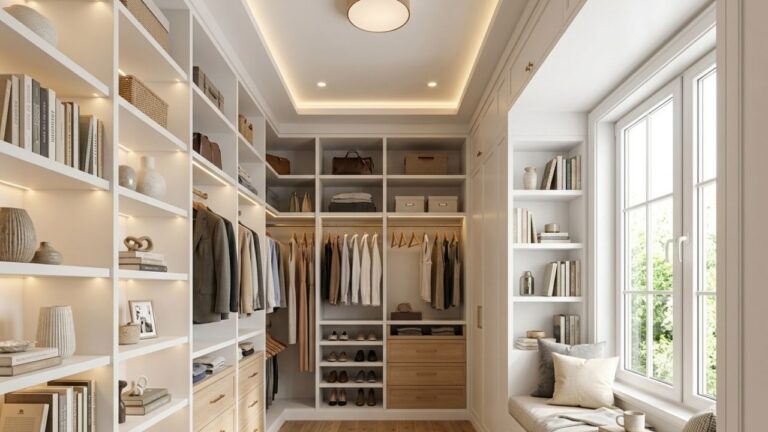
The pinnacle of personal storage, walk-in closets offer 360-degree access and enough room for islands, seating, and full dressing areas. They benefit most from professional design because the layout options are nearly endless and poor planning wastes the potential of the space.
Reach-In Closets
Reach-in closets are the most common type in American homes and the most frequently under-optimized. Replacing a single rod and one shelf with a multi-zone custom system can double or triple usable storage in the same footprint.
Wardrobe and Armoire Systems
For rooms without a dedicated closet, freestanding wardrobe systems offer customizable storage without requiring construction. Modern options are far more sophisticated than traditional furniture pieces, with adjustable interiors and premium finishes.
Specialty Closets
Beyond clothing storage, customizable systems extend to pantry organization, garage storage walls, home office built-ins, mudroom cubbies, and laundry rooms. The same principles of measured design, quality materials, and thoughtful layout apply across all of them.
Expert Design Tips Before You Get Started
Working with a professional closet designer makes the process easier, but going in with a clear sense of your needs and priorities helps you get the best outcome. Here’s what experienced closet designers wish every client knew before the first consultation:
- Do a wardrobe audit first. Before measuring the space, take inventory of what actually lives in your closet. Knowing you have 40 pairs of shoes, 20 suits, or primarily folded items dramatically changes the ideal configuration. Most people discover they own far more than they remembered and donate a significant amount before designing.
- Think about your morning flow. How do you actually get dressed? Do you decide the night before and lay things out? Do you choose randomly? Do you wear work clothes five days a week or casual clothes most of the time? The best closet design matches how you actually behave, not how you wish you behaved.
- Measure ceiling height carefully. Standard closet systems assume 8-foot ceilings. If you have higher ceilings, you may be able to add a second hanging rod level or taller shelving units but only if the system is designed for it.
- Plan for lighting early. Adding lighting after a closet is built is significantly more expensive and complicated. If you’re working with a designer, lighting should be part of the initial plan, not an afterthought.
- Consider your five-year wardrobe. Your closet will likely be installed for at least a decade. Think about whether your wardrobe is likely to grow, shrink, or shift in type (more casual, more formal, more athletic wear) and choose an adjustable system that can accommodate those changes.
Conclusion
A well-designed closet isn’t a luxury it’s one of the most practical improvements you can make to your home and your daily routine. Customizable closet systems give you the storage architecture your life actually requires, rather than forcing you to adapt to a generic layout that was never designed with you in mind.
Whether your priorities are sustainability through eco friendly closet ideas, cutting-edge convenience through smart closet solutions, or finally achieving peace through shared closet organization the right custom system addresses all of it in a single, well-considered design.
The process starts with a conversation and a measurement. Everything else follows from there. If you’re ready to stop fighting with your closet and start working with it, the next step is exploring your options with a specialist who can translate your specific space and lifestyle into a storage solution that actually works.
Ready to see what’s possible for your home? Explore the full range of custom closet services, project galleries, and design inspiration at Custom Closets Louisville where every system is built around the way you actually live.
FAQs
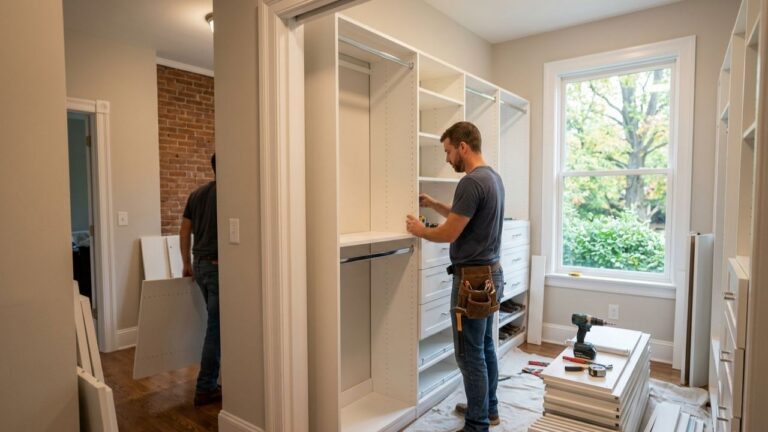
Most professional custom closet installations take one to two days for a standard walk-in or reach-in closet, following a design and fabrication period of one to three weeks. Larger or more complex systems with built-in lighting and specialty features may take longer.
Yes. Freestanding wardrobe systems and wall-mounted modular units can be installed in rooms with no existing closet space. Some companies also specialize in converting alcoves, awkward corners, or spare wall sections into fully functional closet systems without major construction.
For most homeowners, yes. Custom closets consistently rank among the highest-return home improvements in terms of daily quality-of-life improvement and resale value contribution. They are particularly valuable in high-cost real estate markets where maximum storage efficiency is a key selling point.
Solid wood and high-quality plywood outperform particleboard for long-term durability, particularly under heavy loads. For a balance of durability, cost, and eco-consciousness, formaldehyde-free MDF with a melamine or lacquer finish is a popular professional choice.
The most effective strategies are: doubling hanging space with stacked rods, using slim velvet hangers to reduce width per garment, adding over-door shoe organizers, using drawer dividers to maximize folded storage, and establishing a clear personal zone for each person to prevent wardrobe overlap and conflict.

1 Comment
References:
Bet Casino Test https://s3.amazonaws.com/