Be honest, how many mornings have you wasted hunting for a missing sneaker, digging through a pile at the bottom of your closet, or stubbing your toe on a heel that had no business being there? If your shoe collection has officially outgrown your storage situation, you’re not alone. Shoe storage is one of the most common pain points homeowners bring to closet designers, and for good reason.
The good news? Custom closet shoe shelves are one of the fastest, most satisfying ways to transform a chaotic closet into a space that actually works for your life. Whether you own ten pairs or a hundred, the right shelving system turns your shoe collection into an organized, visually stunning display not a daily obstacle course.
In this guide, we’ll walk you through everything you need to know: the best shelf types and configurations, how to plan your layout, which features genuinely add value, and how to tie your shoe storage into a cohesive closet design that includes built-in drawers, accessories, and even pantry organization. Let’s dig in.
Why Custom Shoe Shelves Beat Generic Storage Every Time
Before we get into specific designs, it’s worth addressing the big question: why go custom at all? After all, you can buy a shoe rack from any big-box store for under $50.
Here’s what generic shoe storage can’t give you:
- Shelf heights calibrated to your actual shoe sizes (sneakers vs. boots vs. heels all have different clearance needs)
- Materials and finishes that match the rest of your home
- Configurations that fit odd-shaped or awkwardly sized closets
- Integrated organization features like lighting, drawers, and pull-out trays
- Structural durability to hold a serious collection without sagging
Custom closet shoe shelves are built around you. That’s a fundamental difference and once you experience it, it’s very hard to go back.
Types of Custom Closet Shoe Shelves to Know

Not all shoe shelves are created equal. The right type depends on your collection size, the type of shoes you own, and how much space you’re working with. Here’s a breakdown of the most popular options.
1. Angled (Slanted) Shoe Shelves
This is arguably the most elegant and functional design for display-style shoe storage. Each shelf is tilted at a slight angle typically 15 to 20 degrees so shoes rest with the toe pointing downward. This does two things: it shows off the shoe (great if you’re proud of your collection), and it prevents shoes from sliding off.
Angled shelves work best for heels, loafers, flats, and dress shoes. They’re a hallmark of luxury walk-in closet shoe storage ideas you see in high-end homes and designer showrooms.
2. Flat Adjustable Shelves
Simple, versatile, and practical. Flat shelves with adjustable spacing let you reconfigure as your collection grows or changes. Need to squeeze in a pair of knee-high boots? Drop the shelf bracket down. Want to add a row of slim sandals? Bring it up.
This flexibility makes flat adjustable shelves ideal for everyday sneakers, athletic shoes, and casual footwear. They’re also the most cost-effective custom option.
3. Divided Shelf Cubbies
Individual cubbies one slot per pair keep shoes separated, upright, and easy to find at a glance. This design is particularly useful for families with multiple people sharing a closet, or for anyone with a large collection who wants maximum organization.
Cubbies also work beautifully in reach-in closets where you don’t have the depth of a walk-in but still want structured storage.
4. Pull-Out Shoe Drawers and Trays
For a truly seamless look, pull-out shoe drawers keep footwear hidden behind closed doors or drawer fronts. This is perfect for minimalist aesthetics where the goal is a clean, uncluttered visual even if you own 60 pairs of shoes.
Pull-out trays can also be angled inward, so when you slide the tray open, the shoes are presented at an easy-to-grab angle. It’s one of those small design details that feels surprisingly luxurious.
5. Floor-Level Shoe Storage
Don’t overlook the floor space in your closet. Dedicated floor cubbies or low-profile shelves at the base of a wardrobe tower work wonderfully for bulkier footwear boots, chunky sneakers, and athletic shoes that don’t fit neatly on upper shelves.
Walk-In Closet Shoe Storage Ideas That Actually Work

If you have (or are planning) a walk-in closet, you have a genuine opportunity to create a shoe storage experience that rivals a boutique. Here are some of the walk-in closet shoe storage ideas our designers love most.
The Dedicated Shoe Wall
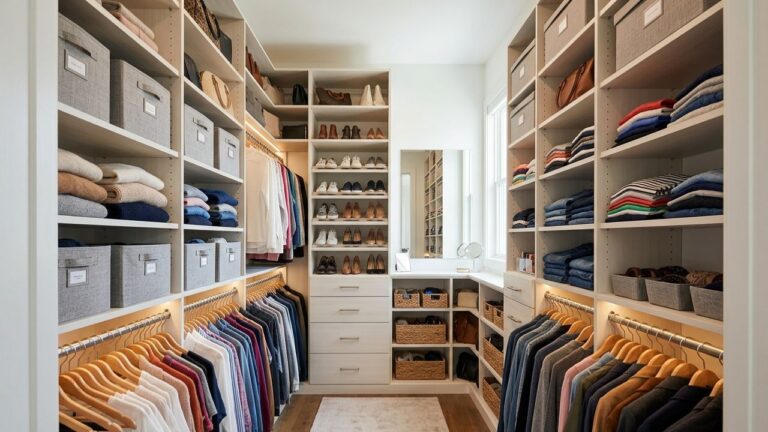
Designate one full wall floor to ceiling exclusively for shoes. Use a combination of angled shelves at eye level for your favorites, flat shelves above for less-worn pairs, and low cubbies at the bottom for boots and bulky shoes. Add LED strip lighting along each shelf edge, and you’ve got something that looks straight out of a fashion editorial.
This approach works especially well in larger walk-in closets (8 feet wide or more) where dedicating an entire wall doesn’t compromise clothing storage.
The Island with Shoe Drawers Below
A freestanding closet island typically used for folded items and accessories on top is a natural place to hide shoe storage underneath. Pull-out drawers built into the island base can hold dozens of pairs in a surprisingly compact footprint.
This design keeps shoes accessible while maintaining a tidy, hotel-suite aesthetic. Pair the island with built-in closet drawers along the perimeter walls for a cohesive, high-function layout.
Corner Shoe Shelves
Corners in walk-in closets are chronically underused. A custom corner shoe unit designed specifically to wrap around the corner can add significant storage without eating into your main wall space. Rotating carousel-style corner units take this even further, giving you 360-degree access to everything stored there.
The Boutique Display Wall
For the true shoe enthusiast, this is the ultimate setup. Think glass-front cabinet doors, integrated LED lighting, and floating shelves positioned at perfectly consistent heights. It’s equal parts storage and display your shoes become part of the room’s décor.
This works best when the shoes themselves are worth showing off: designer heels, limited-edition sneakers, or a carefully curated collection of quality footwear.
How to Plan Your Custom Shoe Shelf Layout
Great shoe storage starts with a plan. Before you meet with a closet designer, it helps to gather some basic information about your collection and your space.
- Step 1: Count and categorize your shoes. Group them by type heels, flats, sneakers, boots, sandals, athletic shoes. This tells you exactly how many of each shelf type you need and what height clearances to plan for.
- Step 2: Measure your tallest shoes. Knee-high boots need significantly more vertical clearance than a pair of ballet flats. Your shelf spacing should be planned around your actual footwear, not a generic standard.
- Step 3: Consider accessibility. Shoes you wear every day should be at eye level or just below the easiest reach zone. Seasonal shoes, special-occasion heels, or rarely worn pairs can go higher up or in lower cubbies.
- Step 4: Think about future growth. A well-designed custom closet should accommodate your collection for at least five to ten years. Build in a little extra capacity rather than designing to exact current capacity.
- Step 5: Plan for the full closet, not just the shoes. Shoe shelves don’t exist in isolation. They need to work in harmony with your hanging rods, built-in closet drawers, accessory storage, and any other features you’re incorporating. A cohesive custom closet design always accounts for the full picture.
Integrating Shoe Shelves Into Your Overall Custom Closet Design

The best closets don’t feel like a collection of parts they feel like one intentional, unified system. Here’s how to make your shoe storage work seamlessly with the rest of your custom closet ideas.
Matching Materials and Finishes
Your shoe shelves should use the same materials as the rest of your closet cabinetry. Whether you’re going with a warm wood tone, a crisp white laminate, or a sleek gray finish, consistency is everything. Mismatched shelving looks like an afterthought; matched finishes look designed.
Coordinating with Built-In Drawers
Built-in closet drawers are one of the most requested features in custom closet design and for good reason. They’re ideal for folded garments, accessories, and anything that doesn’t hang well. Positioning drawers adjacent to your shoe shelves creates a natural “dressing station” where everything you need to put together an outfit lives in one compact zone.
Soft-close drawer mechanisms and full-extension slides are worth the upgrade. You’ll interact with these drawers every single day, and quality hardware makes the experience noticeably better.
Adding Lighting
Lighting inside a closet isn’t just aesthetic it’s practical. LED strip lighting along shoe shelves makes it easy to identify shoes at a glance, especially in early morning when you’d rather not flip on the overhead light. Motion-activated LED lighting is a particularly popular feature that feels luxurious and genuinely useful.
The Bench or Ottoman
A built-in bench at the end of a shoe wall or at the entrance of a walk-in closet gives you a place to sit while putting on shoes. This small addition meaningfully improves the daily experience of using your closet. Some benches incorporate shoe storage underneath cubbies or a pull-out drawer for even more efficiency.
Material Options for Custom Shoe Shelves
The material you choose affects not just the look but the durability and maintenance of your shelving. Here are the most common options:
- Melamine-coated MDF: The workhorse of custom closet construction. Durable, affordable, easy to clean, and available in dozens of colors and textures. This is the most popular choice for residential closets.
- Solid wood: Warmer and more premium-feeling than MDF. Solid wood shelves can support more weight and are less susceptible to moisture damage, making them a good choice in humid climates. They’re also a natural fit for traditional or transitional home styles.
- Plywood with veneer: Stronger than MDF with the aesthetic flexibility of real wood veneer. Often used in higher-end custom closet installations.
- Glass shelves: For a luxury boutique look. Glass shelves with angled brackets let you see shoes from multiple angles and pair beautifully with LED lighting. They require more careful maintenance but make a stunning visual statement.
Beyond the Closet: Shoe Storage Throughout the Home

While a custom closet is the primary destination for shoe storage, it’s worth thinking about secondary storage zones particularly if you have a large family or an active lifestyle with lots of athletic footwear.
Mudroom shoe cubbies: A custom mudroom with built-in shoe cubbies near the entry door keeps everyday footwear out of the main closet entirely. Assign one cubby per family member and the clutter problem largely solves itself.
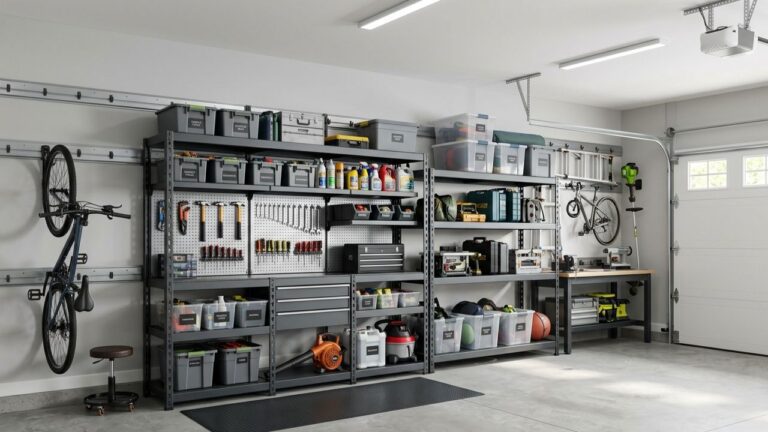
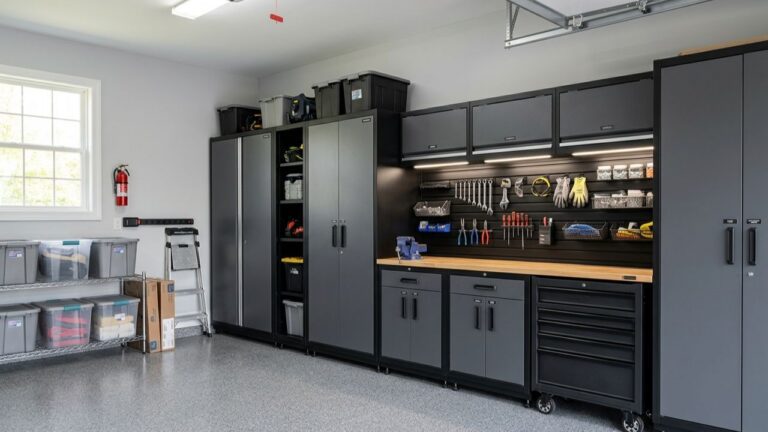
Garage storage systems: Athletic footwear, work boots, and outdoor shoes often do better in the garage than in a bedroom closet. A custom garage storage wall with dedicated shoe sections keeps these items clean, accessible, and out of the living space.
Pantry-adjacent storage: In homes with open floor plans, a custom pantry organization zone near the kitchen can sometimes incorporate a small shoe storage nook for kids’ shoes handy for families who use the back door as the main entry. Speaking of which, thoughtful custom pantry organization follows the same principles as closet design: everything in its place, labeled zones, and adjustable configurations that grow with your family’s needs.
Common Mistakes to Avoid With Shoe Shelf Design
Even with a custom build, some planning oversights can undermine the final result. Avoid these common pitfalls:
- Underestimating boot storage. Tall boots are the most space-hungry footwear you own, and they’re often an afterthought in closet planning. Design explicit boot storage from the beginning either deep floor cubbies or a tall open section with at least 18 inches of vertical clearance.
- Forgetting about boxes. Some people prefer to keep shoes in their original boxes for dust protection. If that’s you, make sure your shelf spacing accommodates standard shoebox dimensions (roughly 13″ x 8″ x 5″ for most shoes).
- Ignoring ventilation. Enclosed shoe storage particularly in tight spaces can trap odor and moisture. Consider open-front shelving or cabinets with vented doors to keep air circulating.
- Designing only for today. Your shoe collection will likely grow. Build in at least 20% more capacity than you currently need.
- Skipping the professional consultation. A custom closet designer can see opportunities and flag problems that are easy to miss when you’re planning on your own. Most reputable companies offer free design consultations take advantage of it.
Conclusion
Your shoes are an investment in your wardrobe, your comfort, and your personal style. They deserve storage that reflects that. Custom closet shoe shelves aren’t just a luxury upgrade; they’re a practical decision that pays dividends every single morning when you can find exactly what you’re looking for in seconds.
From sleek angled display shelves to functional pull-out trays, from dedicated shoe walls to island drawers the right configuration depends entirely on your shoes, your space, and your lifestyle. That’s exactly why custom is the right approach. A system built around your needs will outperform any generic solution every time.
And remember: great shoe storage is just one part of a great closet. When your shoe shelves coordinate beautifully with built-in closet drawers, smart hanging systems, integrated lighting, and a thoughtful overall layout, you get a closet that doesn’t just function well it feels like a genuine retreat.
Ready to stop living with storage that doesn’t work for you? Explore the full range of custom closet ideas, walk-in closet designs, and organization solutions at custom-closets. From luxury walk-in closets to custom pantry organization and garage storage, the team at Custom Closets has the expertise to turn your vision into a beautifully organized reality.
FAQs
It depends entirely on the wall dimensions and shelf configuration, but a standard 6-foot-wide shoe wall with floor-to-ceiling shelving can typically hold 40 to 80 pairs, depending on shelf type and spacing. A dedicated 8-foot wall with optimized angled shelving can hold significantly more.
For flat shoes and most dress footwear, 6 to 7 inches of vertical clearance is sufficient. Sneakers and most casual shoes need 8 to 10 inches. High heels and wedges typically need 10 to 12 inches. Ankle boots need 12 to 14 inches, and tall boots may need 18 inches or more. A good custom designer will help you dial in the exact spacing based on your actual collection.
It depends on what you’re storing. Angled shelves display shoes beautifully and are excellent for heels, loafers, and dress shoes. Flat shelves are more versatile and better suited for sneakers, athletic shoes, and bulkier footwear. Many closets use a combination of both.
Costs vary widely based on size, materials, and features. A basic custom shoe shelf installation might start around $500 to $800, while a fully built-out luxury walk-in closet with dedicated shoe walls, integrated lighting, and premium finishes can range from $5,000 to $20,000 or more. The investment pays off in daily convenience, home value, and the sheer pleasure of a well-organized space.
Absolutely. One of the great advantages of custom closet systems is that they can be designed to retrofit into an existing space without major construction. In many cases, new shelving can be installed in a single day with minimal disruption to your home.