Want to design a custom entertainment center that fits your space perfectly? This article provides straightforward tips and ideas for creating a custom entertainment center design: tips and ideas, from measuring your room to choosing the right materials and managing cables. Learn how to create a functional and stylish centerpiece for your home.
Key Takeaways
- Assessing room layout and accurate measurements are crucial for designing a custom entertainment center that fits seamlessly into your space.
- Define your needs by considering storage, functionality, and aesthetic preferences to create a personalized and organized entertainment center.
- Engaging with a professional design team and establishing a clear budget can enhance the quality and efficiency of your custom entertainment center project.
Understanding Your Space
Understanding your space is the foundation of a successful custom entertainment center. Evaluating the room space determines the functionality and style alignment with your home. This process involves measuring, consulting, assessing needs, budgeting, and personal styling.
Whether it’s a living room alcove, a flat wall, or a freestanding piece, the location plays a significant role in the design and installation.
Assessing Room Layout
Start by assessing your room layout. Evaluate the room’s size to ensure the custom wall unit fits without feeling overbearing. Consider existing furniture and features to find the best location for the entertainment center, balancing aesthetics with practical use for a harmonious fit with wall units.
Ensure the design and functionality of the entertainment center align with the room’s layout and atmosphere. It should complement existing decor while enhancing the overall ambiance, transforming the room into a cohesive and inviting space with entertainment center ideas.
Measuring Dimensions
Accurate measurements ensure the custom entertainment center fits seamlessly into the designated area without crowding the room. Measure the room’s dimensions and the wall where the unit will be placed.
This precision will help avoid costly mistakes and ensure a perfect fit, making your entertainment center a functional and stylish addition to your home.
Defining Your Needs
Defining your personal needs is critical for customizing your entertainment center. Identifying preferences tailors the design to fit your lifestyle. The entertainment center should efficiently store and conceal items and cables.
This involves assessing your storage needs, functionality requirements, and aesthetic preferences.
Storage Requirements
Storage cabinets hide electronics, maintaining a clean and organized look. Adjustable shelving improves storage capacity and item accessibility. Custom designs may feature pull-out drawers for easy access. Appropriate custom storage solutions are crucial for efficiency.
Consider the certain items you need to store and their accessibility. This guides your choices for storage cabinets, shelves, and drawers, making your space more functional and organized.
Functionality
Effective cable management hides unsightly wires, improving aesthetics. The entertainment center should accommodate various electronic devices, ensuring proper airflow to prevent overheating. Integrating technology enhances functionality and user experience, and drawer organizers maximize efficiency by keeping items neatly arranged.
Placing custom entertainment centers can enhance viewing angles and optimize space use. A perfectly designed piece seamlessly blends form and function, enhancing your viewing experience and making your living space more enjoyable.
Aesthetic Preferences
Custom entertainment centers should align with the room’s overall design aesthetic. Colors and finishes ensure the unit matches your home’s style. Materials like metal, glass, and laminate achieve different design aesthetics, and the right hardware complements the overall design.
Personal photographs or artwork add a unique touch, reflecting your style. Personalized decorative elements enhance visual appeal and create a sense of identity, making the space feel more like home with added warmth and character.
Choosing the Right Materials
The choice of materials significantly affects the room’s overall ambiance and style. Durable materials enhance the functionality and aesthetics of a custom entertainment center.
Opt for simpler designs and less expensive materials to keep costs down while maintaining quality. Incorporating natural materials provides a warm and inviting look.
Wood Options
Hardwoods like oak and maple are popular for their strength and appealing grain patterns. Maple, oak, and birch each offer unique benefits and aesthetics. Solid wood and plywood are favored for their durability and finish, with plywood also being cost-effective and stable.
The choice of wood significantly impacts project costs. Pine costs around $2 to $4 per board foot, while acacia ranges from $10 to $24. Understanding these costs helps you choose materials that fit your budget and design preferences.
Alternative Materials
Metal frames provide a modern look and are highly durable. Glass shelves and accents create a sleek, contemporary feel while allowing light to pass through. Laminate surfaces are affordable and mimic wood’s appearance without the high cost. These materials offer unique aesthetics and functionality.
Choose materials that complement your existing decor and meet your functional needs. The right combination ensures your entertainment center is both beautiful and practical.
Incorporating Technology
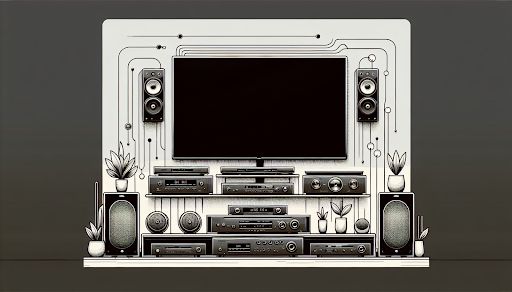
Incorporating technology into your entertainment center enhances the organization and presentation of electronic devices. Custom designs can feature home office built-Ins and flexible storage solutions tailored to various items, including electronics and books.
This ensures both visible items and hidden elements are efficiently accommodated.
Cable Management
Effective cable management is crucial in entertainment device design. Features like louvered doors or wire mesh inserts conceal cables while providing ventilation for AV equipment. Cable covers can disguise wires along walls or floors, improving aesthetics.
Bundling cables with Velcro or plastic ties reduces clutter and improves organization. Power strips with surge protection keep devices neatly plugged in one location. Effective cable management enhances the look and safety of your entertainment center.
TV and Audio Equipment
Select a TV model that fits well within your entertainment center, considering size and resolution. Choose audio equipment based on sound quality, budget, and compatibility with your TV setup. Ensure the layout allows for optimal viewing angles and sound distribution.
Smart home devices elevate the functionality of your entertainment center, streamlining the operation of your TV and audio equipment for a more enjoyable and convenient experience.
Enhancing with Accessories
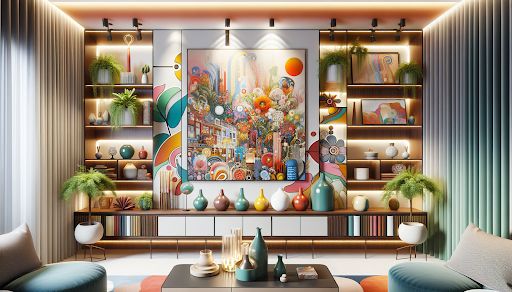
Accessories enhance the functionality and aesthetic appeal of your entertainment center. Functional accessories like drawer organizers and shoe fences improve organization and usability.
The right accessories make your entertainment center more functional and attractive.
Lighting
LED strip lights create dynamic lighting effects around your entertainment center, enhancing visual appeal with accent lighting. They can effectively accentuate shelves and highlight decorative pieces.
Focal lighting options like pendant lights or wall sconces create a warm atmosphere. Ambient lighting can transform a dull entertainment center into a vibrant focal point.
Motion-sensing lights are convenient, activating automatically upon approach, making them ideal for entertainment areas.
Decorative Elements
Incorporating shelves for plants or decorative items enhances the overall aesthetic. Decorative elements personalize the entertainment center, making it feel more like home. Use decorative boxes, art pieces, or books that reflect your personal style to complement the space.
Personalized decorative elements enhance visual appeal and create a sense of identity, making the space feel more like home with added warmth and character.
Working with a Design Team
Collaborating with a design team leads to personalized designs that align with individual style and functional needs. Engaging with professionals enhances the quality of a custom project through insights and innovative ideas.
This collaboration often results in a more personalized and cohesive outcome.
Finding the Right Designer
Selecting a designer involves assessing their ability to capture your vision and understand your requirements. This ensures the final product meets your expectations and fits seamlessly into your space.
Choose a designer with a proven track record in custom projects who understands your style and needs.
Collaboration Process
The design team typically starts with a detailed needs assessment. This stage includes meetings, sketches, and revisions to ensure your expectations are met throughout the design and installation phases.
Accommodating tight timelines and managing schedules efficiently are crucial aspects.
Budgeting Your Project
Establishing a clear budget from the start helps manage expectations and avoid unexpected costs. The process includes stages from the initial consultation to material selection and construction oversight.
A structured collaboration process ensures efficiency and keeps the project on track.
Cost Factors
The cost of custom-built entertainment units varies significantly with material quality, size, and additional features like lighting and shelves. Labor costs can account for 40% to 66% of total expenses. Hiring experienced contractors influences overall costs, with labor typically ranging from $750 to $3000.
Labor costs vary based on builder experience and regional market rates. Understanding these cost factors is crucial for budgeting your project and ensuring the best value for your investment.
Saving Tips
Thorough price research and obtaining multiple quotes help identify the best value. Plan for hidden costs like delivery fees and hardware, and budget an extra 20% for unexpected expenses. This proactive approach ensures financial preparedness and avoids surprises.
Combining your entertainment center project with other renovations may result in a discount from your contractor. DIY options reduce costs, but complex projects benefit from professional carpentry and electrical expertise. Balancing DIY with professional assistance saves money while ensuring high-quality results.
Installation and Maintenance
Hiring professionals for installation ensures the custom entertainment center is set up correctly and securely, reducing the risk of damage. Regular maintenance, such as dusting surfaces, cleaning cables, and checking for wear or damage, keeps your entertainment center looking great.
Professional Installation
Collaborating with professional designers provides insights and expertise that ensure your entertainment center meets your vision and functional needs. Selecting a designer who understands your style and requirements can enhance the overall outcome of your custom entertainment center. The collaboration process often includes meetings, sketches, and revisions to guarantee your expectations are met throughout the design and installation phases.
Hiring professionals for installation service ensures that the process is handled efficiently, reducing the risk of mistakes and enhancing the final aesthetic and functionality of the center. This expertise is invaluable in creating a custom entertainment center that is both beautiful and functional, perfectly fitting into your space.
Maintenance Tips
Regular cleaning and dusting of the entertainment center can prolong its lifespan and maintain its appearance. Using appropriate cleaning products helps maintain the finishes and materials, preserving the look and feel of your entertainment center.
Avoiding exposure to direct sunlight can prevent fading and damage to the finishes of the entertainment center. Keeping your entertainment center neat and well-maintained ensures it remains a centerpiece in your home for years to come.
Summary
Creating a custom entertainment center is a rewarding project that can transform your living space. By understanding your space, defining your personal needs, and choosing the right materials, you can design an entertainment center that is both functional and stylish. Incorporating technology and enhancing the unit with lighting and decorative elements further personalizes the space.
Working with a Custom closets design team ensures that your vision is captured and executed flawlessly, while budgeting and professional installation guarantee that the project stays on track and meets your expectations. Regular maintenance will keep your entertainment center looking great and functioning well. Now is the perfect time to start planning your custom entertainment center and bring your dream to life.
FAQs
To effectively organize your entertainment center, use bins or baskets that fit the shelves and label them by game system or type. This method keeps your games sorted, easily accessible, and enhances the overall organization.
Understanding your space is crucial for ensuring that the entertainment center is both functional and visually harmonious with your home, preventing it from feeling overwhelming or out of place. Proper evaluation enhances the overall design and user experience.
To choose the right materials for your custom entertainment center, opt for durable options like hardwoods or modern alternatives such as metal and glass, while also considering your budget and style preferences. This approach will ensure both aesthetics and functionality in your design.
Working with a design team ensures that you receive tailored designs that perfectly match your style and functional needs. Their expertise facilitates efficient project management and guarantees that the final product aligns with your expectations.
To effectively manage the costs of a custom entertainment center project, establish a clear budget and obtain multiple quotes while planning for hidden expenses. Consider combining projects and exploring DIY options for further savings.