You open the pantry door, and a can rolls out. A forgotten bag of pasta spills. The shelves are full and yet you still can’t find the olive oil. If any of this sounds familiar, you’re not alone. For most homeowners, the kitchen pantry is the most chaotic space in the entire house. But here’s the good news: custom kitchen pantry cabinets can completely change that and in ways that go far beyond just “looking organized.”
Unlike the fixed, one-size-fits-all shelving that comes standard in most homes, custom pantry cabinets are designed around exactly how you shop, cook, and live. This guide walks you through everything you need to know from layout planning and material choices to creative pantry organization ideas and even incorporating display cabinets for collectibles into your kitchen design. Whether you’re starting from scratch or upgrading an existing space, this is the most comprehensive resource you’ll find.
A well-designed custom pantry doesn’t just store food it changes how you cook, shop, and feel in your kitchen. When everything has a place and every inch is used intentionally, the entire rhythm of your home improves.
Why custom kitchen pantry cabinets are worth the investment
Most people underestimate how much a disorganized pantry costs them not just in stress, but in real dollars. Studies on household food waste show that the number one reason families throw away perfectly good food is that it gets lost in cluttered, hard-to-navigate storage. Custom pantry cabinets solve this by making every item visible and accessible.
But the benefits run deeper than just food savings. Here’s why so many homeowners in Louisville and across the country are choosing custom over stock cabinets:
- Perfect fit for your space. Standard cabinets come in fixed widths and heights. Custom pantry systems are built to use every inch of your actual room, including odd corners, low ceilings, and awkward alcoves.
- Designed around your habits. A baker needs deep pull-out drawers for flour and sugar. A meal-prep household needs wide open shelves for sheet pans and instant pot appliances. Custom means designed for you.
- Better materials and finishes. You choose the wood species, door style, hardware, and interior finish. Custom pantry cabinets age beautifully and stay cohesive with the rest of your kitchen design.
- Increased home value. Real estate professionals consistently note that updated, organized kitchens including built-in pantry storage systems are among the highest-return improvements for resale.
Understanding the different types of custom pantry layouts
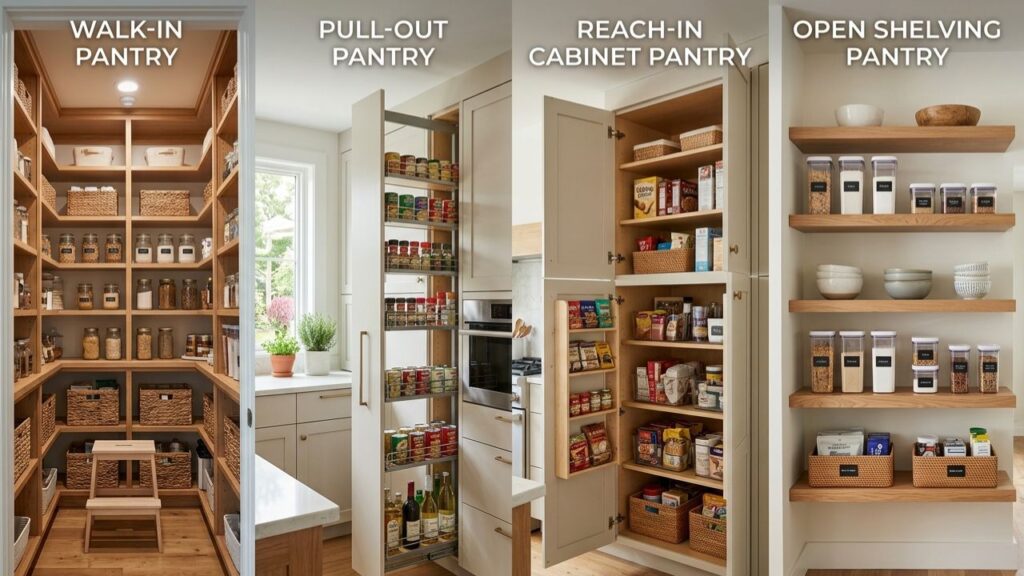
Before deciding on materials and finishes, you need to decide on your pantry layout. The right structure depends on the size and shape of your space, how much you store, and how accessible you need things to be day-to-day.
Walk-in pantry cabinets
The gold standard of pantry storage solutions, a walk-in pantry gives you room to move inside and organize items by zone: dry goods on one wall, canned goods on another, snacks at eye level, small appliances below. The key to a great walk-in pantry is a thoughtful cabinet plan that avoids dead corners and creates clear sightlines. Custom built-ins with a mix of open shelving, closed cabinet doors, and pull-out drawers work best here.
Reach-in pantry cabinets
Not every kitchen has space for a walk-in. Reach-in pantry cabinets typically 12 to 24 inches deep are built into a wall cavity or a narrow closet space and optimized for visibility. Full-extension pull-out shelves are the single most impactful upgrade you can add, letting you see and reach items at the back without digging.
Butler’s pantry and pass-through designs
Increasingly popular in open-concept homes, a butler’s pantry connects the kitchen to a dining room or entertaining area. These spaces often incorporate both functional pantry storage and display elements beautiful glass-front cabinets, built-in wine storage, and open shelving for serving pieces. This is also where display cabinets for collectibles and heirloom dishware fit naturally, blending storage with showcasing.
Pantry cabinet towers
When you don’t have a dedicated pantry room, full-height pantry tower cabinets installed within the kitchen itself can hold a surprising amount. Tall pull-out pantry units sometimes called “larder pull-outs” allow access to every shelf without bending or reaching, making them especially popular in accessible and aging-in-place kitchen designs.
Smart pantry storage solutions that make everyday life easier
The difference between a good pantry and a great pantry often comes down to the interior fittings the hardware, pull-outs, bins, and organizers that turn a set of shelves into a truly functional system. Here are the pantry storage solutions our design team recommends most often.
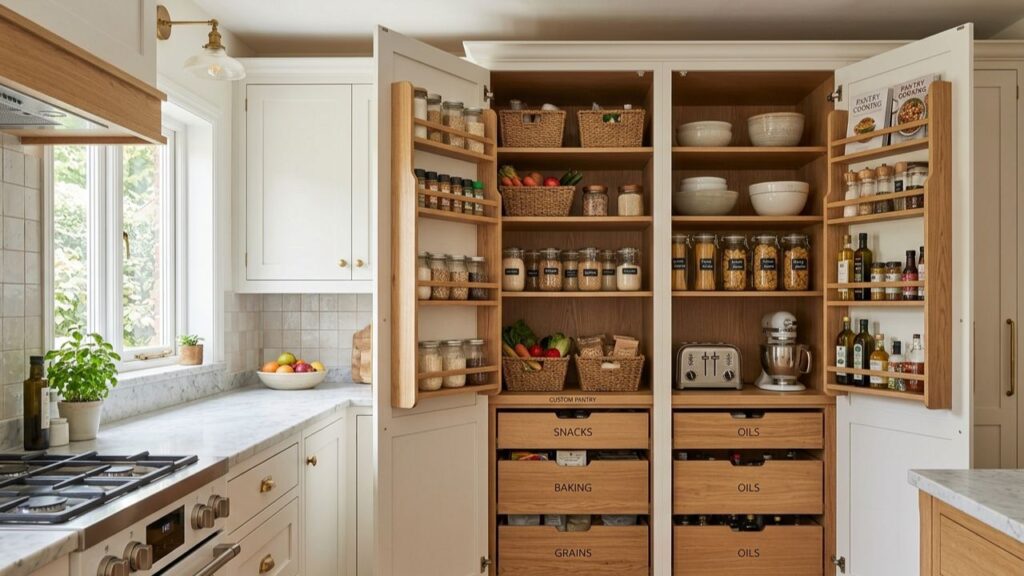
- Full-extension pull-out shelves: Reveal every item stored at the back of deep cabinets. Eliminates the “black hole” effect entirely.
- Door-mounted storage: Narrow spice racks, foil holders, and can organizers mounted inside doors double usable surface area.
- Adjustable shelving: Peg-system shelves that can be repositioned as your storage needs evolve over the years.
- Deep lower drawers: Perfect for pots, pans, bulk items, and root vegetables. Far more ergonomic than low, fixed shelves.
- Lazy Susan corner units: Rotating shelves solve the classic “corner cabinet black hole” problem with style and function.
- Integrated lighting: LED strip lighting inside cabinets makes everything visible instantly, especially for deep or tall spaces.
Expert tip: When planning your pull-out shelf placement, think in zones: breakfast zone near the toaster area, baking zone near countertop workspace, snack zone at kids’ eye level. Zoning a pantry cuts daily search time dramatically and makes keeping it tidy much more natural.
The best pantry organization ideas for 2026
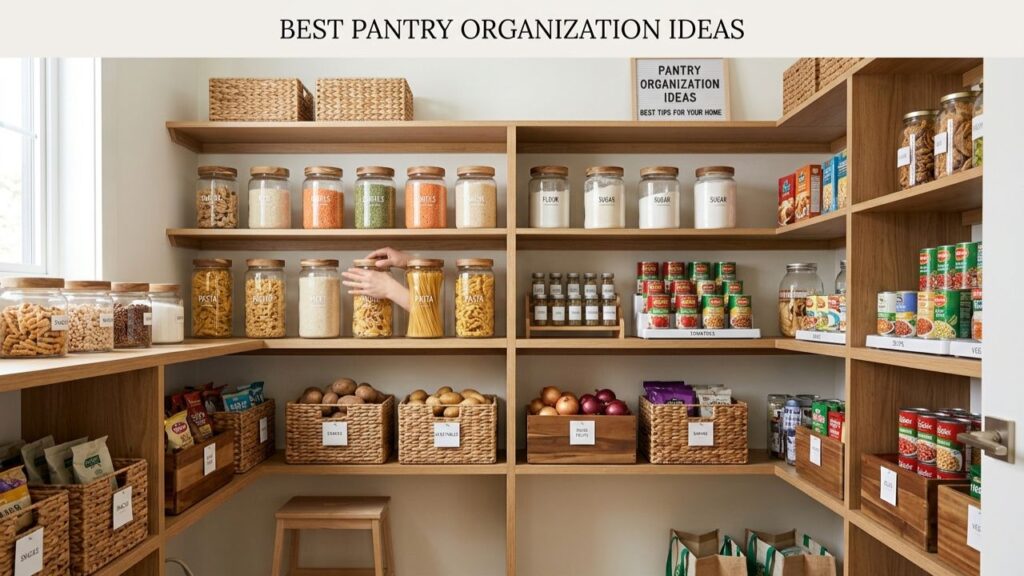
Organization trends in kitchen pantry design have shifted significantly in recent years. The old approach was all about matching containers and uniform labels. Today’s thinking is more systemic and functional the structure of the cabinet itself should do most of the organizational work, so you’re not relying on willpower to keep things tidy.
Category clustering
One of the most effective pantry organization ideas is grouping items by how they’re used rather than by category. Instead of “all canned goods together,” you cluster things as “weeknight dinners,” “baking supplies,” and “grab-and-go snacks.” This meal-based organization mirrors how people actually cook and shop, which means items naturally return to the right spot.
First-in, first-out shelf systems
Gravity-fed can dispensers and tiered risers allow older items to move to the front automatically as new ones are added at the back. This reduces food waste significantly and is especially useful for households that buy in bulk or meal prep weekly.
Open shelving with intentional display
Not everything in a pantry needs to be hidden. Beautiful glass jars, wooden cutting boards, and ceramic serving pieces can be displayed openly on select shelves, adding warmth and personality to the space while keeping everyday items accessible. This is also where the principles of displaying collectibles start to intersect with pantry design particularly in butler’s pantry spaces or kitchen nooks where heirloom pieces are part of the aesthetic.
Dedicated small appliance storage
One of the biggest pain points in kitchen organization is countertop clutter from appliances. Custom pantry cabinets can include a dedicated appliance zone with deep lower shelves, electrical outlets, and even a built-in lift mechanism that raises heavy items like a stand mixer to countertop height when needed and lowers back out of sight when not in use.
Incorporating display cabinets for collectibles into your pantry design
Many homeowners are surprised to learn that custom pantry design and display storage can coexist beautifully in the same space. If you have a collection of vintage dishware, hand-painted ceramics, or family heirlooms that deserve to be seen, your butler’s pantry or kitchen nook is an ideal setting for display cabinets for collectibles.
Glass-front upper cabinets with interior LED lighting create a gallery-like effect that showcases pieces without exposing them to dust or kitchen grease. Adjustable glass shelves allow you to configure the display around pieces of varying sizes. And because custom cabinetry is built to your specifications, you can set exact shelf heights to accommodate tall pitchers, wide platters, or a row of delicate teacups without awkward empty space above each item.
From a design perspective, mixing closed storage for everyday items with open or glass-front display sections creates beautiful visual rhythm full cabinet fronts punctuated by lit display niches feel intentional and curated rather than cluttered. This is especially effective in transitional and traditional kitchen styles where warmth and character are priorities.
Choosing the right materials and finishes
The material choices for your custom kitchen pantry cabinets affect not just aesthetics but also durability, ease of cleaning, and the long-term feel of the space. Here’s a quick breakdown of the most common options:
- Plywood core vs. particleboard. Custom cabinetry built on a plywood core is substantially stronger and more moisture-resistant than particleboard. For a pantry where heavy items are stored, plywood is the clear choice.
- Paint vs. stain finish. Painted pantry cabinets (typically in whites, off-whites, or greiges) give a clean, cohesive look and are easy to touch up. Stained wood finishes oak, walnut, or maple show more character and age gracefully but require more careful maintenance near food storage areas.
- Inset vs. overlay doors. Inset cabinet doors sit flush inside the face frame for a furniture-like look. Overlay doors cover the face frame and are easier to keep perfectly aligned. Both are available in custom work; the choice is largely aesthetic.
- Interior finish. A thermofoil or melamine interior is the most practical for pantry cabinets it’s smooth, non-porous, easy to wipe down, and won’t absorb spills or odors. Some clients choose painted interior boxes to match or contrast with the exterior doors for a more intentional, designed look.
The design process: what to expect when ordering custom pantry cabinets
If you’ve never worked with a custom cabinetry company before, the process can feel unclear. Here’s what a typical project looks like from first call to finished installation:
- Initial consultation. A designer visits your home (or works from measurements and photos) to understand your space, storage habits, and style preferences. This is the conversation where you talk about what’s working and what isn’t in your current pantry.
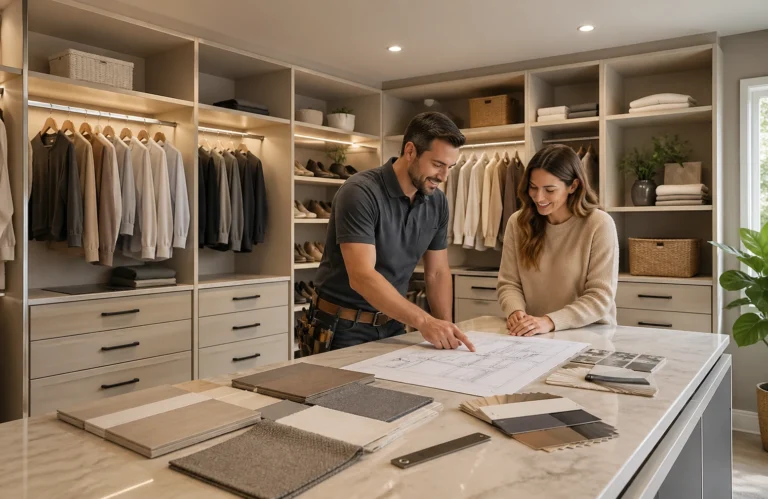
- 3D design presentation. Most custom cabinetry studios now use 3D rendering software to show you exactly what your finished pantry will look like before anything is built. You can adjust layouts, door styles, and finishes until the design is exactly right.
- Material and hardware selection. You’ll choose everything from wood species and door profiles to drawer pull styles and interior fittings. This is also when you confirm the details like soft-close hinges, full-extension drawer glides, and integrated lighting.
- Production and delivery. Custom cabinets typically take four to eight weeks to produce depending on the complexity of the order and the fabrication queue.
- Professional installation. An experienced installer ensures that every cabinet is plumb, level, and securely anchored, and that all doors and drawers are adjusted to operate perfectly.
Conclusion
A thoughtfully designed custom kitchen pantry is one of the most functional investments you can make in your home. When your pantry storage solutions are tailored to your space and habits, the difference is immediately noticeable less food waste, faster meal prep, and a calmer, more enjoyable kitchen environment overall.
Whether you’re planning a full walk-in build-out, upgrading a reach-in closet, exploring pantry organization for a smaller kitchen, or looking to incorporate display cabinets for collectibles into a butler’s pantry renovation, the foundation is always the same: start with thoughtful custom design rather than fitting your life into a shelf system that wasn’t made for you
FAQs
A pantry cabinet is a freestanding or built-in furniture piece within the kitchen typically 12–24 inches deep with shelving, drawers, and doors. A pantry closet is a dedicated room or large closet space converted entirely for food and kitchen storage. Both can be fully customized; the choice depends on available space and your storage volume needs.
Yes this is one of the most rewarding design opportunities in custom pantry and butler’s pantry projects. Glass-front display cabinets with interior lighting can be integrated seamlessly alongside closed storage cabinets, giving you both functional pantry organization and beautiful display space for your most treasured pieces.
Most pantry installations take one to three days depending on the size and complexity of the project. Walk-in pantry builds with electrical work for lighting may take slightly longer. The preparation and design phases before installation typically span four to eight weeks.
Yes. Kitchen and storage upgrades consistently rank among the highest-return home improvements at resale. Custom pantry systems signal quality construction to buyers, reduce the appearance of a cluttered kitchen, and are often specifically highlighted in listings as a selling feature.
In smaller kitchens, the most effective pantry storage solutions are full-height pantry tower cabinets with pull-out interior shelves, door-mounted organizers that capture unused space on cabinet door interiors, and vertical dividers for trays and cutting boards. Even a single 12-inch-wide pantry tower can provide substantial storage without taking up significant floor space.