You’ve likely experienced that moment of opening your closet door and feeling frustrated and not calm, you’re not alone. The good news? With the right design for walk-in closets, the whole experience can be transformed from a room that has a lot of stuff stored in it, yet is not utilized, to a gorgeous organized room where getting dressed feels straightforward.
From a complete renovation to limited space to the desire for a little boutique dressing room, this guide has it all. Whether you are looking for walk-in closet ideas, walk-in closet layout tips or the dream walk-in closet with island, we have something for everyone, and we have all the tips and tricks you need to help you along.
Why Closet Designs for Walk in Closet Matters More Than You Think
Most people treat the closet as an afterthought a place to stuff things behind a closed door. But your closet is one of the most-used spaces in your home. You start and end every day there.
A well-designed walk-in closet doesn’t just look good in photos. It:
- Reduces morning stress by making every item easy to find
- Protects your wardrobe by storing clothes and accessories properly
- Increases home value according to real estate professionals, a custom-designed closet is consistently one of the top features buyers look for
- Maximizes every square foot, whether you have a 5×7 nook or a 12×14 suite
The difference between a generic builder closet and a thoughtfully designed one comes down to understanding how you live, what you own, and how space can work smarter.

Understanding Walk-In Closet Layouts: Where Design Starts
Before you think about finishes or fixtures, you need a layout that works for your space. Walk-in closet designs generally fall into a few core configurations:
Single-Wall Layout
Everything runs along one wall ideal for narrow spaces or pass-through closets. This layout works surprisingly well for small walk-in closet ideas because vertical space can be maximized with floor-to-ceiling shelving and hanging sections.
L-Shaped Layout
Two adjacent walls are used for storage. This is one of the most common and versatile walk in closet designs, offering good separation between clothing categories for example, long hang on one side and folded items plus accessories on the other.
U-Shaped Layout
Storage lines three walls, with a clear aisle through the center. This is the gold standard for medium to large walk-in closets, offering maximum storage density. It’s also the most natural layout for adding a walk-in closet with island in the center.
Island or Peninsula Layout
For larger rooms (typically 10×10 or bigger), a freestanding or built-in island in the center of the closet adds drawer storage, display space, and a flat surface for laying out outfits a feature that’s become highly sought after in custom closet design.
Walk-In Closet Shelving Ideas That Actually Work
The backbone of any system of closets is the shelving. The wrong shelving makes everything difficult, the right system makes everything easy. Let’s take a look at the walk-in closet shelving ideas that the professionals swear by in 2026:
Adjustable Shelving Systems
A fixed shelf might appear clean but doesn’t reflect the changes in truth that occur in a wardrobe over time. Vertical rails or tracks support adjustable shelving for flexible storage solutions as requirements change. This is particularly beneficial if you change clothes heavily between seasons or have someone you share the closet with.
Double Hang Sections
Single-hang rods are very inefficient at using vertical space. Double-hang configurations of two shorter rods nearly double your hanging capacity, and are used for folded shirts, blazers, jackets and pants folded over a hanger.
Open Shelving for Shoes and Bags
Angled shoe display shelves, flat shoe cubbies or floor to ceiling tower shoe racks cater to the needs of visibility, access and protection of footwear. Open shelves are also perfect for handbags, folded sweaters, and objects to be displayed, such as hats or jewelry boxes.
Pull-out drawers and bins
Not everything hangs. The pull-out drawers can be mounted directly into the shelving system, which means no need for a separate dresser, saving up the room in the bedroom. For the organization of folded garments, accessories, and undergarments, soft-close drawers with custom dividers are very popular in modern walk-in closets.
Glass-Front Cabinets
Glass-front upper cabinets help keep items visible and protected from dust in a more boutique-retail design. These are fantastic for high-end purses, folded cashmere or a refined accessories assortment.
Built-In Lighting Integration
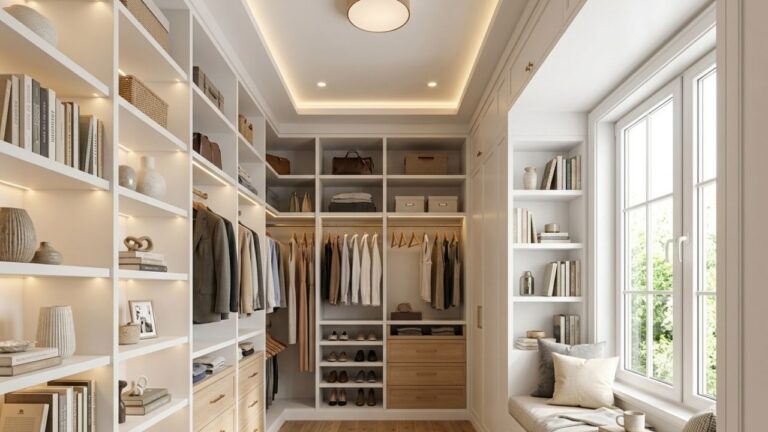
Placement of shelving and lighting should be coordinated. The space is functional at night with LED strip lighting under shelves, recessed lighting overhead and accent lighting in glass cabinets to enhance the overall appearance..
Small Walk-In Closet Ideas: Big Style in a Tight Space

Not everyone has a sprawling master suite. If you’re working with a small walk-in closet say, under 6×6 feet don’t despair. Some of the most creative and efficient closet designs come from the constraint of a small footprint.
Go Vertical
The floor plan may be small, but the ceiling isn’t. Floor-to-ceiling shelving and cabinetry dramatically expands storage without requiring more square footage. Use the upper zone for seasonal or rarely-accessed items, and keep everyday essentials at eye level and below.
Use the Door
The back of the door is prime real estate in a small walk-in closet. Over-the-door organizers, hook systems, or even slim built-in panels on the door itself can hold shoes, belts, scarves, and jewelry without taking up any floor or wall space.
Choose Light Colors and Mirrors
Light cabinetry finishes (white, off-white, soft grey) make a small space appear larger. Mirrored panels on doors, walls or as a full-length mirror built into cabinetry reflect light and make space appear larger. This is one of the easiest small walk-in closet ideas that has the greatest visual impact.
There is a need for a straightforward edit in small spaces. Your closet designer will likely ask you what you access daily. Those items should be stored in the best location, one that is easily accessible. Rest of the others can be stored less accessibly. An organized small closet is better than an unorganised large closet any day of the year.
Delicate, dedicated storage places
Instead of one unified hanging area, divide the small closet into specific spaces – the short-hang space and the long-hang zone.one, a shelf zone, and a drawer zone. Even in a tight space, this zoning approach creates order that feels effortless.
The Walk-In Closet With Island: Is It Right for You?
A walk-in closet with island has become one of the most requested features in custom closet design and for good reason. It’s the element that most transforms a closet into a true dressing room experience.
What an Island Adds
- Drawer storage in the center of the room, accessible from all sides
- A flat surface for laying out outfits, packing suitcases, or organizing jewelry
- Display opportunities a glass top over the island can showcase a watch collection, folded scarves, or decorative objects
- Visual anchoring that makes the entire closet feel intentional and designed
Do You Have Enough Space?
A walk in closet with island should be at least 10 feet wide when the island is placed along the longest length of the closet, which allows for enough aisle width (usually 36-42 inches wide per aisle) for comfortable walking. With an island in the middle, a U-shaped floor plan can be quite charming in a 9′ x 10′ room, if done right.
Island Design Options
Custom islands can be built-in (the same style as the cabinets throughout the closet) or freestanding (a piece in the style of furniture which can be moved if required). Popular finishes include painted wood, walnut veneer, lacquered surfaces, and marble or quartz tops. Built-in pull-out velvet trays for jewelry are a particularly luxurious touch.
Walk-In Closet Design Trends in 2026

The closet design industry has evolved significantly, and here’s what’s resonating with homeowners right now:
Warm Wood Tones : The all-white closet, while still clean and popular, is giving way to warmer palettes. Natural walnut, warm oak, and honey-toned finishes create a spa-like, organic feel.
Mixed Materials : Combining painted cabinetry with open wood shelving, metal hardware, and glass creates visual interest and depth that feels more like a designed room than a storage unit.
Integrated Seating : A built-in bench or ottoman at the end of the closet (or as part of the island) adds function and makes the space feel genuinely luxurious.
Smart Lighting : Motion-activated LED lighting, color-temperature-adjustable strips, and layered lighting plans (ambient + task + accent) are now standard in high-end walk-in closet designs.
Sustainable Materials : Formaldehyde-free cabinetry, FSC-certified wood, and low-VOC finishes are increasingly requested, especially for a space you spend time in daily.
How to Plan Your Walk-In Closet: A Step-by-Step Approach
Planning feels overwhelming until you break it into clear steps. Here’s how to approach your walk-in closet design project:
- Audit your wardrobe: Count how many items need long hang, short hang, folded storage, and drawer storage. This is the data that drives your design.
- Measure accurately: Record floor dimensions, ceiling height, door and window locations, and any obstructions like HVAC vents or light fixtures.
- Identify your priorities: What drives you crazy about your current closet? What do you love? Your pain points point to your must-haves.
- Choose a layout: Use the layout types above as a starting framework, then refine based on your measurements.
- Work with a professional designer: Custom closet designers use 3D rendering software to show you exactly what your finished space will look like before a single piece is installed. This step eliminates costly surprises.
- Select finishes and hardware: Cabinetry finish, shelf material, hardware style, and lighting should feel cohesive with the rest of your home.
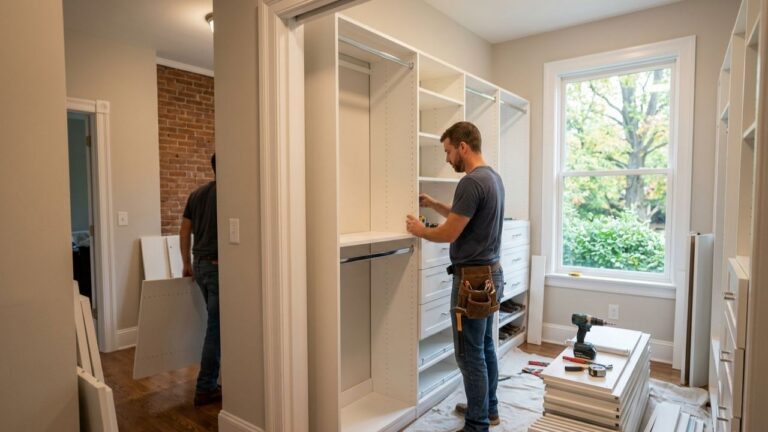
- Plan installation: Professional installation typically takes one to three days depending on the scope of the project.
Conclusion
Walk-in closet ideas that are the right ones aren’t about fancy for the sake of fancy, they’re about creating a space that’s going to work as hard as you do, day after day. No matter if you’re looking for smart 5×6 small walk-in closet designs, a fully equipped U-shaped walk-in closet and a full system of zoned walk-in closets or designing your showstopping walk-in closet with the island central to the scheme of your walking space system, the same small tips apply: know what you need, plan carefully, utilize vertical space, and make quality investments.
Walk-in closet shelves concepts, innovative hardware, practical lighting and proper finishes all play their role in making an ordinary room truly amazing. The result? A closet you want to step into and a house that functions better on the inside.
Ready to see what’s possible in your space? The team at Custom Closets US specializes in designing and installing custom walk-in closets tailored to real homes, real wardrobes, and real lives. Explore the full range of designs, get inspired by completed projects, and connect with a designer who can bring your vision to life.
FAQs
The design process typically takes one to two consultations. Once the design is approved, materials are ordered and installation is usually scheduled within two to four weeks. The installation itself takes one to three days depending on the complexity.
Yes many homeowners convert a spare bedroom, a large existing reach-in closet, or an underused corner of a master bedroom into a walk-in closet. A closet designer can help you evaluate what’s structurally and spatially possible.
Big-box kits are designed for average spaces with standard dimensions. Custom closets are built specifically for your room, your wardrobe, and your style with more material options, better hardware, professional installation, and a design that maximizes every inch of your specific space.
The general principle is: most-used items at eye level and within easy reach, less-used items higher or lower. Group items by category (all dresses together, all shoes together) and by frequency of use within each category.
Consistently, yes. Professionally designed closets improve daily quality of life, protect clothing from damage, reduce clutter throughout the rest of the home, and add measurable value to a home at resale. Most homeowners report that a custom closet is one of the home improvements they most frequently use and enjoy.